The Albany Herald ... We're All About You!
The Albany Herald

Wednesday, December 12, 2007
Today's Paper
Headlines
Sports
SouthView
Opinion
Obituaries
Weekend News
Weddings & Engagements
Birth Announcements
Search Archives
Classifieds
Special Sections
Subscriptions
Policies
Contacts

Local & State Headlines

The Zone

City backs neighborhood

  • Albany City Commissioners vote to write a letter to HUD in support of a South Albany neighborhood group.

ALBANY — Despite City Manager Alfred Lott’s stated concerns that doing so might hamper the city’s working relationship with the Department of Housing and Urban Development, the Albany City Commission voted to have Lott send a letter to HUD expressing concerns over the construction of a senior apartment complex in the Country Club Estates neighborhood.

Lott had City Attorney Nathan Davis draw up a resolution stating in part that while “the city of Albany recognizes the interests of the citizens of Country Club Estates Subdivision, the city must defer to the analysis of the U.S. Department of Housing & Urban Development in this matter.”

But Ward 4 City Commissioner Bo Dorough, whose district includes Country Club Estates, said the commission should not let its fear of HUD reprisal keep it from supporting the wishes of its citizens.

“We need to send a letter to HUD saying the (49-unit Dalewood Estates) project is incompatible with the neighborhood,” Dorough said. “I can’t believe HUD would punish the city for being advocates of our citizens.”

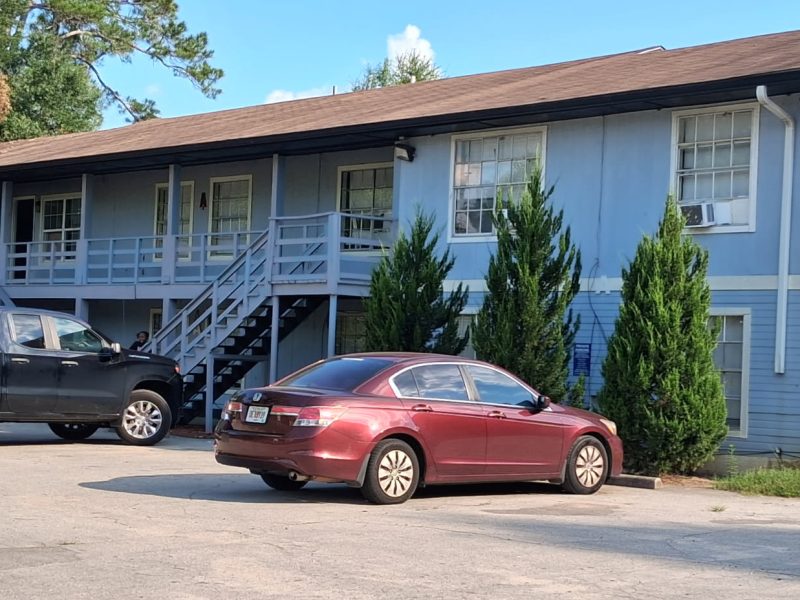
The property in question at 824 Willie Pitts Jr. Road is under fire from citizens in the South Albany neighborhood who say construction of the senior housing complex will lower their property values. The neighborhood group previously took the matter to Dougherty Superior Court but lost their case. A state appeals court confirmed the ruling.

Former Albany State University football coach Hamp Smith, who owns a home in the neighborhood, said the commission had an obligation to stand behind its citizens.

“We’re trying to save our neighborhood, and they’re trying to bring it down,” Smith said. “I’ve invested too much of my life there to have someone come in and tear it down.”

The city’s Community & Economic Development director, Jennifer Clark, told commissioners the Trinity Community Development Corp. that was originally approved to develop the complex had been decertified by the city as a Community Housing Development Organization (CHODO) because of its failure to complete paperwork required of such organizations.

Clark said, however, that the Dalewood Estates project did not fall under city CED guidelines because as a Section 202 federal award, the money went to Trinity directly from HUD.

Commissioner Tommie Postell asked Clark if finances entered into the city’s decertification of Trinity, and she said other issues were determining factors.

“As far as I’ve been able to tell, (Trinity) did not owe the city money when they were decertified as a CHODO,” Clark said. “We might have been able to determine that if they’d submitted their paperwork, but they did not. And when they didn’t, they were automatically decertified by the city.”

Despite Clark’s claim, though, Postell said he’d investigated the matter and found evidence of $317,000 that had been awarded to Trinity by the city and never repaid or accounted for.

“We need to investigate this issue further, see if money was given (to Trinity),” Mayor Willie Adams said. “If that’s the case, I’d like for the city attorney to see if we have legal recourse to account for those funds.”

After the meeting, though, Clark said her investigation did not indicate financial mismanagement by Trinity.

“All funds given to a CHODO must be used for activities that have been approved (by Community & Economic Development) or for public service activities,” she said. “The money that Mr. Postell referenced was used by Trinity properly.

“I was not here at the time, but there has to be documentation with the disbursement of any funds. Our records show that Trinity’s use of those funds was conducted properly and properly documented.”

The action taken concerning Country Club Estates came during a special called meeting, so action approved was binding. Dorough, who had asked that the letter be sent to HUD backing the homeowners, suggested that final action not be taken until next week’s business session so that Lott would have time to craft the letter to the commission’s satisfaction.

“In fairness to the city manager, it would be prudent for us to see the letter that he writes before agreeing to send it to HUD,” Dorough said. “I understand that he doesn’t want to damage the city’s relationship with HUD, but I disagree that this letter would do that.

“The letter should say that we as a body want these 49 units in Albany and we support affordable housing. But construction hasn’t begun, and I don’t see where it necessarily has to be at this location. We don’t oppose the project, but we’d like for them to explore the options of building on other property.”

Asked by Postell if the Country Club Estates homeowners’ only option was to go back to court, Davis said, “I don’t think that’s an option. They only get one bite of that apple. From a practical standpoint, they’re through on that issue.”

Smith and the other homeowners argued that the “missing funds” Postell alluded to should be grounds for HUD to reconsider providing money to Trinity for construction of the senior apartment complex.

Subscribe

Newspapers for Knowledge


© 2007 The Albany Herald/Triple Crown Media