
Celestial show: In more primitive times, solar eclipses were frightening and oddly romantic
Unusual rituals helped frightened cultures deal with the sudden darkness
By Jim Hendricks
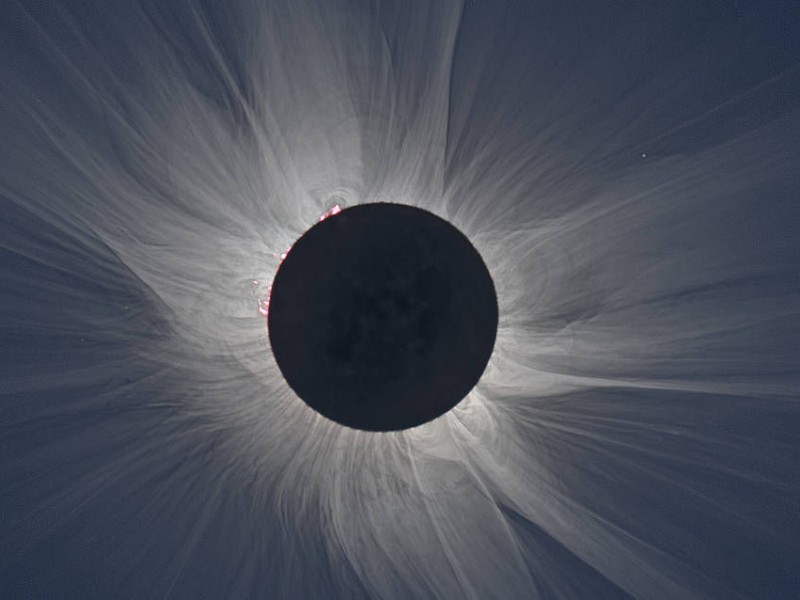
ALBANY — It’s doubtful that anyone is going to feel compelled to shoot a flaming arrow at the sun Monday when it is eclipsed by the moon, but that, it may surprise many to learn, has not always been the case.
While shooting an arrow that’s on fire toward a celestial object more than 90 million miles away is futile, it once seemed like a reasonable attempt to correct what was an unsettling event of night descending during day as the sun mysteriously disappeared.
“The Chippewa people would shoot flaming arrows into the sky, thinking they could re-light the sun,” Sarah Perreault, senior editor at the Old Farmer’s Almanac, said Friday in a phone interview.
The disappearance of the sun, which many ancient cultures personified, along with the moon, was a disturbing event to people who didn’t know why it was happening and had no idea it was coming.
“And then there were native people in Colombia who, when the sky got dark, started promising to be better people, to mend their ways, to work harder because they thought they were being punished,” Perreault said.
One of the more perhaps entertaining theories was that the sun and moon were lovers and the eclipse of the two glowing orbs occurred when they mated.
“There was a tribe in West Africa who believed that when the eclipse happened, it was the moon and the sun coming together and turning out the lights because they needed some private time,” Perreault said.
These are all silly notions now, but at the time people were struggling to find reasons for an event that, while it happens regularly, happens at different locations. Monday’s total eclipse will cross the U.S. from the west coast to the east coast, but the next total eclipse visible in the U.S. will move northeast from Texas through New England seven years from now. A total eclipse will move from California through Georgia and Florida — the Albany area will be at the edge of totality — in 2045.
“I’m in New Hampshire,” Perreault said. “I’m barely going to see anything at all. In seven years, it’s going to pass over Vermont, which is right next door. I’m going to have to make some plans.”
She said with all the information that has been disseminated about Monday’s event, most of the questions folks at the Old Farmer’s Almanac are fielding involve folklore and mythology. Still, some odd misconceptions are hard to shake, even in 2017.
“Even back in the ’90s, we had one and people didn’t understand even then what was happening and there was a little bit of pandemonium,” she said. “But nowadays it’s mostly, ‘Can I look at it?’ and ‘What’s the totality for my area? How much am I going to be able to see?’
“We are urging people to make sure if they do have the eclipse glasses that they’re valid, not knockoffs. There’s some concern about that. If you can’t find any, you also can use welding goggles, but you have a to have a shade factor of 12 or 14. That’s an alternative. A lot of people have sold out of the eclipse glasses.”
While eye safety is a major concern, Perreault said, there are others that are not based on any science, such as an eclipse endangering a pregnant woman’s fetus and poisoning food.
“The pregnant women … they say if they have to leave the house (during the eclipse), they should cover their bellies with some kind of metal to protect the fetus, which we know is not so, or they shouldn’t be carrying sharp objects or eat anything during the eclipse,” Perreault said. “You’re going to tell a pregnant woman she can’t eat anything? That’s just not right.”
One aspect that has been mentioned is the odd animal behavior that is reported to be associated with a total eclipse. She said one Indiana radio station she interviewed earlier said the zoo there is asking people to keep notes on what they observed Monday, especially in regard to any unusual animal behavior.
“This is a great way to gather information as it’s happening,” Perreault said, adding she’s heard reports that animals fall silent during an eclipse. “It might just be they’re confused because it’s the middle of the day and all of a sudden it’s dark outside. It’s turned into nighttime instantly.”
Perreault said she and her coworkers at The Old Farmer’s Almanac, which traces its roots to 1792, weren’t surprised that they’d get calls about the solar eclipse. It was included, along with copious amounts of other astronomical data, in the 2017 edition last fall, and the website almanac.com has quite a bit of electronic space devoted to the high-profile event.
The late timing of the inquiries, however, has been a surprise.
“We came into work on Monday, and the next thing we knew we were getting all these requests to talk to us,” she said. “We said, ‘Yeah, it’s only a week away.’ We were wondering where everybody was.”
Related Articles
My Grandpa Was Killed in World War II. I Met Him Through His Letters Home
Gina Wolf’s grandfather died before she was born. His letters sent to her grandmother from Europe during World War II made it possible to know what kind of man he was.

‘Sounds Like a Mutiny.’ Secret Recording Exposes Claims of Toxic Leadership After a Marine’s Suicide
This week’s War Horse story follows the systemic failures before and after the death of Cpl. Drew Mobley who was the third in two years at Marine Corps Base Quantico to die by suicide.

Southwest Georgia artists recognized at packed opening of exhibition
The annual juried exhibition, one of the region’s largest showcases of visual art, features approximately 46 artists and nearly 90 works spanning painting, sculpture, ceramics, photography and mixed media.
