
MARY BRASWELL: Tuesday is National Cereal Day
LOOKING BACK: One bushel of wheat makes about 53 boxes of cereal
By Mary Braswell
Get ready to celebrate! Tuesday is National Cereal Day. The word “cereal” comes from the ancient Greek word “Cerealia,” a major festival in celebration of Ceres, the goddess of agriculture.
A BOWL OF THIS AND A BOWL OF THAT
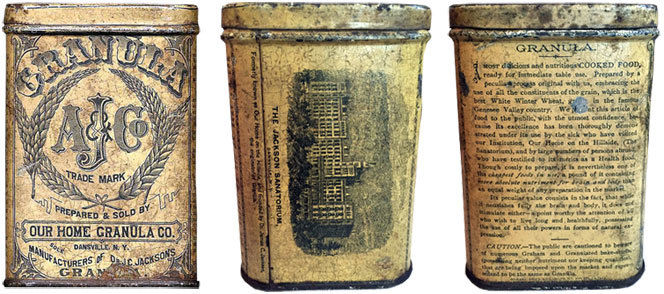
— Granula (with a “u”) is considered to be the first ready-to-eat breakfast cereal ever created. Actually, it had to be soaked in milk overnight before it could be chewed. It was the creation of Dr. James Caleb Jackson in 1863. The doctor operated the Jackson Sanatorium in Dansville, N.Y., where he treated patients with “the water cure,” exercise and healthy foods, all in a smoke- and booze-free environment.
— Lou Gehrig was the first athlete to appear on a box of Wheaties. The year was 1934. The first Wheaties live commercial aired when radio host Red Barber promoted it during a Brooklyn Dodgers game in 1939.
— Snap, Crackle & Pop are the longest-running Kellogg’s characters. Pow joined the Rice Krispies trio briefly in the 1950s, but was soon dropped.
— Just over 49 percent of Americans say they eat cereal from a box with milk every morning.
— According to several sources, cereal ranks as the No. 9 most-purchased item in a grocery store. Milk ranks No. 6.
— The first Kellogg’s cereal on the market was Corn Flakes in 1906. All-Bran arrived in 1916 and Rice Krispies in 1928.
— Cap’n Crunch was introduced in 1963 and remains one of the top pre-sweetened cereals on the market. Cap’n’s full name is Horatio Magellan Crunch and he was born on Crunch Island in the Sea of Milk.
— The only shaped and colored marshmallow to remain unchanged since Lucky Charms became available from General Mills in 1963 is the pink heart. Purple horseshoes were added in 1984 and rainbows in 1992.
— One in every eight boxes of cereal sold in America is Cheerios. About 7,500 boxes of Honey Nut Cheerios are purchased every hour.
— Life Cereal was introduced in 1961 by the Quaker Oats Company as a cereal that “would help kids grow strong.” In the early ’70s, Life Cereal became famous for being the cereal that even Mikey, a finicky little 4-year-old who “hates everything,” loved to eat. “He likes it! Hey, Mikey!” was the catch phrase from the popular Life cereal commercials. They aired nationally from 1972 through 1984, becoming one of the longest-running commercials of all time.
— On “All In The Family,” Froot Loops was a favorite cereal of Archie Bunker. The tasty sweet cereal, by the way, contains no real fruit and all the loops are the same flavor.
— On average, Americans eat 160 bowls of cereal per person each year.
— Kix was the first puffed cereal introduced in the U.S. Using the new technique of the “puffing gun,” which took dough pellets and expanded them into different shapes, Kix hit the market in the year 1937.
— Raisin Bran is the only cereal manufactured by three of the four big cereal companies in the U.S. that has the same name. There’s Kellogg’s Raisin Bran, Post Raisin Bran and Total Raisin Bran, by General Mills. A district court in Nebraska in 1944 determined that “raisin bran” could not be trademarked.
— Thurl Ravenscroft, the man who gave Tony the Tiger his Frosted Flakes voice, was the same man who sang “You’re a Mean One, Mr. Grinch” in Dr. Seuss’ “How the Grinch Stole Christmas.”
— Thirty-five percent of men say they eat the same breakfast cereals they ate as a child.
— Kellogg’s Corn Flakes was eaten aboard Apollo 11, the first to land on the moon.
— Honey Smacks contain 53 percent sugar. Introduced by Kellogg’s in 1953, the cereal has had several mascots including clowns, Quick Draw McGraw and the Smackin’ Bandit. Since 1972, Dig Em Frog has remained the mascot.
— Count Chocula was the first monster cereal introduced by General Mills. It was followed by Frankenberry later in the same year, 1971. Amazingly, a 1975 Frankenberry cereal box (just the box) with the original “big face” monster on the front sold recently on eBay for $434.
IN THE BOX
— Kellogg’s Corn Flakes offered the first cereal prize. With the purchase of two boxes in 1909, the cashier would give “The Funny Jungleland Moving Pictures Book.” These books were given out for about 28 years.
— In 1936, former FBI agent Melvin Purvis hosted a children’s radio program called “Junior G-Men.” He became the face of Post Toasties from General Mills. Boxes offered G-Men prizes of many kinds.
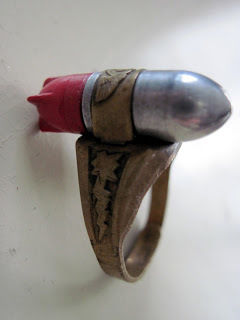
— In 1947, as atomic technology became known, Kix cereal released an atomic silver bullet Lone Ranger ring. Available for 15 cents plus one box top, the ring contained trace elements of radioactive polonium, which would glow when it struck a screen made of zinc sulfide. Instructions declared the ring to be “perfectly safe.”
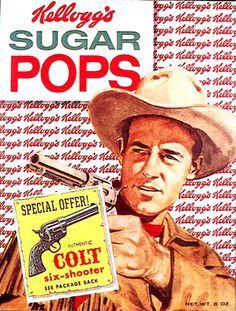
— Corn Pops, originally Sugar Pops, sponsored the show “The Adventures of Wild Bill Hickok.” In 1951, boxes of the cereal included an offer for “an authentic Colt six-shooter.”
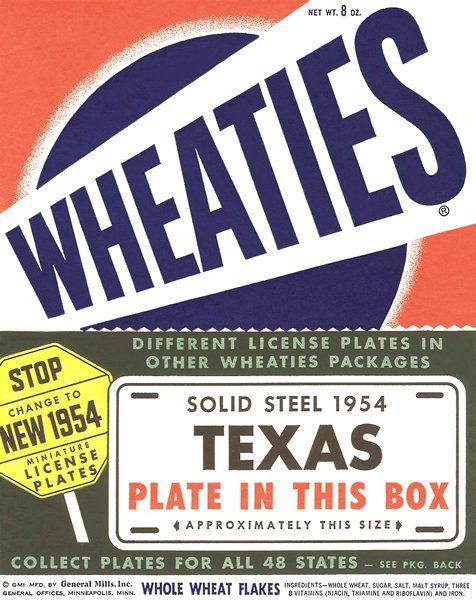
— Boxes of Wheaties sold in 1954 included miniature solid steel license plates from all 48 states. There were different ones in each box and an offer on the back to purchase 12 license plates for 25 cents.
— In 1958, Nabisco Shredded Wheat Juniors offered a plastic Spoonman from outer space. Three were available, Munchie, Crunchie and Spoon-size. The figurines were designed to ride on the spoon as children ate their cereal.
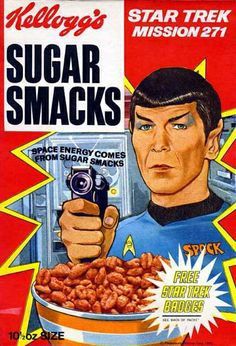
— Specially marked boxes of Sugar Smacks featured Star Trek’s Mr. Spock on the front and one of five different Star Trek badges inside. The year was 1969.
— Several varieties of Kellogg’s cereals offered atomic submarines as prizes. Fueled by baking soda, the subs would crash dive into the water of the sink or tub and resurface.
ONE OF THE BEST!
In the 1950s, CBS’s hit show Sergeant Preston of the Yukon was sponsored by Quaker Oats. To connect the show with the cereal, Quaker would give a deed for one square inch of Yukon Territory in exchange for a box top. The promotion was far more successful than anyone could have anticipated, and Quaker flew through 21 million deeds in just weeks. Although people continue to write in to the company to check on their land, the territory Quaker purchased was reverted back to the Canadian government in 1965.
QUIK QUIZ ANSWER: b) Grape-Nuts (1897)
Each week Albany Herald researcher Mary Braswell looks for interesting events, places and people from the past. You can contact her at (229) 888-9371 or [email protected]. Follow @ABH_MBraswell on Twitter.
Which of the following Post cereals was produced first?
a) Elijah’s Manna (Post Toasties)
b) Grape-Nuts
c) Bran Flakes
d) Shredded Wheat
Answer at the bottom of Marfy’s column.
Related Articles
My Grandpa Was Killed in World War II. I Met Him Through His Letters Home
Gina Wolf’s grandfather died before she was born. His letters sent to her grandmother from Europe during World War II made it possible to know what kind of man he was.
‘Sounds Like a Mutiny.’ Secret Recording Exposes Claims of Toxic Leadership After a Marine’s Suicide
This week’s War Horse story follows the systemic failures before and after the death of Cpl. Drew Mobley who was the third in two years at Marine Corps Base Quantico to die by suicide.

Southwest Georgia artists recognized at packed opening of exhibition
The annual juried exhibition, one of the region’s largest showcases of visual art, features approximately 46 artists and nearly 90 works spanning painting, sculpture, ceramics, photography and mixed media.
