
Retail primary focus for Lee County future
Lee County EDC focuses on improved infrastucture to attract business
By Brad McEwen
LEESBURG — For Lee County Chamber of Commerce and Development Authority Executive Director Winston Oxford, attracting new industry to Lee County is all about knowing the product. And as far is Oxford is concerned, the great product he has to sell is that Lee County as an ideal location for retail.
“Economic development isn’t anything other than selling, and of course, our product is the community,” said Oxford. “I’m a former car dealer from Americus, and I learned a long time ago that in selling, the first thing the salesman has to do is figure out what his product is. So, No. 1, know your product. And No. 2, you’ve got to figure out what your target market is. No. 3, you’ve got to figure out how to reach that target market, and No. 4, you’d be very wise to continuously try to improve your product.”
It’s with those core tenets that Oxford goes about the business of building relationships with prospects in hopes that he can attract another important business to Lee County, something he’s been doing pretty well for the last decade.
Oxford will tell anyone who wants to know that he’s been in the job more than 10 years, 12 to be exact, but that it took some time for him to truly find out what his product was.
What he ultimately discovered was that the county couldn’t hang its growth hat on trying to attract industrial and manufacturing entities, despite the fact that the county had invested in a 144-acre industrial park off of U.S. Highway 82 in the western portion of the county.
“When I came here, Lee County had just developed an industrial park and they had two inhabitants with a third going up out there,” said Oxford. “Two of them were relocations from Dougherty County over to Lee. So these two entities from Dougherty County were going to do an expansion, modernize and that sort of thing, and Lee County just got lucky.”
That luck has somewhat held out over the years. There are now eight entities in the industrial park. Oxford said only about 16 acres of county land are still available in the park, and he has the potential to broker a deal for an additional 15 acres owned by a private party. So available space to locate a new manufacturer or industrial entity is scarce.
“I’ve got about 25-30 acres that I could put an industrial prospect on,” Oxford said.
Although he has the potential to locate an industrial prospect there, Oxford said that with the help of a 1997 University of Georgia study and a SWOT (strengths, weaknesses, opportunities, threats) analysis the county conducted in 2004, he learned that Lee County needed to focus its efforts on commercial investment and attracting retail.
According to Oxford, the 2004 SWOT analysis offered a picture of a county that has been growing rapidly since the early 1990s. By 2002, the commercial tax base had expanded by 70 percent. Additionally, the industrial tax base had increased by more than 400 percent, which would at first glance lead some to believe that the county was growing industry and needed to continue to do so. However, Oxford explained that wasn’t the case.
“When you started with nothing, you know, (the increase) was easy to do,” said Oxford. “So that figure can be misleading.”
Oxford said what really expanded the tax base was commercial and retail, much of which he says has been driven by industrial development to the south of the county, in Albany and Dougherty County.
“We’re a bedroom community for Albany,” said Oxford.
In fact, Oxford is completely convinced that Albany and Dougherty County should be the economic driver for the entire region, and that Lee County should continue to position itself to take advantage of any momentum Dougherty can create.
Oxford explained that, when looking at the two counties from an industrial standpoint, Dougherty is infinitely more equipped to handle a large industrial or manufacturing entity.
Dougherty County has much more industrial land, complete with necessary infrastructure like sewer, utilities, rail access, etc. to offer a prospect, than Lee County does. Dougherty can also offer better incentives to industrial prospects, all of which leads Oxford to believe that Lee simply can’t compete for those types of companies, nor does it need to.
“I spend zero time recruiting industrial,” said Oxford. “If I get a decent industrial prospect, I’ll mention the park out there (in Lee County). But for the most part, I flip it to (the Albany Dougherty Economic Development team). They have the industrial product already in place. They have industrial properties with the infrastructure in place. They have available buildings they can sell for a deal. And they are an old established industrial destination. We’re not.
“Basically, what I do when I go to trade shows is I sell Albany,” Oxford continued. “That insults in some people down there. (But) most people have never heard of Lee County. I sell Albany knowing that if I get the people to take a look down here, I have a shot.”
And what Oxford thinks Lee County has a shot at attracting are the large and mid-sized retailers and service industries that would be drawn to an area that has potential industrial growth.
That approach has already been successful during the time Oxford has been in Lee County, as he’s seen a number of companies choose to locate in Albany’s bedroom community. He offers the example of the development along and near Ledo Road, which in the last 10 years has grown considerably to now include Wal-Mart, Hibbett Sports, three large car dealerships, Tractor Supply Company, Chili’s, Kohl’s, Mellow Mushroom, IHOP and several others.
Additionally, the area has seen the development of more than one multi-unit strip center that houses several smaller, and often local, retailers. All of which contribute to the county’s tax base, which Oxford says is the most important thing that can happen in the county.
“I can’t think of a politically correct way to put this, but we need tax base more than we need to create jobs,” said Oxford. “Now, every community needs to create jobs, but it does Lee County just as much good for those industrial jobs to be created in Dougherty because 85 percent of the people that live in Lee County work in Albany and Dougherty County.”
Oxford uses the example of IHOP, which has been a significant addition to the tax base since it arrived in Lee County, to illustrate his point.
“The reason we need additional tax base so bad is that, over the last 25 years, Lee County has grown residentially, so the population’s more than doubled,” said Oxford. “And residents put a large demand on government services. Most households, at least those that have kids, do not pay enough property tax for the local government to provide those services to the households and break even. Most of them are what I call ‘tax consumers,’ rather than tax contributors.
“On the other hand, IHOP pays, I think, about $8,000 a year in property taxes. They don’t send any kids to school, and they have very little demand on local government services. I mean very little demand. And what demand they do put on it, like trash pickup and water and sewer, they pay for each month. In addition to that, they also generate about $60,000-65,000 a year, IHOP alone, in that 3 percent Local Option Sales Tax. I mean that’s a tax contributor rather than a tax consumer.”
That analysis leads Oxford to ask what in his mind is the most critical question about how to best develop Lee County and increase the tax base.
“Why should we spend probably $3 millions buying property and developing it for industrial when we’re going to have to give that away?” Oxford asked rhetorically. “Hell, just keep the $3 million. That’s four or five mills right there. Just leave it in the general fund to spend on local government services. In Lee County’s case, instead of developing new industrial properties, we’d be better served to invest the taxpayers’ money on new infrastructure, such as water, sewer, and — Guess what? — roads.”
In fact, Winston said that over the past few years, the county has had interest from several “big box” retailers and junior anchor retailers that see the potential in Lee County, primarily along U.S. Highway 19 and U.S. Highway 82, due to improving infrastructure.
That is why the county has focused a considerable amount of attention on three key road projects recently.
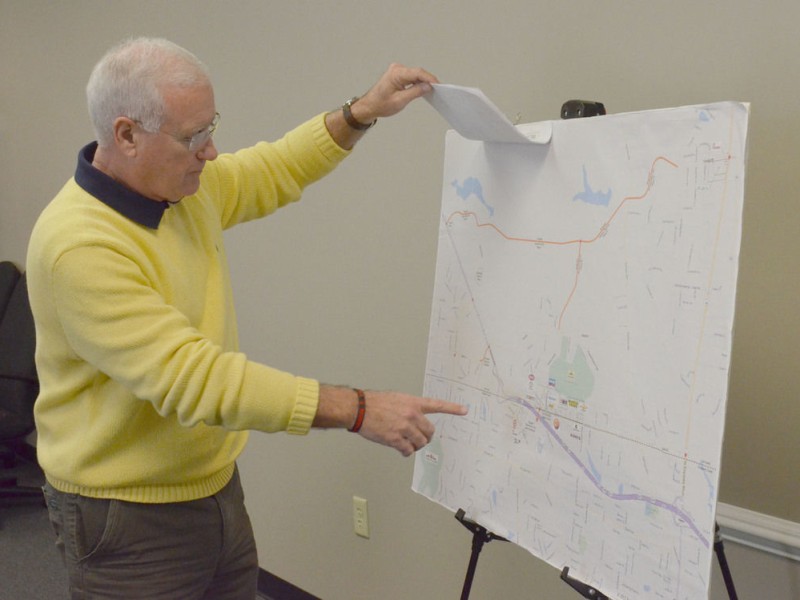
Oxford said he believes that once the Marlow Lane Extension to 82, the Forrester Park Extension from 19 to 82, and the Westover Boulevard extension to Ledo Road are completed, the county will be primed to reap the rewards of those infrastructure improvements.
Using the example of the Marlow Lane Extension, which he’s particularly excited about because the state is footing most of the bill for the work, Oxford explained why road improvements make good sense.
“Marlow Lane will cut through and ultimately connect to Doublegate,” he said. “What retailers look at before they invest is the number of households and the number of people in those households, within a five-minute drive to a specific site. Also, how many are within a 10-minute drive, or a 15-minute drive or a 50-minute drive. That’s not distance, it’s drive time.
“With Doublegate, and not just the county club but the whole area, it brings in people with median incomes that exceed $70-something thousand a year. And you’re looking at over 100,000 people within a 10-minute drive of Walmart. Marlow cuts the drive time by seven minutes to get from Doublegate over to Walmart.”
Even though the Marlow project has only just begun, Oxford said companies have already shown interest in locating in Lee County because of it.
“I won’t mention the site, but I’ve got a good national big box working, and have had for a number of months now,” he said. “That little $350,000 investment that we actually got the state to make part of it, it’s going to increase the potential. Like that big box prospect that I’m working with, there’s no way that site they were looking at would qualify without Marlow.”
Although Oxford has put in considerable personal effort to develop those kinds of prospects, he’s also quick to laud county leaders, who have worked hard to make infrastructure developments a priority, despite some opposition from residents.
“I have to say, since I’ve been here, at least for the last 10 years, that Lee County’s elected officials have listened to me,” said Oxford. “I’m not saying they haven’t hesitated from time to time because it can be a political issue, but for the most part they have listened.”
Because of that positive attitude toward growth that seems to permeate Lee County these days, Oxford gets downright giddy when he thinks about future projects. He said he also believes that Lee County, as well as Albany and Dougherty County, has a bright future ahead.
“I just feel really positive about it,” said Oxford. “I also feel pretty positive about Albany being successful and Dougherty County being successful going forward, with creating jobs on the industrial side.
“There are always challenges, but I can’t pick one that’s really that terribly negative. We have so much going for ourselves, with so much infrastructure going in place now, with the roads. We’ve got sewer in the right places. We’ve got a great product to sell.”
Related Articles
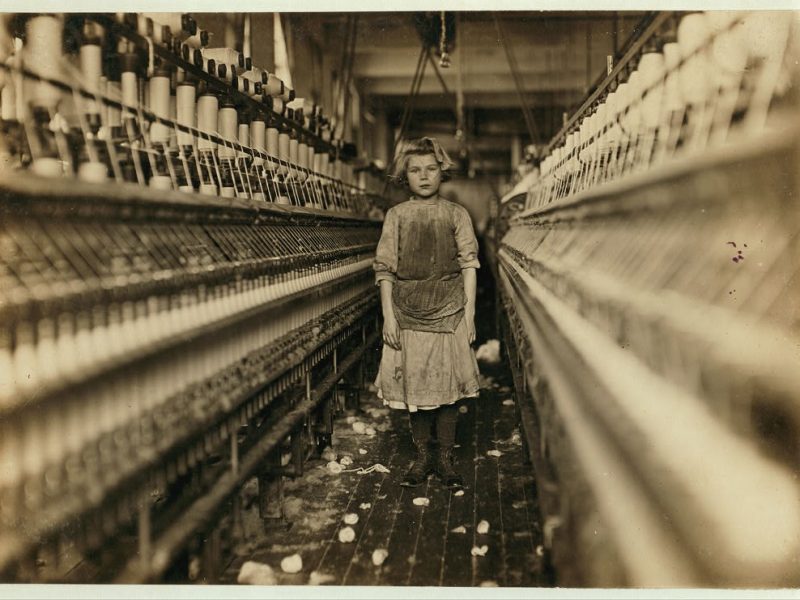
From cotton to cloud: In the data center debate, is rural Georgia once again being asked to carry the cost?
Across much of rural Georgia, the abandoned cotton warehouses and shrinking tax bases remain — enduring reminders that industries built to serve distant markets do not necessarily stay rooted in the communities that first sustained them.

My Grandpa Was Killed in World War II. I Met Him Through His Letters Home
Gina Wolf’s grandfather died before she was born. His letters sent to her grandmother from Europe during World War II made it possible to know what kind of man he was.

‘Sounds Like a Mutiny.’ Secret Recording Exposes Claims of Toxic Leadership After a Marine’s Suicide
This week’s War Horse story follows the systemic failures before and after the death of Cpl. Drew Mobley who was the third in two years at Marine Corps Base Quantico to die by suicide.
