
Sea turtles having a prolific season
By Donna Stillinger and Anna Hall
The Brunswick News
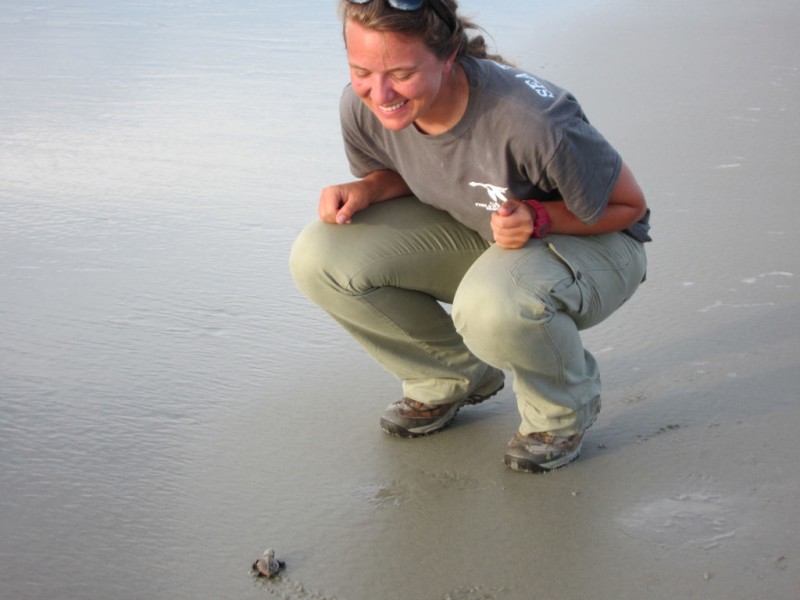
BRUNSWICK (TNS) — It’s that time of year again. Time for the nighttime searches and early morning patrols by researchers and volunteers looking for nesting sea turtles along the beaches of the Georgia coast.
With a banner year for nesting last year, researchers believe this year could be even bigger — and they have the science to back it up.
“Sea turtle nesting varies from year to year,” said Kimberly Andrews, the research coordinator for the Jekyll Island Authority. “Females nest every two or three years, it’s completely cyclical. We will see higher and lower numbers of nesting sea turtles each year based on females set to return. With tagging and genetic data now available to us, we can look at it and get a relative number and can even figure out which females will come back when.”
Even getting older doesn’t stop the sea turtle from nesting, Andrews added. As turtles get older, they may have a longer interval for nesting,or may lay fewer eggs.
So far this season is off to a fast start.
This time last year, only one sea turtle nest had been found on St. Simons Island. Fast-forward to the present, and Catherine Ridley has good news to report.
As the leader of the St. Simons Sea Turtle Project, which works in conjunction with the Georgia Department of Natural Resources to monitor, track and protect sea turtles and sea turtle nests specifically on St. Simons Island, Ridley is thrilled to see the summer nesting season play out more successfully this year. As of late Monday, five nests had been found on the island’s beaches, with the fifth nest detected on Saturday, Ridley said.
“The record for St. Simons is six, since DNR started tracking nests in 1989,” Ridley said. “It’s looking like this is going to a great year. I’m just thrilled, and our volunteers have been very busy.”
Historically, the island has not been one of the more popular spots for nesting sea turtles along the Georgia coast, largely due to the amount of development and activity seen along certain segments of its shores. That may now be changing, and to keep the momentum up, Ridley is reminding beach residents and visitors to stay away from possible turtle nests.
As of Saturday, Andrews said researchers had seen 36 individual turtles on Jekyll Island, with 25 of those back for another nesting year wearing tags from previous stops.
Four turtles have nested twice already. The total number of nests as of Monday, according to the Georgia Department of Natural Resources, is 53 on Jekyll and more than 830 in Georgia. The oldest turtle GSTC staff has seen this so far this season was tagged on Jekyll in 1992.
“We are seeing really consistent nesting,” Andrews said. “We had only one, lone turtle nest for about a week, but since then, we have had turtles nesting every night. It’s a trend we are hearing is happening for all of Georgia.”
The first tagging of sea turtles started in 1958, and the first Loggerhead tagged was on Jekyll Island. Andrews said tagging started consistently in the mid-1990s.
“The Georgia Sea Turtle Center opened in 2007, and turtle walks started in 2008,” Andrews added. “These walks, along with our Ride with Patrol program that we started in 2014, are a great way to give the public a chance to possibly experience sea turtle nesting and to see how cool sea turtles really are.”
The walks and patrols, which people can book through the turtle center, generate more interest in and money for sea turtle conservation, Andrews said.
“These are donation-based programs and they are circular … people like that, they want to do something tangible and they get a really impressionable experience,” Andrews added. “We couldn’t operate the nesting beach without these donations.”
Related Articles

My Grandpa Was Killed in World War II. I Met Him Through His Letters Home
Gina Wolf’s grandfather died before she was born. His letters sent to her grandmother from Europe during World War II made it possible to know what kind of man he was.
‘Sounds Like a Mutiny.’ Secret Recording Exposes Claims of Toxic Leadership After a Marine’s Suicide
This week’s War Horse story follows the systemic failures before and after the death of Cpl. Drew Mobley who was the third in two years at Marine Corps Base Quantico to die by suicide.

Southwest Georgia artists recognized at packed opening of exhibition
The annual juried exhibition, one of the region’s largest showcases of visual art, features approximately 46 artists and nearly 90 works spanning painting, sculpture, ceramics, photography and mixed media.
