
BREAKING NEWS: 3rd explosion rocks nuke plant in Japan
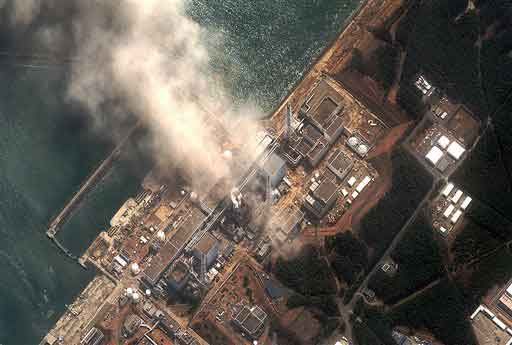
Photo by Jim Hendricks
Associated Press
SOMA, Japan (AP) — A third explosion in four days rocked the earthquake-damaged Fukushima Dai-ichi nuclear plant in northeast Japan early Tuesday, the country’s nuclear safety agency said.
The blast at Dai-ichi Unit 2 followed two hydrogen explosions at the plant — the latest on Monday — as authorities struggle to prevent the catastrophic release of radiation in the area devastated by a tsunami.
The troubles at the Dai-ichi complex began when Friday’s massive quake and tsunami in Japan’s northeast knocked out power, crippling cooling systems needed to keep nuclear fuel from melting down.
The latest explosion was heard at 6:10 a.m. Tuesday (2110 GMT Monday), a spokesman for the Nuclear Safety Agency said at a news conference. The plant’s owner, Tokyo Electric Power Co., said the explosion occurred near the suppression pool in the reactor’s containment vessel. The pool was later found to have a defect.
International scientists have said there are serious dangers but not at the level of the 1986 blast in Chernobyl. Japanese authorities were injecting seawater as a coolant of last resort, and advising nearby residents to stay inside to avoid contamination.
Tokyo Electric Power said some employees of the power plant were temporarily evacuated following Tuesday morning’s blast.
The accidents — injuring 15 workers and military personnel and exposing up to 190 people to elevated radiation — have compounded the immense challenges faced by the Tokyo government as it struggles to help hundreds of thousands of people affected by twin disasters that flattened entire communities and may have left more than 10,000 dead.
The crisis also has raised global concerns about the safety of such reactors at a time when they have enjoyed a resurgence as an alternative to fossil fuels.
Japanese authorities said there have been no large-scale radiation releases, but have detected temporary elevations in levels, and have evacuated tens of thousands of people from around affected reactors. Prevailing winds were pointing out to sea, and U.S. ships assisting tsunami recovery moved further way to avoid potential danger.
Copyright 2011 The Associated Press.
Related Articles

Dougherty Jail graduates first class of female GED recipients
“It was an escape. I can say this has been challenging. I want to express my gratitude for being able to attend this program.”

From cotton to cloud: In the data center debate, is rural Georgia once again being asked to carry the cost?
Across much of rural Georgia, the abandoned cotton warehouses and shrinking tax bases remain — enduring reminders that industries built to serve distant markets do not necessarily stay rooted in the communities that first sustained them.

Dawson Council approves $400,000 lifeline in emergency meeting as financial accountability remains elusive
Less than a week after city officials publicly acknowledged the City of Dawson cannot continue operating without additional financing, the Dawson City Council convened a hastily called emergency meeting Tuesday evening and unanimously approved authority to borrow up to $400,000 through a tax anticipation note.
