
Churches differ in views on capital punishment
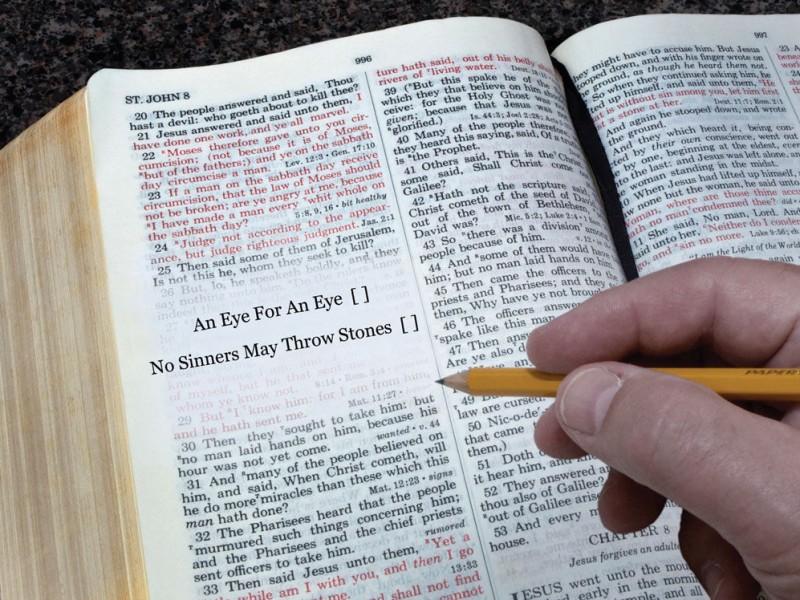
Many local churches have official positions on capital punishment while some do not. Some pastors wonder why conservative churches condemn abortion while giving the go ahead to state sponsored executions.
Jim West
ALBANY — Whether or not you’re a believer, the image of a crucified Jesus evokes the world’s most famous execution. For some 2000 years, churches dedicated to what many believe are the words and deeds of Jesus continue to be built and to endure.
In contrast to the harsh and bloody message of the old testament, Jesus spoke of love, most say, and so it might be easily assumed all Christian churches might view the death penalty in ways similar to one another. there are, however, some big differences.
While capital punishment may be attacked or defended on a number of fronts, churches which condemn the death penalty tend to do so with concern toward the soul of the convicted, with the admonishment that we should not “play God.”
Leigh Ann Raynor, pastor of Porterfield United Methodist Church, says her church’s position is to oppose the death penalty in “all cases.” Raynor cites The United Methodist Book of Discipline, which is intended as a spiritual and moral guide for all United Methodists.
The Book of Discipline states that while the church is “deeply concerned” about the value of any life taken by a murder or homicide, “when governments implement the death penalty, then the life of the convicted person is devalued and all possibility of change in that person’s life ends.”
According to the Book of Disciple, Raynor said, ending the life of a convicted person prematurely could therefore deprive the person of a reconciliation with Christ, which through repentance is offered to everyone.
Raynor stressed that the position of the United Methodist Church does not necessarily represent the opinions of all those who attend Porterfield.
Eddie Adams, pastor of Victory Tabernacle Assembly of God, says that neither the Assembies of God as a whole, nor his local church, have a specific guideline for the subject.
According to national church material provided by Adams, AOG members are a mixed group when it comes to the topic of capital punishment, but admits that “most likely” a greater number of members favor execution for certain types of crimes, such as premeditated murder, than those who oppose capital punishment “without reservation.”
The AOG material goes on to say that most of their church members tend to form their opinions based on the perceived endorsement of capital punishment in the Old Testament, and find nothing to negate that directive in the Testament of Jesus Christ.
“As a pastor, I don’t have a problem with the laws of the land and the way our judicial system is set up,” Adams said. “Neither do I have a problem making a decision based on evidence without considering myself judgmental.”
Jason Burchfield, pastor of Albany Christian Church, shares his satisfaction with the current governmental position on capital punishment and said that his church has no particular position on the death penalty.
“It’s a governmental issue, not an issue for the church,” Burchfield said. “Government is there to protect society and scripture tells us we should support our government.”
When asked, however, Burchfield said he would vote to abolish the death penalty.
“A life term in prison would be sufficient,” he said.
It would be difficult to find a more energetic or vocal critic of the death penalty within the Christian ranks than Garrett Andrew, pastor of First Presbyterian Church in Albany. Andrew makes his feelings clear.
“I am personally pro-life in all situations,” Andrew said. “and I can’t help but find the dichotomy of some individuals — and churches — disturbing when they can come out against abortion and not against executions. It’s confusing too, that these conservatives seem to be against all aspects of government, and yet when it comes to states killing people, they fall right in line.”
According to material supplied by Andrew, the official position of the Presbyterian Church is that “capital punishment cannot be condoned by an interpretation of the Bible based upon the revelation of God’s love in Jesus Christ,” and that Christians should “seek the redemption of evil doers and not their deaths.”
In 1978, the General Assembly of the Presbyterian Church referred to capital punishment as “an expression of vengeance which contradicts the justice of God on the cross.”
Andrew related the New Testament story of the woman who was found in an act of adultery, a capital offense by Old Testament rules.
“The accusers brought her before Jesus and reminded him what the law of Moses called for. They tried to tempt him into saying the wrong thing. But he acted like he hadn’t even heard them. He stooped down and wrote something in the dirt with his finger. Nobody knows what he wrote. Now, I like to think that he was writing their sins for them to see, but we don’t know. They kept after him to answer and finally he stood up and invited those of them without sin to throw a stone. Of course they all left.”
Father Barry Stanton at St. Teresa’s Catholic Church said that the current system of capital punishment is based on the Old Testament dictum of “an eye for an eye,” and is unnecessary in modern times. In addition, he believes the U.S. legal system favors the wealthy and that the death penalty has little or no impact as a deterrent against crime.
“You don’t have to take a life,” Stanton said. “Christian scriptures show that His death was for the just and the unjust. You can assure the safety of society without taking a life. In Europe it’s very secular now. Almost everywhere the death penalty has been abolished. They’ve done it for humanitarian reasons.”
In June of 2000, The Southern Baptist Convention passed a resolution supporting “fair and equitable use of capital punishment.” Matthew Nance, said that Byne Memorial Baptist Church, where he is pastor, has no particular position on the subject.
Nance himself supports the death penalty, he said, but states that we need to be as “gracious and cautious as possible.” According to Nance, the death penalty does serve as a deterrent to heinous crime.
Kelly Levi, who is studying to be a Rabbi, divides her time between her studies in New York and Temple B’nai Israel in Albany. According to Levi, Reform Jews, such as those attending B’nai Israel, are encouraged to reject the death penalty.
Although not Christian, those of the Jewish faith worship from the Torah, essentially the Old Testament of the Christian Church.
“Torah commands us ‘Thou shalt not murder,” Levi said. “When a person is put to death in such a way as during a state execution, we consider it murder.”
Related Articles

Albany Herald – July 7, 2026
Lee County stands alones without… DOT say delay in Oglethorpe Bridge… ASU’s Leah Cowen Selected for…

Classifieds – July 7, 2026
Albany Herald Classifieds: July 7, 2026

Lee County JROTC cadets honored by DAR for citizenship and leadership
Several Terrell County High School JROTC cadets were recognized for outstanding citizenship, leadership and service during the school’s recent JROTC Honors Night, receiving awards from the Old Herod Chapter of the National Society Daughters of the American Revolution.
