
Albany murder rates plummet
J.D. Sumner
ALBANY, Ga. — In 1988 the Cosby Show was tops on TV, Rain Man was setting records at the box office and Albany became known as the murder capital of the U.S.
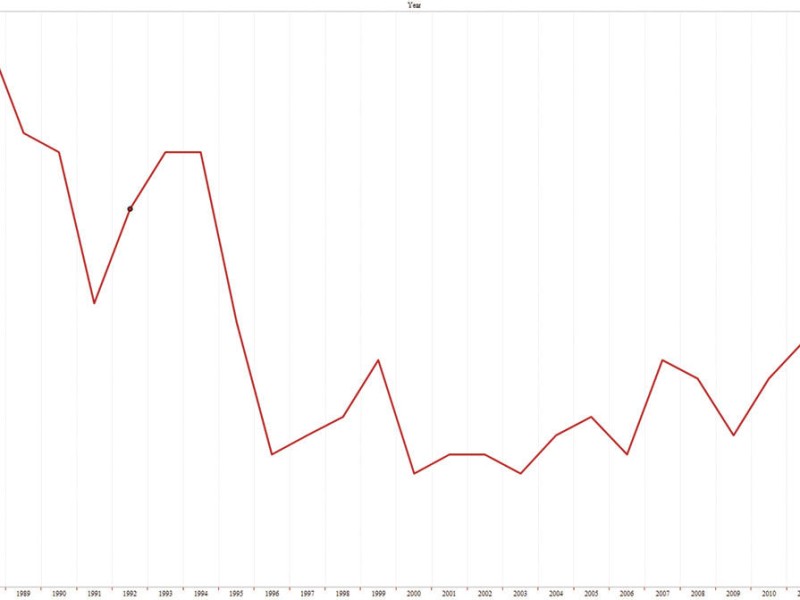
More accurately, Albany had a higher percentage of murders per capita than any other city in the country. Its 24.1 murders per 100,000 people topped even the percentage of New York City who came in at 22.7 per 100,000 in 1988.
That year 29 people where killed — a high water mark that earned the city its dubious nom de plume and cemented the perception held by many in Southwest Georgia, the state and beyond that Albany is unsafe place to live.
It’s a perception that, 24 years later, still grips the community — rightly so when one looks at the majority of violent crime categories like robbery and aggravated assaults.
But in that murder category something inexplicable has happened; something unexpected and surprising:
The numbers are trending at their lowest levels in recent memory.
If no one kills another person before midnight on Dec. 31, Albany will have had four homicides for the year in 2012 — a far cry from the 13 it witnessed in 2011.
In fact, four would be the fewest number of homicides in Albany since at least 1979, the last year records were immediately available. The lowest homicide total prior to this year was in 2000 and 2003 when six people were killed. The average between 2012 and 1988 is 13.1 each year.
Local officials aren’t exactly sure why the numbers have dipped over the years but some point to an increased awareness of domestic violence and a more proactive stance by legislators, law enforcement, prosecutors and judges to intervene in domestic violence relationships before they end in murder.
According to old Herald news clippings, the majority of murders in 1988 were domestic in nature, meaning that they happened people who were living together, in some kind of relationship or were closely related.
Fast forward to 2012 and the cases are different.
Darius Wallace and Dontavious Luke were each shot to death in separate, non-domestic violence related incidents in 2012. The killers of Anthony Westbrook and Judith Hernandez remain at large.
Silke Deeley, the executive director of the Liberty House — a domestic violence shelter that not only provides temporary living arrangements for those escaping domestic violence but also help in the form of temporary protective orders and more — said that she fully believes the dip in the numbers is a result of a renewed focus on domestic violence cases.
“I think it’s a result of a few things, namely an active legislature that has created new laws over the years to aid in the prosecution of domestic violence cases; better training and police work by police officers who intervene before someone is killed; and judges who have taken domestic violence seriously,” Deeley said.
Nationally, murders are still on the rise in many of the major cities across the country with many of the deaths coming at the hands of people who purport to love one another, Deeley says.
Deeley also points to an improved cultural awareness of domestic violence that has been aided by television and now social media, with helping improve the social consciousness.
District Attorney Greg Edwards was a budding young attorney in 1988 when Albany earned its dubious moniker. In 1990, when he first started at the district attorney’s office as a prosecutor, he became responsible for prosecuting a lot of the violent offenders who were behind the murders and agrees with Deeley that new domestic-violence related legislation coupled with more vigorous enforcement by police have helped to curb the murders.
“When I was working in civil practice in the late ’80’s, a lot of domestic violence cases were escalating because of ineffective police tactics,” Edwards said.
He remembers an assault in the parking lot of Georgia Legal Services office where a woman was physically attacked by her spouse.
“The police came and did what I would say was the norm back in that day, they separated them and made the guy leave, despite the fact the woman had visual injuries,” Edwards said.
The man later came back and rendered the woman’s vehicle inoperable.
It wasn’t just police tactics, however. Judges would often grant bonds to those who were likely to re-offend sometimes sending murder defendants back out on to the streets without any special conditions to stay away from the their spouses.
“I’m with Silke. I think an improved response by law enforcement and by the judges has helped,” Edwards said. “We also have programs that help victims get their feet on the ground; domestic violence shelters and other ways of making sure that people are removed from violent situations before someone is killed.”
Related Articles

Albany/Dougherty County among local governments looking at data centers
“Our understanding is that data center developments look like an easy fix for the problems that face rural America, but this is a Faustian deal at best. You can see the effects in communities across the state and country.

Albany Herald – July 14, 2026
In Lee County, they saw it… Bigger budget will mean improvements at… Small actions can help save…

Classifieds – July 14, 2026
Albany Classifieds and Legals…
