
Albany officials: Bethel housing project worth the investment
Carlton Fletcher
ALBANY, Ga. — With memories of other failed certified Community Housing Development Organization (CHDO) projects burned in their memory — most recently the $374,000 Cutliff Grove community development attempt that is expected to eventually impact local taxpayers — many citizens in Albany and Dougherty County decried the Albany City Commission’s recent decision to approve some $500,000 in Housing and Urban Development Home Investment Partnership (HOME) funds for use by the Bethel Housing Community Development CHDO.
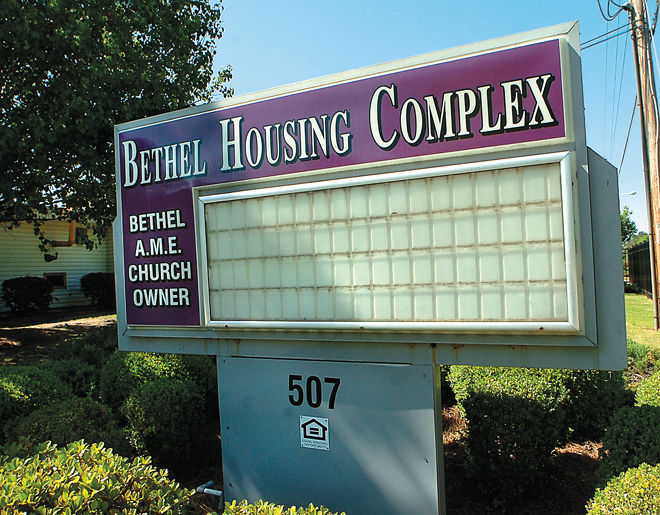
Bethel Housing, the development arm of Bethel AME Church, wants to use the HOME funding as part of a $10.6 million upgrade of a 98-unit low- and moderate-income apartment complex at 507 Swift St. in Albany. The complex, according to tax records, was built in 1973, went through a $1.4 million renovation in 1989 and has a current fair market value of slightly more than $2.5 million.
City officials, wary of such local projects’ past failures, say Bethel’s long-term management of the Swift Street complex, its own investment in the proposed project and its mission of providing affordable and safe housing for citizens who would otherwise not have a decent place to live lessen the possibility of forfeiture on the project. Such a scenario would leave the city liable for the half-million dollars in HOME funding.
“We’re talking about a group that has maintained and managed that property successfully for more than 30 years,” Assistant City Manager Lonnie Ballard said. “They have a good track record, and if you look at their mission you see an organization dedicated to providing safe, affordable, decent housing to low- and moderate-income families.
“Imagine what the cost to the city would be if this apartment complex came offline and we had to try and find 98 additional units for the displaced families. This money — $500,000 — is significant, but you’ve got an organization with skin in the game. Bethel Housing has put their resources where their mission is.”
Interim Department of Community and Economic Development Director Shelena Hawkins said the $500,000 in HOME funds, which had accumulated since 2007 as 15 percent of the city’s total HUD allocations — an amount required by the federal agency to be set aside and awarded to a certified CHDO — would be returned to HUD if not utilized. She said careful consideration was given three applicants before Bethel’s project was selected.
“This is not a fly-by-night decision,” Hawkins said. “A review panel made up of representatives of our department, Planning, Engineering and a local banker with underwriting experience looked over proposals from Bethel, The Oaks at North Intown Homeownership and Mt. Olive Community Outreach Center before determining (the Bethel project) to be the best qualified for use of the funds.”
Laura McCool, a DCED housing program manager, said the process of selecting a CHDO to receive the HOME funding was carried out in a manner that eliminated the possibility of favoritism.
“Our review panel awarded points for certain criteria and came up with a tally to determine the best qualified project for use of the funds,” she said. “And even with that scrutiny, the process is not complete. No local funding will be issued until (Bethel Housing) has secured all its funding for the project.”
Hawkins said the recommendation to approve Bethel’s request for the HOME funding was based on its staff’s knowledge of the HOME program regulations, its experience in developing and managing HOME rental units and its evidence of leveraged funding for the project.
The Swift Street apartment complex includes 14 one-bedroom, 42 two-bedroom, 21 three-bedroom and 21 four-bedroom units among its 14 housing units. Bethel Housing has partnered with IDP Housing of Valdosta and Massachusetts-based Stratford Capital Group to put together the funding proposal for the project.
A detailed project budget shows costs ranging from $299,800 for predevelopment (including architectural and engineering), $2,457,729 for acquisition (in which the Bethel Housing CHDO will assume the HUD-insured mortgage currently held by Bethel Housing Partnership), $4,781,616 for construction and $3,101,966 in so-called “soft and carrying costs” (including $244,500 for relocation of residents during construction).
IDP Housing’s chief financial officer, Steve Brooks, tried to address concerns over the $10.6 million price tag during a brief presentation before the City Commission voted on the HOME allocation at its March business meeting, but he said this week he may not have gotten his points across.
“That amount is not a figure we wanted; it’s what it takes to complete this project to the standards required,” Brooks said. “One thing I don’t think people (who are complaining about the allocation) are looking at is that almost all of that $500,000 amount is going to come back to Dougherty County in sales taxes for construction supply purchases locally.
“Plus property taxes have been paid on that complex every year since 1974.”
Dougherty County Tax Director Denver Hooten said that Bethel had paid its property taxes through 2012 (that year’s total was $40,660.32). Tax records show that Bethel applied for tax-exempt status on the property in 2007 and was denied by the county’s Board of Assessment. That ruling is currently under appeal in Superior Court.
“If the court rules (in Bethel’s favor), they would be eligible to have the taxes they’ve paid (since filing the tax-exempt application in 2007) returned,” Hooten said. “But they’ve kept up payment on the taxes in the meantime.”
Brooks said construction on the apartment complex must be completed to strict HUD and Georgia Department of Community Affairs standards.
“Energy efficiency is a very big thing now,” Brooks said. “For instance, we’re required to use 40-year shingles, and we’ll take off all vinyl siding and use a much more durable hardyboard. There are also a lot of other little requirements: for windows, carpeting, air conditioning.
“We do this right, because we’re putting ourselves and our funding stake at risk as well. If, for instance, Bethel allowed an unqualified resident to stay in one of the units, the property could be foreclosed on and both IDP and Stratford would lose its investment in the project.”
Community and Economic Development Program Compliance and Accounting Manager Phyllis Brown said rent at the complex is based on the area’s median income.
“The median income in our area is $49,150, and renters in the complex must earn at a level of 60 percent or below that income to qualify,” Brown said. “The income rate is adjusted to specified criteria, and no tenant may pay more than 30 percent of their income on housing..”
Asked by City Commissioner Bob Langstaff how his group could justify a $10.6 million price tag on the project when “you could build every family there a new $100,000 home and come out cheaper,” Brooks said a number of factors make such a swap-off unreasonable.
“You have to look at land availability,” he told Langstaff. “Where could you build 98 new homes in the city?”
Brooks also said razing the apartments and starting from scratch would not be economically feasible.
“Trust me, we look at such proposals carefully,” he said. “One thing you have to consider is that code and zoning ordinances have no doubt changed since these apartments were built in 1973. Current zoning might not allow us to build these apartments back. You’d no doubt have parking and setback issues.”
Brooks said relocation costs also figure into the project.
“There are 14 buildings, and we’ll work on three or four of them at a time,” he said. “We will not work on any building with a resident still in it. Part of our cost includes relocating residents while work is ongoing. We have a person on our staff who manages this, and she talks one-on-one with each resident to help them find suitable temporary housing.
“We hire the mover, and we replace any item that might be damaged in the move. But one thing I should note is that, no matter where the residents stay during the construction period, they still continue to pay the rent they are currently paying. If, for example, someone were paying $300 in monthly rent and they found a temporary location that costs $500 a month, we would be responsible for the other $200.”
The city’s allocation of $500,000 in HOME funding, which is still subject to HUD approval, is a small part of the overall cost of the Bethel Housing renovation project. Stratford Capital is investing $3.765 million in exchange for tax credit benefits earned through the Community Reinvestment Act; $5,218,540 will come from transfer of the HUD-insured mortgage and from a HUD flex subsidy loan; $500,000 will come from Federal Home Loan Bank of Atlanta’s Affordable Housing Program; $500,000 will come from Bethel cash reserves, and $157,571 will come from rental operations.
Triumph Housing Management Group of Atlanta will be involved in the project to assure Bethel Housing maintains compliance with federal, state and local standards and guidelines.
“We’ll manage the daily operations of the (apartment complex),” Yoshonda Williams, Triumph’s director of compliance, said of her company’s involvement in the project. “We work hand-in-hand with the development team to assure compliance, and we’ll remain under contract to manage the development once the renovation is completed.
“We will be working, I think it’s important to point out, with the Bethel Housing Community Development CHDO, not with the church itself. The church will not be the owner of this property.”
Brooks said Triumph’s CEO, Paul J. Ponte, had contacted IDP Housing to gauge the company’s interest in the Bethel project.
“We’re a faith-based company,” Brooks said. “Improving people’s lives through helping provide quality housing is part of our mission, a mission we share with Bethel and with Triumph. This is just part of what we do.
“We met with the ownership of this complex, and after talking with them felt their mission was similar to ours. They have a history of concern for how the residents in that community are treated.”
Ballard, acknowledging issues the city has had with certain other CHDOs in the past, points to the accomplishments that are part of the city’s allocation of HOME funds, including: 68 rental units rehabilitated, 94 homebuyers assisted, 60 homeowners assisted and 222 low- or moderate-income families assisted.
“Albany has been designated an entitlement community; there are real needs for these types of programs here,” he said. “We’re fortunate to have a mechanism in place that allows us to help provide decent housing without utilizing General Fund dollars. By working jointly, we’re able to maximize the impact we can have on the community.”
Such positives, DCED officials say, outweigh risks when city-backed funding is allocated.
“Bethel Housing has a stake in this game,” Brown said. “They’ve been managing that project for more than 30 years; they’re not going to be here and gone. You can count on them to be here.”
And the rewards, Hawkins notes, are significant.
“For these residents, there’s a renewed sense of pride when they see the work that will go into this renovation project,” the Community and Economic Development director said. “It has an overwhelmingly positive impact on your place in the community when you feel someone cares.”
Related Articles

Albany Herald – July 21, 2026
From cotton to cloud… Dougherty Jail graduates first class of… Worldwide United
Way leader speaks…

Classifieds – July 21, 2026
Albany Classifieds and Legal Notices:

Albany Herald – July 18, 2026
Georgia Trust for Local News partners with… Adult leadership group spreads concept to… Lee County homeowners have until Aug. 1 to…
