
Cutliff Grove options examined
Carlton Fletcher
ALBANY, Ga. — Cries of indignation and outrage spread throughout the city last week when officials with the Cutliff Grove Family Resource Center asked the Albany City Commission to restructure debt the development agency owes on a low-income housing project it took over from the city in 2008.
Cutliff Grove representatives asked the city to reduce the principal on a $1.5 million Housing and Urban Development block grant it received to manage the South Albany New Nativity Village housing complex and to do away with the 3 percent interest it is paying on the grant so that the agency can make the almost half-million dollars in repairs it says the complex needs.
The request left city officials to ponder what action they could take to keep Cutliff Grove from caving under the weight of the $6,324 monthly payments the development organization is currently making.
“I’m not trying to pass off responsibility for this project; I fully accept it on behalf of the city,” City Manager James Taylor said Friday. “But most of us who are dealing with it now were not actively involved in this process when it was happening. I do think, though, that Cutliff Grove was ill-prepared to take this project on from Day 1.
“Frankly, I don’t think they understood what it takes to run a project of this magnitude. They hired a consultant who was supposed to help them with the process, but he apparently did not do a very good job.”
Cutliff Grove program manager Juanita Nixon, who did not respond to a message left Friday, told the City Commission at its Feb. 19 work session that the agency needed around $440,000 to make repairs the city had agreed to do when it approved the block grant that allowed Cutliff Grove to take over the housing program.
REPAIRS ‘NOT STRUCTURAL’
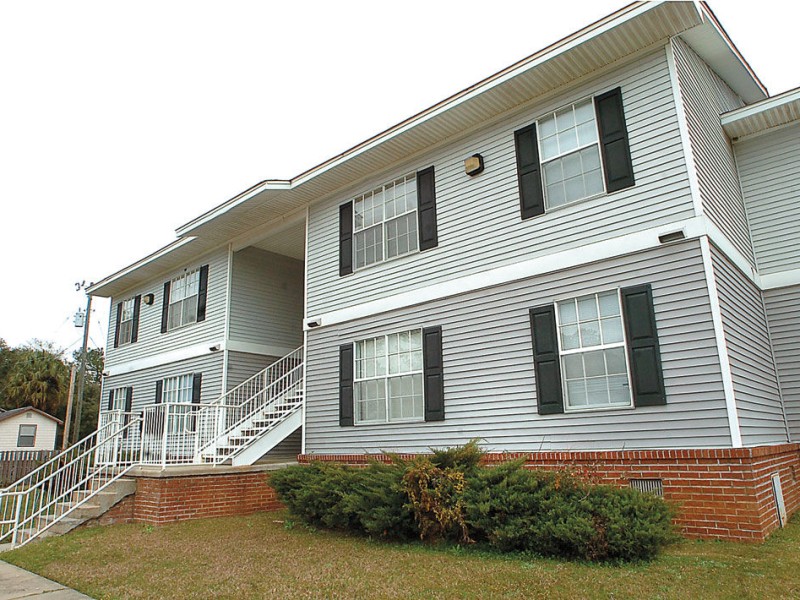
The city had acquired property at 601 Mission Court and built a low-income, 42-unit apartment complex in the mid-1990s. The city’s Department of Community and Economic Development recommended at the time, and the City Commission approved, a $2.5 million HUD-backed grant so that an organization called Mission Outreach Center could manage the apartments. Mission Outreach, which dubbed the complex New Jerusalem Village, was charged with maintaining the property to HUD standards.
Funds collected as rent would be used to fund additional low-income housing projects in the community.
“Mission Outreach, the original CHODO (Community Housing Development Organization), failed to meet the requirements for maintenance of the project, so the city recovered the property,” Taylor said. “Since it was no one on the City Commission’s desire to manage a housing unit, the city sought to find another agency to manage the project. That’s when the grant was extended to Cutliff Grove.”
Taylor said that Cutliff Grove officials have produced a letter suggesting the city would make repairs to the complex, a matter that he said needs further scrutiny. However, City Attorney Nathan Davis said the repairs needed at the New Nativity Village complex did not warrant the kind of funding Cutliff Grove said it needed.
“These are not the kinds of repairs that would make that big a difference in the value of the property,” Davis said. “They’re maybe a couple of notches above cosmetic, but they’re not structural.”
Community and Economic Development Director Latoya Cutts, who said Friday was her last day with the department, noted that the public’s reaction to Cutliff Grove’s request has been distorted by misleading media coverage of the agency’s request.
“Everyone’s assuming that these folks are asking for a handout,” Cutts said. “They’re not. I don’t think anyone has reported that Cutliff Grove has made all 23 payments on the grant since they took over the project, and they’ve made all 23 on time. What they’re asking for is a restructuring of the debt so that they can afford to make payments and make repairs.
“They don’t have the cash on hand to make both. And they can’t raise rent like you would in a typical housing complex. HUD sets the standards (less than 80 percent of area median income) for eligibility, and no person who lives in the complex may pay more than 30 percent of his or her income for rent and utilities.”
STILL REVIEWING OPTIONS
Cutts said low-income housing complexes like New Nativity are needed in cities like Albany that have high poverty rates.
“I know a lot of people around here are frustrated because the city and federal government are providing this kind of assistance for what they are calling an ‘entitlement population,'” she said. “But HUD has a certain level of requirements for these structures, that they be safe and decent, as well as affordable.
“If there were no affordable housing projects like this one available in Albany and all housing was provided by, for lack of a better word, slumlords, imagine what the city would look like. Imagine how much more crime we’d have in the city.”
Davis, meanwhile, said the city has few options in helping Cutliff Grove maintain control of the New Nativity complex.
“They’ve asked the city to reduce the principal balance (of the grant) by half, and that would constitute a gratuity, a gift,” Davis said. “I don’t believe the federal government would allow that kind of agreement in this case. HUD does have grant programs in which debt may be forgiven, but I’m pretty sure this is not one of those cases. I think it has to be specified before the project is completed.
“I do believe there is a possibility, though, that the city could extend the terms of the agreement.”
Davis said he’s read citizen-generated commentary that suggests the city “lost money” on the transaction that allowed Cutliff Grove to take over the complex when Mission Outreach could not meet HUD requirements for maintaining the project. He discounts such notions.
“There was not any write-down or loss taken by the city,” he said. “The appraised value of the complex did not enter into the equation. This was a non-cash transaction, intended simply to provide low-cost housing for some of the city’s poorer residents.”
The city is expected to make a ruling on Cutliff Grove’s requests soon.
“As of now, we’re still looking at options,” Assistant City Manager Lonnie Ballard said. “There are some things the city might like to do that we cannot do under federal guidelines. We’ll keep looking at our options and make a recommendation to the commission when we feel we have all the information we need.”
Related Articles
Albany Herald – July 16, 2026
Albany among local governments looking… ASU Marching Rams first HBCU band
invited…

Classifieds – July 16, 2026
Jobs; Cemetery Lots; Garage Sales; Public Aucitons; Etc…

Adult leadership group spreads concept to high school students
“The purpose of Albany Junior Leaders is to pull together leaders from all over the community. We wanted to give these youth the same experience and the same exposure we’re getting in Leadership Albany.”
