
Dougherty sheriff brings suit against state
Carlton Fletcher
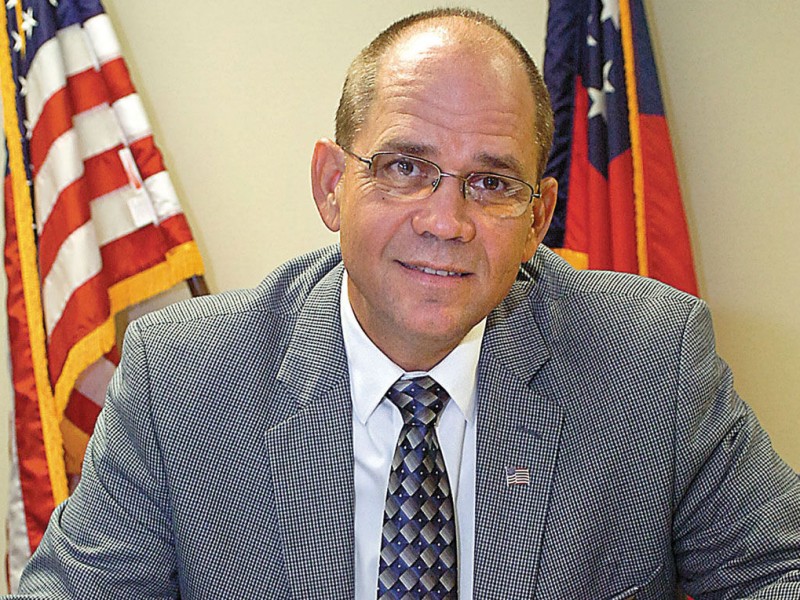
ALBANY, Ga. — Dougherty County Sheriff Kevin Sproul told the Dougherty County Commission Monday morning that his department is involved in a lawsuit against the state of Georgia to collect back funds the department had billed the state’s Department of Human Resources for attempts to deliver child recovery papers.
Sproul said after the meeting the disputed funds are related to unsuccessful attempts to deliver papers to individuals at addresses provided by Human Resources’ Child Recovery Division.
“As sheriff, I understand how important the child support recovery process is to the children who are impacted,” Sproul said. “But I think it’s wrong for the state to tax a community for the sheriff making several trips to deliver recovery papers at incorrect addresses provided by the state’s Child Recovery Division.”
DSO Uniform Division Commander Capt. Ken Faust said Monday morning the funding in question came after the sheriff’s office in 2011 started charging the state the same $50 fee for unsuccessful attempts to deliver notices as it did for trips in which papers were served.
He said the department had accumulated $105,200 in fees, but the state had OK’d payment of only $54,100 for successfully delivered paperwork.
“This has really opened a can of worms,” Faust said. “Our deputies were sometimes making four or five trips to contact the same person, but they were not successful because the addresses given by Child Recovery were wrong. We feel that, whether our deputies contacted the person or not, they were using the same amount of gas and oil and using the same amount of time.
“Since we filed suit trying to collect the remaining money ($51,100), the local Child Recovery unit has gotten (Chief Superior Court) Judge (Willie) Lockette to approve collections from a private company rather than the sheriff’s office.”
Lockette said Monday he had approved a private firm for child recovery collections so that “children did not become victims of an internal dispute.”
“I did issue an order that allows the Child Support enforcement arm to use a (private) process server in response to their request,” Lockette said. “When they made the request, they said thousands — and the term they used indicated it may have even been more than that — of kids could be affected if this backlog of papers was not served.
“As far as the dispute is concerned, I take no part or no side. I have to remain neutral because this could come before our court. The attorney for the Child Recovery department convinced me the need in this case was not to hold up child support recovery during any proceedings. My interest is in the children.”
County Attorney Spencer Lee said the case is being reviewed by Assistant Attorney General Mark Cicero and could have an impact across the state.
“The county and the sheriff’s department will have to make a determination on how to proceed after the Attorney General’s office makes a ruling, but this is essentially about the state not paying about 50 percent of the sheriff’s fees for attempts to deliver Child Support Recovery papers from August 2011 to April 2012,” Lee said. “Each sheriff’s office in the state does things differently, but the way we interpret applicable law the state should pay the $50 fee for each attempt the sheriff makes to deliver these papers.
“The 50 percent that the state is disputing is for non-deliverable papers because of insufficient addresses given by Child Recovery.”
Lauren Kane, the director of communications for Attorney General Sam Olens’ office, said late Monday afternoon her office is preparing to respond to the county’s suit.
“We’re drafting a letter of response to the county attorney that we will get out this week,” she said in response to a Herald request for comment on the matter.
Faust said Sproul had instructed DSO division leaders to look for ways to increase funding during the 2011 budget crunch, and Faust said a closer look at the process of delivering child recovery papers drew his attention.
“When we told the state they owed us for attempts to deliver these papers, they did not agree,” Faust said. “We told them we were making our claims based on the way we interpret the law.”
Related Articles

Albany Herald – July 14, 2026
In Lee County, they saw it… Bigger budget will mean improvements at… Small actions can help save…

Classifieds – July 14, 2026
Albany Classifieds and Legals…
‘Just Africa’ festival scheduled for third weekend in September in downtown Albany
A taste of the Caribbean and Africa is coming to Albany with a fall festival that will also bring African dance, a parade of children’s fashions, as well as vendors, live bands, and arts and crafts.
