
Albany gathering documents for Justice investigation
Carlton Fletcher
ALBANY — City officials will send the U.S. Department of Justice certification documents today requested by the agency as part of a Justice investigation into zoning and land-use practices of the city as they apply to the Fair Housing Act and Title II of the Americans With Disabilities Act.
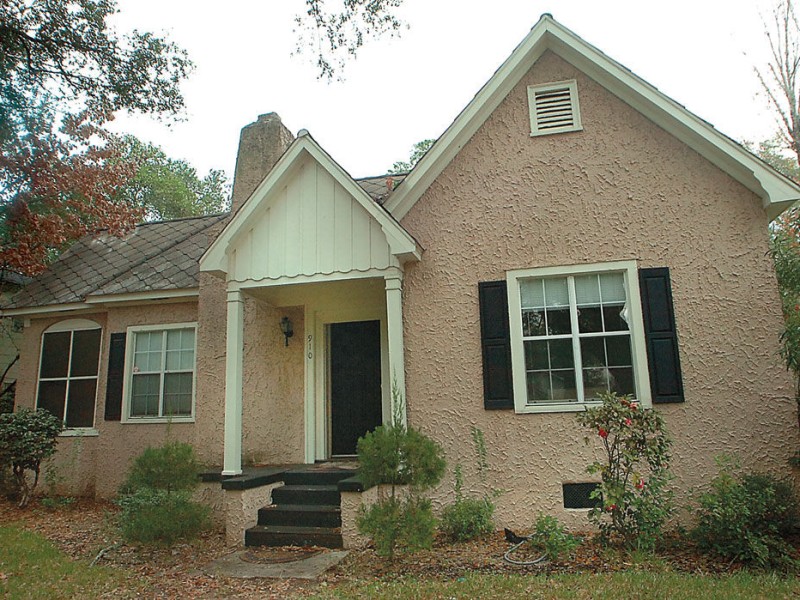
The investigation centers around Randy and Lauren Bailey’s attempts to open a community residence facility for disabled citizens at 910 N. Davis St. The Baileys had planned to create a personal care home at the address when, first, the Albany City Commission, and most recently, the Albany Dougherty Planning Commission, denied their request based on a distance requirement in an ordinance that was passed after the Baileys attempted to open the facility.
In a letter sent to City Attorney Nathan Davis and obtained by The Albany Herald through an Open Records Act request, Steven H. Rosenbaum, the chief of DOJ’s Housing and Civil Enforcement Section, said the agency’s investigation is preliminary in nature.
“We believe that both the public interest and the interests of the city will best be served by our having complete and accurate information about the city’s zoning and land use practices with respect to residences for persons with disabilities,” Rosenbaum wrote. “To that end, we ask that you send the information requested in Atachment A to Beth Frank, the attorney handling this matter …
“We have attempted to limit the areas of inquiry to expedite the initial phase of this investigation and are willing to work with you to minimize any burdens that would be imposed upon you or your staff in obtaining this information.”
Davis said the information sought by the Justice Department would be dispatched to Washington next week.
“By (today), we have to send them certification documents indicating that so-and-so will be in charge of gathering and discharging the documents,” the city attorney said. “The actual documents they have requested are due next week. That information is readily available, and we’ll be able to respond in the timely manner that they have requested.”
Randy Bailey informed The Herald he and his wife had been contacted by DOJ after the Planning Commission refused last week to reconsider his request for a variance to the section of the new ordinance that requires a minimum 1,000-foot distance between such community residences. The house at 910 N. Davis is about 735 feet from an existing facility in the Rawson Circle neighborhood.
Residents who live in that neighborhood launched a heated campaign to keep the Baileys from creating the personal care home that would allow them to relocate disabled citizens who had previously been cared for in a state-run Thomasville facility. All such facilities have been ordered shut down as part of a federal lawsuit in which the state was found to have been “warehousing” disabled persons under its facilities’ care.
The residents argued first that their neighborhood would be negatively impacted by the care facility, and subsequently that it would decrease property values and create an institutional setting in “one of the last decent neighborhoods left in Albany.”
Randy Bailey said Thursday the hoopla over he and Lauren Bailey’s attempts to locate the personal care home at the North Davis residence had led everyone involved astray from the real issue.
“The Fair Housing Act was put in place to protect everybody, not just persons with disabilities,” he said. “Certainly, though, this situation involves people who don’t have a voice, who can’t advocate for themselves. We care for these people, and we advocate for them.”
Rosenbaum stressed in his letter that his office had made no determination whether the city had violated the Fair Housing or Americans With Disabilities acts, but he asked Davis for “any and all records, documents, files and tapes that may be relevant to this investigation … within 10 days of the date of this letter (April 30).”
“The Fair Housing Act prohibits discrimination in housing on the basis of disability and other protected categories,” the DOJ official wrote. “The FHA’s enforcement provisions authorize the Attorney General to commence a civil action whenever he has reasonable cause to believe that a person or group of persons is engaged in a pattern or practice of housing discrimination, or that any group of persons has been denied rights under the act and the denial raises an issue of general public importance.
“Similarly, the ADA authorizes the Attorney General to commence a civil action under Title II.”
Davis said Thursday he has no way of knowing whether DOJ has grounds for action against the city based on actions of the City or Planning commissions.
“There’s way too much we don’t know at this point to figure out what the Department of Justice is specifically looking for,” Davis said. “If I could figure the way DOJ — or any other federal agency — operates, I wouldn’t be working right now. I’d be retired to my condo on the beach.”
Related Articles

HAPPY 250TH ANNIVERSARY AMERICA
America Celebrates 250 Years???

Classifieds – July 4, 2026
Albany Classifieds: Real Estate for Sale: 1835 Arlington Park Circle… Jobs: Irrigation Tech needed…

Squawkbox – July 4, 2026
Regarding the changes to the Squawkbox… Lee County officials encountered a screw-up with… Bo and Preacher Lorenzo and his disciples should reflect on why…
