
Birds of prey prefer city over cliffs
Raptors spotted in downtown Atlanta
By Jon Gosa
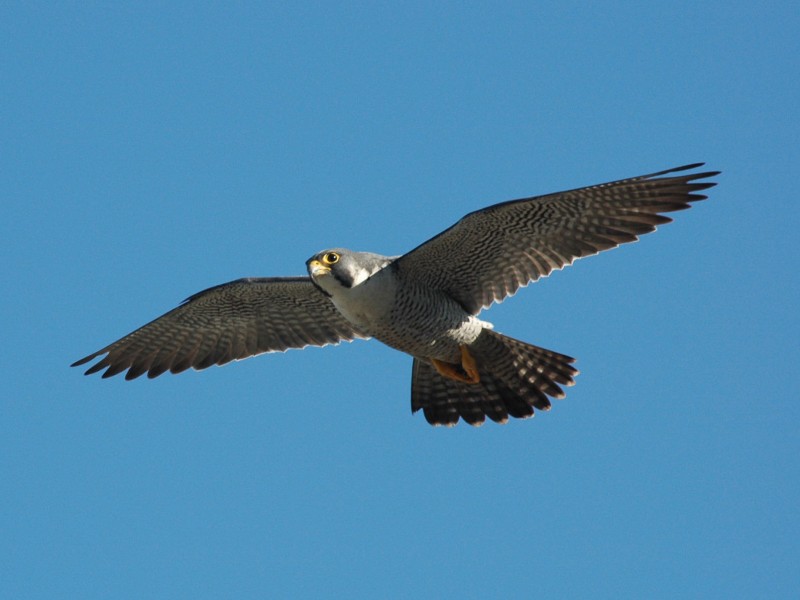
ATLANTA – A recent extensive search for Peregrine falcon nests by the Georgia Department of Natural Resources, the first of its kind undertaken in more than two decades, has confirmed three key things, according to experts. The wilds of north Georgia offer quality habitat for peregrines, Tallulah Gorge has the state’s only known wild nest site, and metro Atlanta is the bird of prey’s favored nesting and hunting grounds.
For the first time since 1995, a helicopter survey was performed in April along cliff faces and other prime falcon locations across the state, as well as a foot survey, performed in May, of Atlanta buildings where birds had been seen nesting.
“When I checked our records and discovered it had been 23 years since an intensive survey had been conducted, I decided a new survey was overdue,” Dr. Bob Sargent of the Georgia Department of Natural Resources said.
Sargent, a program manager with DNR’s Non-game Conservation Section, said the appearance and success of the nesting pair at Tallulah Gorge State Park and reports of falcons at other mountain sites during breeding season had made him wonder if there might be nests on other north Georgia cliffs or among the capital’s high-rises.
The crow-sized falcons are the world’s fastest birds, according to aviary experts.
Peregrines are best known for their 200 mph-plus dives, or stoops, on ducks, pigeons and other prey.
Found on six continents, the species in the U.S. suffered a devastating population crash linked to use of the pesticide DDT during the mid-1900s, but it is currently recovering.
Peregrines were taken off the federal endangered species list in 1999, but they are still state-listed as rare in Georgia and rank as a species of significant conservation concern in the State Wildlife Action Plan, a comprehensive strategy to protect and conserve native wildlife, plants and their habitats.
To help peregrines recover, DNR and partners have released nearly 30 young falcons from hatching enclosures in north Georgia, a region on the southern edge of the species’ breeding range in the eastern U.S., from 1988-1994.
This year’s survey, led by Sargent, visited those north Georgia sites; 14 cliff faces in all, from Cloudland Canyon State Park near Rising Fawn to Yonah Mountain in White County.
No eyries, or nests, were found and no falcons were spotted on the cliffs, according to Sargent, but at least five areas, particularly Cloudland Canyon, looked suitable for nesting.
Each site featured wide, tall cliff faces that were isolated, mostly free of plants and pocketed with shelves, overhangs and crevices.
Nesting at inaccessible sites protects the falcon eggs and young from predators or human disturbance, Sargent explained.
Reports indicate a Peregrine nest on the cliffs at Tallulah Gorge State Park was spotted in 2015, becoming Georgia’s first nest in a natural site in nearly 75 years. However, after six to seven young were fledged at the park, the nest failed earlier this year.
Other reports indicate a Peregrine nest was seen at a communications tower in DeKalb County during the April flight and from the ground in May. Birders also have reported falcons in and near a drum-like structure on the tower.
DNR’s previous aerial surveys, in 1987, 1992 and 1995, failed to document any nests.
Atlanta, however, befitting its NFL team, appears to have become the state’s nesting hotspot for the rocket-fast raptor.
As in some other eastern U.S. cities, the falcons, taking advantage of ample nest sites on high-rises, hunting hours extended by city lights and plentiful prey, from pigeons and doves to starlings and migrating yellow-billed cuckoos, appear to be thriving in the city.
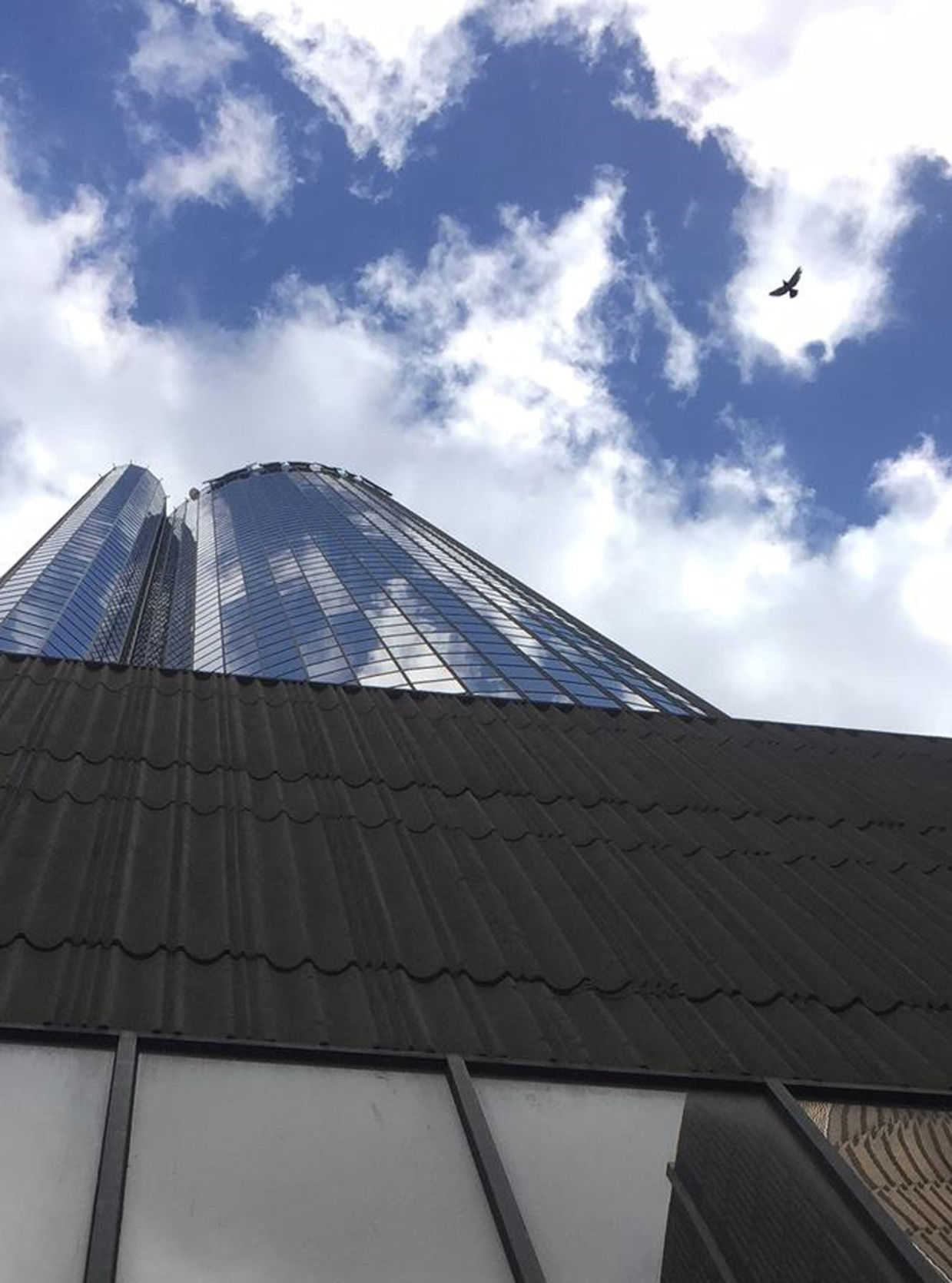
Nests were documented on SunTrust Plaza Tower balconies in 2015, and juveniles have been seen regularly.
Observations from sites “between midtown Atlanta and Sandy Springs suggest there might be as many as four (nest) territories,” Sargent said.
RE/MAX Greater Atlanta Realtor and Administrator for Livable Atlanta Chris Hayes lives and works near many of the sites where falcons have been spotted and said the birds of prey can be regularly seen soaring among the city’s skyscrapers.
“I haven’t seen any nests, but I see falcons dive bombing yard-birds every week,” Hayes said.
While surveying in the metro area last month, Sargent was encouraged by the public’s fascination with Peregrines taking advantage of an offer from one businessman to scan from his high-rise office.
Apparently, a Peregrine had been spotted on a nearby ledge in March.
Sargent said he hopes this network of watchers, from building owners to maintenance workers, will lead to the discovery of other eyries and “a greater understanding of Peregrine ecology and management needs in urban environments.”
Peregrine nests or nesting behavior can be reported to Sargent at (478) 994-1438 or [email protected].
For more information or how to help with conservation efforts visit www.georgiawildlife.com/conservation/annualreport.

Related Articles

‘It’s time to listen to us’: Lee County school tax proposal draws fire
A longtime Lee County resident urged the school board to reject a proposed property tax increase during its first public hearing Oct. 8, questioning spending priorities and warning about the burden on families and older residents.

Incumbent Bill Yearta, newcomer Mitchell Rosa vie for state House District 152 seat
The Georgia House District 152 race features Republican incumbent Bill Yearta and Democrat Mitchell Rosa, who is making his first run at political office. The two candidates will be on the ballot for voters in Lee and Worth counties and southeastern Dougherty County on Nov. 3.
Value of Dougherty’s tax-exempt worship property more than doubles
The assessed value of property in Dougherty County’s religious-worship exemption category more than doubled over a decade, reaching $38.2 million in 2025 while the county’s net taxable value grew about 2%.
