
Former Army Ranger discusses changes in Latin America
After visiting more than 20 countries in the region, Paul Clark says corruption biggest problem
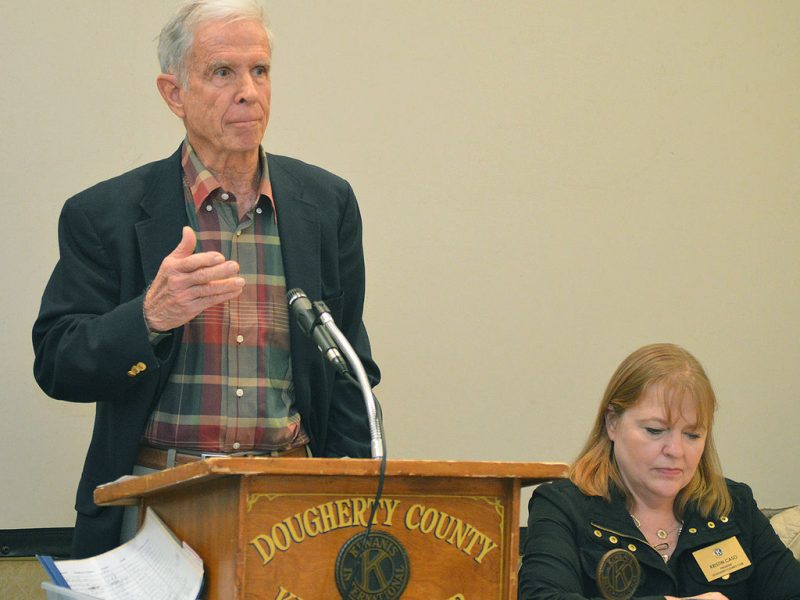
Retired Army Lt. Col. Paul Clark addressed the Dougherty County Kiwanis Club Monday. Clark, a former Army Ranger, visited 20 Latin American countries after he retired and said Nicaragua remains his favorite country in the region. (Staff Photo: Terry Lewis)
By Terry Lewis
ALBANY — As an Army Ranger, Lt. Col. Paul Clark pulled two tours of duty in Vietnam, but the pull of Latin America was also present. After his retirement from the Army, Clark acted on that urge, visiting more than 20 of the countries in Central and South America which make up the region.
Latin America is comprised of Mexico to the north and extends to the southern to the tip of South America.
Monday at the Dougherty County Kiwanis Club, Clark, who raises Tennessee walking horses in the Coleman community of Clay County, said many Americans regard the region as full of third-world “banana republics.”
“As far as the U.S. goes, many regard Latin America as a historical backwater with a perceived lack of importance,” Clark, a native of North Carolina, said. “When Americans think about the region they think of coups d’état and earthquakes and drug cartels. It is a region of grinding poverty and a lot of corruption in many governments. But the region has moved more toward democracy lately.”
Corruption is the region’s largest and most persistent issue, Clark said.
“Corruption is the big problem there and much of that is due to colonial occupations of the past, from European countries like Portugal and Spain, but even their democratic countries have more authoritarian presidents than we are used to seeing,” Clark said.
He added there is no love lost for America in many countries of the region.
“Much of their politics is based on anti-Americanism, and that is still there today,” Clark said.
Of all the Latin American countries he lived in and visited, Clark preferred Nicaragua.
“Nicaragua is my favorite Latin American country,” he said, noting the country had suffered under three generations of the Somoza dictatorship before being ousted by the Russian-backed Sandinistas in 1979. The revolutionaries ruled the country for 11 years before the breakup of the Soviet Union, their major benefactors, occurred in 1990.
Clark added that heavily armed drug cartels and other armed gangs had changed the region for Americans over the past several decades.
“Gringos used to be able to drive freely to almost anywhere and remain relatively safe,” Clark said. “That is no longer the case. Now I would advise sticking to the resort areas.”
Related Articles

Small actions can help save big on utility bills
The high temperatures of July and August can bring scorching utility bills as air conditioners hum to keep houses cool. Albany Utilities Residential Conservation Auditor Willie Jackson offered some tips on making summer cooling bills more manageable.
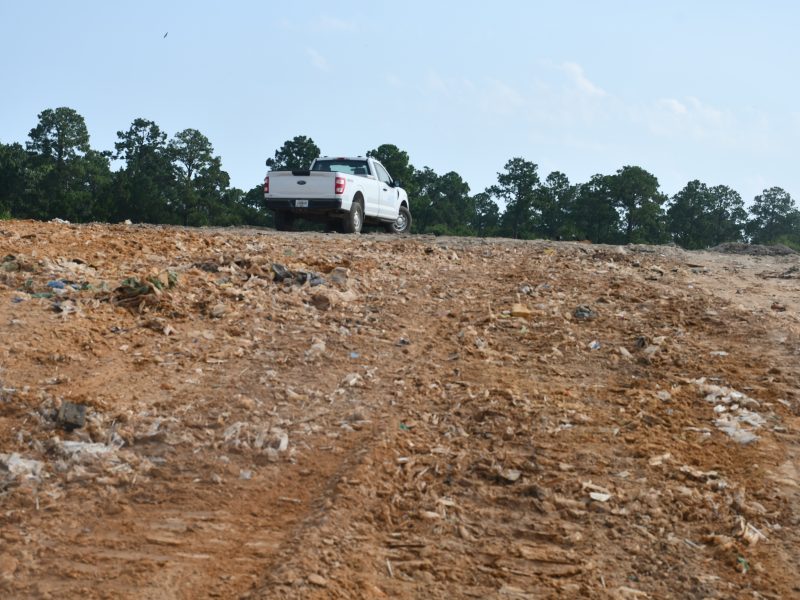
Bigger budget will mean improvements at Dougherty County’s landfill
“It’s certainly an opportunity where we can grow and make this very beneficial for years to the community. It’s a service that we provide for the community and I want to prolong that resource for the community. It’s not just fill it up and close it.”
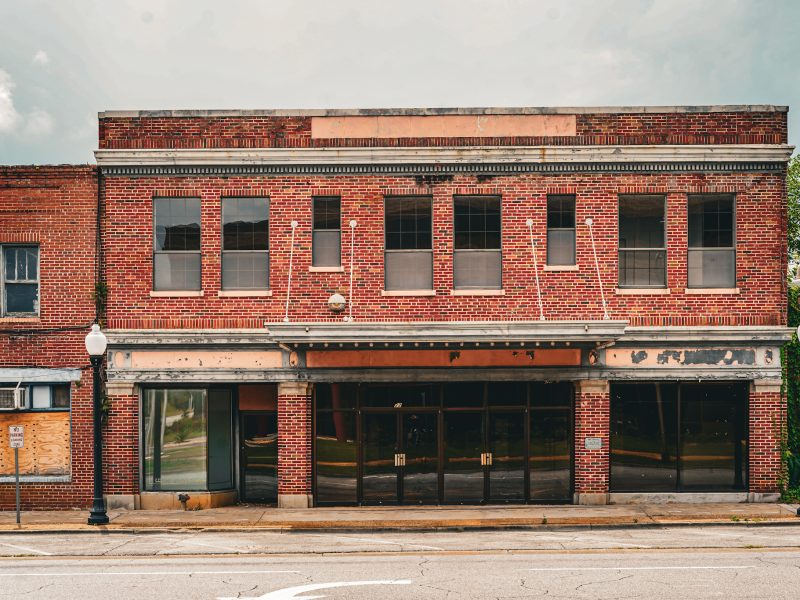
Putting on the Ritz: The rise, fall and renewal of Albany’s Harlem District
On July 7, the Albany City Commission unanimously approved final construction drawings for a comprehensive restoration of the Ritz Theatre and Cultural Center, clearing the way for the project to move into competitive bidding after years of planning and preservation efforts. The decision marks the latest chapter in a decades-long effort to preserve one of Southwest Georgia’s most significant African American landmarks.
