
Knowledge is power against mosquito-borne illness
Health officials encourage people to be aware, not become complacent
By Jennifer Parks
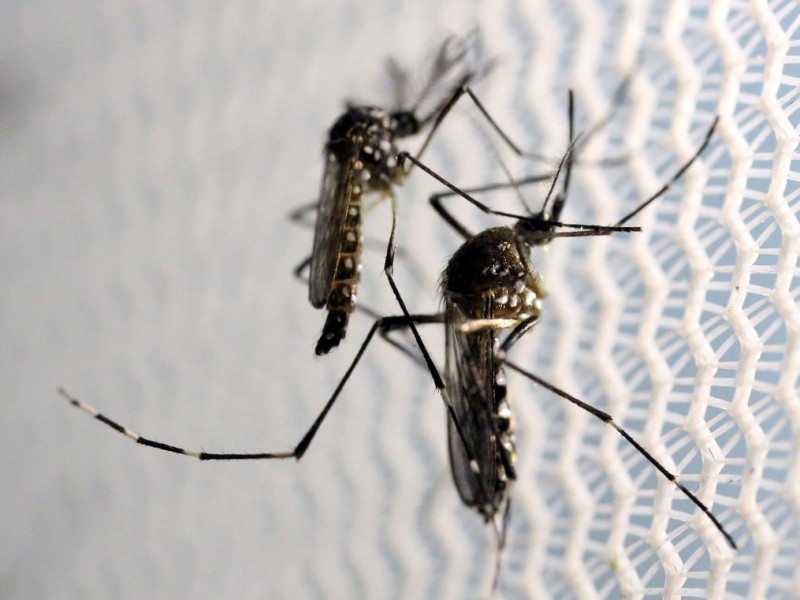
ALBANY — The presence of mosquito-borne illness is apparent both with the season and the Zika news coverage, in turn prompting a need for the public to know how to protect themselves.
Dr. Charles Ruis, director of the Southwest Public Health District, said that — apart from Eastern Equine Encephalitis in a horse in Valdosta — there is nothing particularly new to report as far as mosquito-borne illness in the region.
Aside from Zika, West Nile is another health concern — the peak season for which is usually August.
“We want people to know we are only halfway through summer, and we don’t want them to let their guard down,” Ruis said.
Ruis said the recommendation is still to use repellent, and even in the hot weather, to wear long pants and long sleeves. Wear a hat, make sure door screens are in good repair and avoid outdoor activity in the dawn and dusk hours — when mosquitoes are most active.
“Horse owners are also to be advised to keep animals up to date on their vaccinations for EEE,” he said.
The general rule that Ruis offered is to seek help if an illness without a known origin is present for 24-48 hours. There is no specific treatment for most mosquito-borne illnesses, but supportive treatment can be offered that would help. There are currently no vaccinations for Zika or West Nile.
It takes just one tablespoon of water to create a breeding environment for mosquitoes, so clearing properties of standing water as much as possible is a big step in protection, Ruis said.
A mosquito surveillance team is in place in Southwest Georgia. There are no locally transmitted cases of Zika in the United States yet, but should one present in the Albany area there is a backup plan in place to protect those at risk. Local transmission of Zika is currently confined primarily to Central and South America, so travel to those areas should be avoided — especially for women who are pregnant or are planning to get pregnant, Ruis said.
After a month, the Zika virus is not likely to be in the blood, but there are other bodily fluids — such as semen — that can carry it for longer, Ruis said. The majority of sexually-transmitted cases reported have been a man infecting a partner, but a female-to-male transmission case in New York City was reported by the Centers for Disease Control and Prevention on Friday.
Dr. Carlos Franco, an infectious disease specialist with Phoebe Putney Memorial Hospital, said that while Zika, chikungunga or West Nile continue to not be present this year in Southwest Georgia, there is still a need to be careful.
“It is important to pay attention to the possibility of some cases,” he said.
Franco said repellent that is DEET-based can be effective. Getting a product with 7-11 percent DEET offers about 35 minutes of protection, while a product with 40 percent DEET or higher can last up to eight hours. The drawbacks are that DEET can cause skin irritation, compromise sunglasses or clothing, and is not suitable for young children.
Picaridin is a possible alternative, and is considered more effective in smaller doses, Franco said.
“(Picaridin at 20 percent) is very effective. It doesn’t irritate the skin, lasts eight hours and doesn’t (harm) sunglasses or clothes,” he said.
He added that sunblock should be put on ahead of repellent, and that there are products that can be used on clothes which remain viable after several washings.
As an infectious disease specialist, Franco is aware of some of the threats to the community such as influenza and HIV/AIDS that have significant impact. While recognizing the potential threat of illnesses like West Nile and Zika, in his opinion, other illness currently ailing people in Southwest Georgia pose a bigger threat to be concerned about.
“Based on what we know, I don’t expect to see West Nile in the community again,” he said. “There are some swamps here, but we have water management systems and spraying systems.
“Chances of this (Zika) becoming a major problem is not there.”
As of Wednesday morning, the most recent day from which data is available from the CDC, the U.S. had 1,305 travel-associated cases and one laboratory-acquired case of Zika. There had been 14 sexually transmitted cases. In the territories, there were 2,905 locally-acquired cases reported as of Wednesday, along with 11 travel-associated cases.
At the same time, there were 33 cases of Zika reported in Georgia, accounting for 3 percent of the cases.
In 2015, Georgia had a total of 15 West Nile cases, including 13 neuroinvasive disease cases. In all, there were 2,060 cases in the U.S. that same year, the CDC said.
Those in Southwest Georgia seeking more information are encouraged to speak to their county health department or their health care provider. The Southwest Public Health District often uses its Facebook page to update the public on outbreaks.
Related Articles

Albany teen, 16, makes bodybuilding debut at Atlanta OCB Pro/Am
Crockett, an Albany resident and student at Albany Technical College Academy, placed second in the teen bikini division this weekend at the OCB Immortal Muscle Pro/Am Bodybuilding Competition in Atlanta, becoming the youngest competitor across all categories at the event.
Phoebe opens new urgent care clinic in Camilla
Phoebe Putney Health System has expanded its network of urgent care clinics by opening a new location in Camilla.
Colquitt Regional introduces new heart failure treatment
Colquitt Regional Medical Center recently announced a major advancement in its cardiac care services with the introduction of the biventricular implantable cardiac device (ICD)
