
Study: Race not an issue in police use of lethal force
Surprising statistics evolve from study on use of force by law enforcement
By Jon Gosa
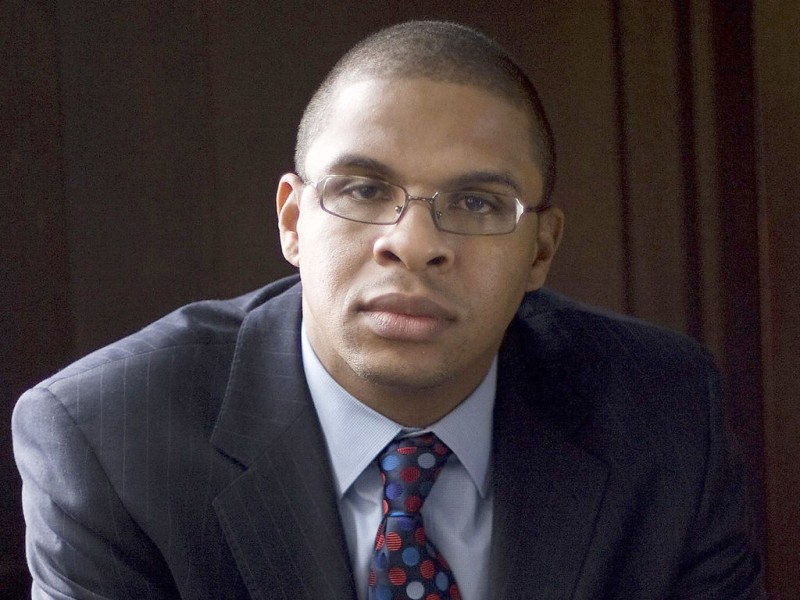
ALBANY — Racial bias is not a compelling contributing factor in police use of lethal force, according to a new study by Harvard professor Roland G. Fryer Jr. and published by the National Bureau of Economic Research.
According to Fryer, the issue of deadly police violence and its racial incidences has become one of the most divisive topics currently in American discourse.
The study, titled “An Empirical Analysis of Racial Differences in Police Use of Force,” explored racial differences with regards to the use of force by police, and the findings varied between non-lethal and lethal situations.
In instances of non-lethal uses of force — handcuffing, drawing or pointing a weapon, using pepper spray, or using a baton — Fryer found that Hispanics and blacks were in excess of 50 percent more likely to experience some sort of use of force during a police interaction.
However, in the most extreme cases of use of force, such as officer-involved shootings, events that capture headlines and polarize the nation, there were no racial differences, according to Fryer.
Fryer wrote in his report, “In stark contrast to non-lethal uses of force, we find no racial differences in officer-involved shootings. Using data … where we have both officer-involved shootings and a randomly chosen set of potential interactions with police where lethal force may have been justified, we find, in the raw data, that blacks are 23.8 percent less likely to be shot at by police relative to whites. Hispanics are 8.5 percent less likely.”
The results of his study were, “the most surprising of my career,” Fryer recently told the New York Times.
Fryer and his team of research assistants examined thousands of pages of data from multiple sources, including New York City’s Stop, Question, and Frisk program, a practice of NYC’s police department in which officers stop and question a pedestrian and then can frisk them for weapons or contraband; the Police-Public Contact Survey, a national survey containing the “civilian point of view” and descriptions of interactions with police including the use of force; incident reports of civilian-involved officer weapons discharges (both hits and misses) from three cities in Texas (Austin, Dallas and Houston), six large counties in Florida, and Los Angeles County; a random sample of civilian-police interactions was taken from the Houston Police Department in which arrest codes indicate lethal force was more likely justified; instances of attempted murder, aggravated assault, resisting arrest, evading arrest and interfering in arrest.
When compiling data on officer-involved shootings, Fryer and his team contacted 15 police departments across the nation including Camden, N.J.; New York City; Philadelphia; Austin, Dallas and Houston, Texas; Los Angeles; six Florida counties, and Tacoma, Wash. From the information gathered, incident reports and officer narratives were examined for all cases involving the discharge of a firearm at civilians.
Many of these cities were part of the Obama Administration’s Police Data Initiative, an initiative launched by the White House to work with police departments to leverage data on police-citizen interactions, increase transparency and increase accountability.
In spite of such initiatives and in light of the findings from studies such as Fryer’s, police departments across the nation are still facing harsh criticisms and accusations of racially motivated violence from protesters and social media outlets.
To quell any such beliefs locally, Albany Police Department Chief Michael Persley says that race is not a factor, at least when it comes to APD, in violent interactions with officers.
“Race is not an indicator or a factor in determining a violent encounter; non-compliance to authority is an indicator,” said Persley. “We do not target people because of racial reasons. We target crime and the areas where criminal activity is being committed. The main factor (that leads to a violent confrontation) is non-compliance to authority when an arrest is about to occur. We prefer that all persons who are subject to arrest comply with the authority that is affecting the arrest.
“Because of the diversity of our department, with regards to age, race and life experience, there is a very good relationship between the police department and the community. Our department demographic represents our community, and we encourage our personnel to engage with the public on a daily basis.”
In his paper, Fryer suggests that as police departments employ new tactics and models of operation such as community policing, body cameras and new training to eliminate any implicit bias, they should also raise the accountability of lower level uses of force by explicitly punishing these tactics. To do so would not require officers to change their behavior in extremely dangerous or high-stakes situations and may be a more amenable policy shift improving the interaction of police with blacks and Hispanics.
With so many high-profile incidents of extreme uses of force such as those involving Michael Brown, Eric Garner, Walter Scott, Samuel Du Bose, Rekia Boyd, Zachary Hammond and, most recently, Alton Sterling and Philando Castile, the Fryer study finds itself, as Fryer himself writes, on “the treacherous terrain of understanding the nature and extent of racial differences in police use of force.”
This treacherous terrain is nothing new in the South.
“When I moved to Albany in 1965 as a boy, I experienced some of the racial prejudices that were prevalent in the South,” said Dougherty County Sheriff Kevin Sproul. “Having grown up on a military base before moving here, I had black and white friends. We all played together. After moving here, a lot the friends I made at Magnolia Elementary School, I didn’t see anymore when we started McIntosh Middle School. Their parents wouldn’t allow them to go there because there were blacks. I am sure some of these prejudices still exist today, but my daddy always taught me that we are all Americans, every one of us.
“As the sheriff of Dougherty County, I am entrusted with four specific duties: maintain peace, protect life, protect property and provide services to the community. It doesn’t matter if you are black, white, Hispanic or any other race, my department is going to treat you with the same dignity and respect. We do not target anyone by race, and we never train our officers to respond differently to the race of a person. Yes, there are differences when it comes to gender, such as the handling of a female subject, but race is not a factor. In my experience, instances of violent encounters between officers and civilians, race has had nothing to do with it. I would say non-compliance is the No. 1 example of a situation when an individual is being put under arrest that escalates the situation to a violent confrontation.”
Due to the complexities of interactions between police and civilians, officials admit it is hard to understand whether racial disparities exist in the use of force.
In the conclusion of his study Fryer wrote, “The importance of our results for racial inequality in America is unclear. It is plausible that racial differences in lower-level uses of force are simply a distraction, and movements such as Black Lives Matter should seek solutions within their own communities rather than changing the behaviors of police and other external forces. Much more troubling is the possibility that racial differences in police use of non-lethal force have spillovers on myriad dimensions of racial inequality. If, for instance, blacks use their lived experience with police as evidence that the world is discriminatory, then it is easy to understand why black youth invest less human capital or black adults are more likely to believe discrimination is an important determinant of economic outcomes. Black Dignity Matters.”
Fryer is the Henry Lee Professor of Economics at Harvard University and faculty director of the Education Innovation Laboratory. His research combines economic theory and randomized experiments to help design more effective government policies.
Related Articles

Albany City Commission set to vote on skate park funding
“There have been other sites discussed. Based on information (from) the community, we decided on the current site. That’s the only site we’re looking at right now.”
Food, mini menagerie provide inspiration for Mitchell County’s Lydia Griffin
“I would like to open, like, a Caribbean/tropical buffet where everybody can eat anything and everything. If I can’t do that, I would start small with a coffee shop (and) deli and keep going.”
Federal agency to investigate Monday paragliding fatality
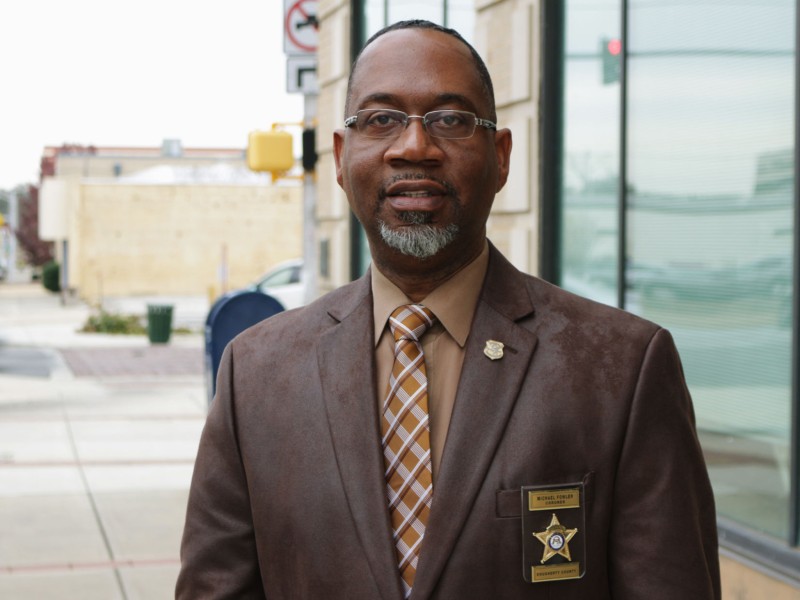
The death of a 63-year-old man who was killed in a paragliding accident on Monday is under investigation by the National Transportation Board, according to Dougherty County Coroner Michael Fowler.
