
Tift Regional Medical Center utilizing new diagnostic lab technology
Bruker Matrix Assisted Laser Desorption Ionization Biotyper CA System meant to provide quicker diagnosis
From Staff Reports
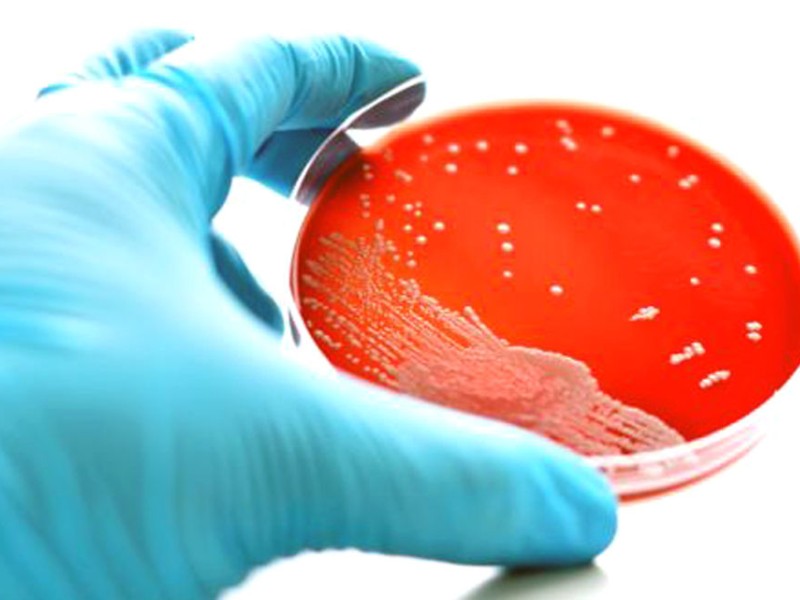
TIFTON — The Tift Regional Medical Center Laboratory has acquired new diagnostic technology meant to allow for a quicker diagnosis and treatment of patients suffering from bacterial infections such as pneumonia, meningitis, ear infections, wound infections and strep throat.
Dr. Jessica Beier, medical director of the laboratory, said the new Bruker Matrix Assisted Laser Desorption Ionization (MALDI) Biotyper CA System is revolutionizing the way microbial identification is performed.
“To diagnose a suspected bacterial infection, a culture is obtained from a patient and it traditionally requires bacterial growth in the laboratory for 24 hours,” she said. “Then, the bacterial identification of any pathogens takes another 24 to 48 hours before a diagnosis can be reported to a referring physician.
“With this new MALDI Biotyper CA System, a diagnosis and report to the physician can be made during the first day of growth.”
Beier said this is significant because it will allow for faster targeted treatment of patients, possibly reducing length-of-stay in the hospital and improving the utilization of antibiotics.
“Antimicrobial stewardship is a coordinated effort by clinicians to appropriately use antimicrobials, including antibiotics, which improves patient outcomes, reduces microbial resistance and decreases the spread of infections caused by multidrug-resistant organisms,” she said. “Reducing length-of-stay in the hospital means a quicker return to normal activities and greater cost value for the patient, the hospital and health insurance providers.”
The MALDI Biotyper CA System is used in conjunction with other clinical and laboratory findings to aid the diagnosis of what is called “gram-negative” bacterial infections.
“Essentially, this system uses highly-attuned spectrometry and specialized software to identify the molecular fingerprint of an organism,” said Beier. “It can identify 210 species or species groups, covering 280 clinically-relevant bacteria and yeast species, representing more than 98 percent of the typical bacterial identification in a clinical laboratory.”
In addition to being faster than traditional methods, Beier said the MALDI Biotyper CA System is more cost effective, easier to use, and utilizes less space in the laboratory.
“It will really help improve our workflow,” she stated. “But, most importantly, it will enhance the level of care provided to our patients.”
Related Articles
Small actions can help save big on utility bills
The high temperatures of July and August can bring scorching utility bills as air conditioners hum to keep houses cool. Albany Utilities Residential Conservation Auditor Willie Jackson offered some tips on making summer cooling bills more manageable.

Bigger budget will mean improvements at Dougherty County’s landfill
“It’s certainly an opportunity where we can grow and make this very beneficial for years to the community. It’s a service that we provide for the community and I want to prolong that resource for the community. It’s not just fill it up and close it.”

Putting on the Ritz: The rise, fall and renewal of Albany’s Harlem District
On July 7, the Albany City Commission unanimously approved final construction drawings for a comprehensive restoration of the Ritz Theatre and Cultural Center, clearing the way for the project to move into competitive bidding after years of planning and preservation efforts. The decision marks the latest chapter in a decades-long effort to preserve one of Southwest Georgia’s most significant African American landmarks.
