
’23 farm season off to dry start
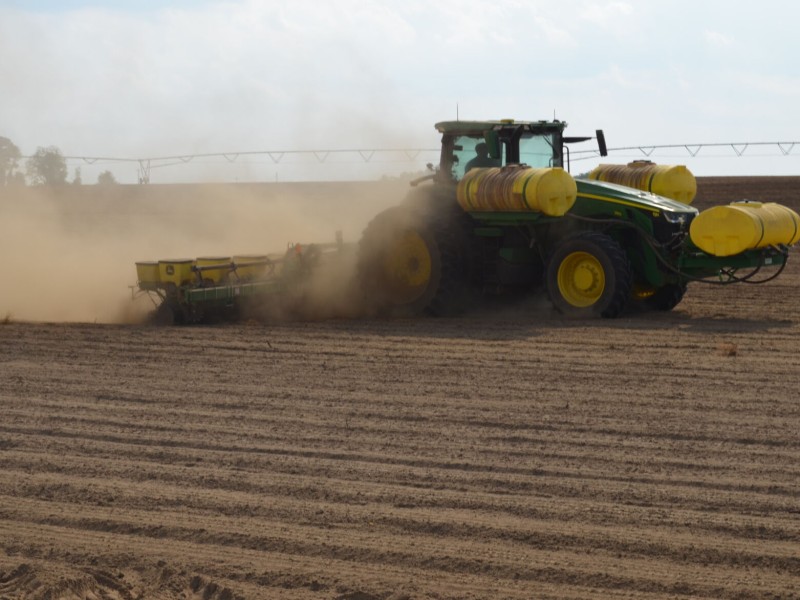
File Photo: Alan Mauldin
By Alan Mauldin
[email protected]
LEARY — The 2023 farm year for row crops is in high gear in the region, with farmers planting some of the state’s biggest crops, like cotton and peanuts. As the seeds go into the ground, area farmers are concerned over the low prices for cotton, the high cost of herbicides and insecticides, and a lack of rainfall.
“We came in with fertilizer prices starting to come down,” Calhoun County farmer Jimmy Webb said. “That helps a lot. Other input prices have not come down. Corn prices are actually pretty good. Cotton prices have really gone down.”
Fertilizer supplies were impacted last year due to the war between Russia and Ukraine, producers of a significant amount of those products. On Friday, cotton prices for farmers were at 87 cents per pound, a good bit less than what farmers need to make a profit.
In 2021, Georgia farmers planted 1.2 million acres of cotton, accounting for $1 billion in income. Some area counties are among the tops in the state, with cotton accounting for $46 million in income in Colquitt County, $44 million in Worth County and $39 million in Mitchell County. Growers in Early and Thomas counties also earned about $40 million in 2020, the last year for which figures are available from the University of Georgia’s annual Farm Gate Value report.
Webb planted about the same acreage in cotton this year and upped his corn acreage.
“I planted more corn because that looked better at planting time,” he said. “Cotton is — you can almost call it a luxury crop; you’ve got to eat, but you can make your clothes last a little longer. That’s kind of put a damper on cotton.”
Cotton supplies were reduced during COVID, but that pipeline has pretty well filled up again. Peanuts remain a question mark.
“I don’t know anybody who’s signed a peanut contract,” Webb said.
Another concern for the future is the next farm bill. The legislation that covers everything from school nutrition to farm programs to rural energy is up for renewal each five years and was last updated in 2018.
“I want to get it done this year, because it’s not an election year,” and politics gets into the equation in election years, Webb said. “I think that since our inputs have gone up so much, if there’s a way to increase our target price, which is what the government guarantees for our crop, that’s what we need.
“They keep talking about shoring up the crop insurance program. In my opinion, crop insurance isn’t too bad, (but) target prices help everybody. That gives you something.”
With corn reaching a critical period where they need plenty of water to make a crop, the weather also is a concern.
“We haven’t had a regional shower in a while,” Webb said. “It’s looking to shape up to be a pretty dry year. It’s fixing to get tight.”
Rain has been “hit or miss,” Colquitt County Cooperative Extension Agent Jeremy Kichler said, and one storm in the eastern part of the county recently brought hail that damaged some crops.
Farmers still have to deal with insects and weeds, as usual,
“There’s never a ‘normal’ year,” Kichler said. “We’re getting a little rain. We’re not in bad shape at all.”
Author

Related Articles

‘She Me Her and Him’ will bring story of life challenges to the stage in Leesburg
“I wanted to give the audience a bird’s eye view of a way to face the challenges of life.”
Lee schools approve $97.1M budget; officials defend tax rollback actions, warn of future funding challenges
Dozens of residents attended the public hearing and subsequent board meeting, where Executive Director of Finance Gary Kelley spent nearly 30 minutes outlining the district’s finances, responding to criticism surrounding the 2025 tax digest error and warning of long-term funding challenges facing the school system.
Deerfield-Windsor welcomes new headmaster, John Abernathy
“We have a very talented faculty that cares about these students. I think our faculty strives to meet the needs of our students and makes them accountable to our core values: honor, encouragement, character and service.

