
Bluesman Roy Rogers rides slide guitar ‘Into the Wild Blue’
Carlton Fletcher
The question was fraught with the possibility of a negative response, one that would turn what had been an upbeat, informative interview around 180 degrees.
Some people are just sensitive about their names.
But when Roy Rogers, the slide guitar great who has played with such luminaries as Taj Mahal, Ray Manzarek, Allen Toussaint, Miles Davis and John Lee Hooker, laughed at the query and offered an amazing anecdote about the famous cowboy star with whom he shares his name, the question-and-answer session kicked into an even higher gear.
“Yes, that is my real name, and, yes, I was named for the cowboy star,” Rogers said in a phone conversation with The Albany Herald. “Man, the stories I could tell you. I mean, just recently when we first put the new album (‘Into the Wild Blue’) up on iTunes, guess whose picture they put with it.”
For rock music fans, Rogers’ often frantic slide work on “Into the Wild Blue” brings to mind Allman Brothers Band great Duane Allman, but Rogers’ influences go farther back to the slide masters who made the Blues an American music staple … Robert Johnson, Elmore James, Muddy Waters.
“Those Delta guys, those were the musicians who influenced my playing,” said Rogers, a Redding, Calif., native who was turned on to the blues of Robert Johnson at age 13. “I’ve done some shows with Gregg (Allman) over the years, but I never really knew Duane. We were more contemporaries, and while I think the Allman Brothers are a great band, I never even had a chance to meet and talk with Duane before he died.”
While casual music fans know Rogers more as the leader of the Delta Rhythm Kings and as a guy whose name appears on the credits of a lot of seminal records, musicians have long sought him out for his slide work and studio smarts. Doors keyboardist Ray Manzarek hooked up with Rogers in 2009 and the pair made three records together (“Ballads Before the Rain,” “Translucent Blues,” “Twisted Tales”) before Manzarek’s death in May of 2013.
“Ray was doing these adjunct shows where he’d tell stories about and then sing Doors songs,” Rogers said. “I asked to sit in with him one night, and things just clicked from the start. He was mock angry when I told him I wasn’t a supreme Doors fan — I was more into Bo (Diddley), (Howlin’) Wolf, Sam and Dave. But as we played more together, we became better friends. He was an amazing, sweet man.”
Rogers talked with The Herald about his better-known collaborations and the release of “Blue,” which is dedicated to his late brother and “No. 1 fan,” Robert Russell Rogers.
ALBANY HERALD: “Into the Wild Blue” is, I think, one of your best albums yet. When you do something new like that, is it a summary of collected experiences from a set period of time, or is it just about playing music?
ROY ROGERS: A new album for me is like a new baby, a new saga. One of the questions I’m asked the most — and a question I hate — is what is your favorite record? You might just as well ask someone which is their favorite child. For me, I make records when I have something to say. When I feel the songs I’m working on are strong enough, then I make a record. I’ve never done the typical make-a-record, go-on-tour-to-support-it thing. I make a record when I feel I’m ready.
AH: You’ve played with some of the greatest musicians ever. If you’ll indulge me, I’d like to ask you about a few of them specifically.
RR: (On John Lee Hooker) What more can you say about a man who is the quintessential bluesman of all time? People ask me, “Did you learn a lot about music from John Lee Hooker?” and I say, “No, I learned a lot about life from him.” The thing about John is that, while he claimed he was “born in Mississippi but became a man in Detroit,” he never lost that Southerness that is a part of his music. He was just a wonderful musician and a wonderful friend.
(On Miles Davis) One of the cool things I remember Miles telling John Lee during our sessions for (the Grammy-nominated) “The Hot Spot” soundtrack was, “Hooker, you sound like you got one foot in the mud.” For those sessions you had folks like Miles, John Lee, Taj Mahal and me on guitars … Man, what a lineup. We’d heard all the rumors flying about how Miles could be hard to work with, and when we went into the studio to meet him, we all meekly followed behind John Lee. But Miles was just the friendliest guy. It was during this project that it dawned on me that if you did your job, you had no reason to be in awe of other musicians.
(On Allen Toussaint) Allen had been in the producer’s chair for so long in his career, working behind the scenes, that some people didn’t realize how accomplished a musician he was. The first time I met him was when I was playing with John Lee and he came into this little club in New Orleans and asked if he could play piano with us. He was simply amazing; he knows so much about music.
(On Manzarek) We became fast friends during our time together. Working with Ray was my first time of working with a iconic rock star, and I was surprised that he was so self-effacing. We had fun making music together, and the happiness — the lightness — came through in the stuff we did.
AH: I don’t expect you’d remember, but we actually talked a couple of years back. You, Ray and I did a conference call when y’all were playing the Wanee Music Festival, and that was one of my most favorite interviews ever. How did his death hit you?
RR: It hit hard. We were touring in Hawaii, and although Ray wasn’t sick, something wasn’t quite right about him. He came home, got the diagnosis no one wants (bile duct cancer) and three months later he was gone. I’ll never forget our last gig together. We were playing a relatively small venue in Hawaii, and there were 500 to 600 people crammed in. The band was smoking, and a lot of the people in the front rows started standing up, which upset some of the people behind them. Ray stopped everything and, in typical Ray style, started pointing to people saying, “You and you and you and you … come on up here.” He puts about 50 people up on the stage with us, and I’m worried about hitting someone. But it was such a welcoming show, it became elevated, spiritual.
AH: Let’s talk about “Into the Wild Blue.” And one of the questions I have to ask is what in the hell is “Dackin’”? (The title of one of the album’s standout songs.)
RR: (laughing) In high school in Vallejo (California), there was this strut guys had. It was about a look and an attitude. We called it “dackin.’” It’s a certain kind of walk.
AH: The coolest line of the album (from “She’s a Real Jaguar”) is “Life is just one big one-night stand.” Personal experience?
RR: Oh, no, that’s not about me. It was really cool to twist things around, have the woman in the song say that. It struck me as a cool switch to have the woman make that statement.
AH: “Song for Robert (A Brother’s Lament)” … What an amazing tribute to your brother. What would he have thought of the song?
RR: He would have been honored. We were really close, and he was my No. 1 fan, someone who would shoot it to me straight, tell me if he liked something or if he didn’t. Robert was the guy who came up with all the “Remember that’s?” I miss that, miss the close relationship we had. I feel blessed to be able to play something that will bring the joy to others that my brother brought me.
AH: So, Roy Rogers is your real name, huh? Was that a cross to bear or something that turned out to be pretty cool?
RR: A little of both. Believe me, I got my share of kidding. Roy Rogers the cowboy’s show came out around 1955, so I was growing up right in the middle of all that. One of the oddest things is that in 1991, Roy Rogers the cowboy and I were both nominated for Grammys. He did a song with Clint Black that was nominated, so we ended up taking pictures together. Neither of us won in our categories, but on the day after the Grammys I found out we were in the same hotel. The way I found out is I went to the lobby to check out, and the guy at the desk said, “Mr. Rogers, your limo is here to take you to JFK (Airport).” I get in the car, and the limo driver says he’s a big fan of Roy Rogers, and I assume he means the cowboy. But he starts talking about how he loves my slide guitar. While we’re riding along, he gets a call from dispatch, and it’s obvious the guy on the other end of the phone is not happy. Turns out I’d gotten the other Roy Rogers’ limo.
AH: “Into the Wild Blue” at times makes me want to get up and dance. What does it feel like to know you’ve written and recorded music that brings out that kind of emotion in people?
RR: That’s actually the greatest compliment of all. Plain and simple, it’s why I like roots music; plain and simple, it’s why I love the blues. John Lee Hooker always said music — and the blues in particular — is a feeling. If your music moves people, it’s a blessing.
AH: Thank you so much for your time. As I go, I have to say that “Into the Wild Blue” shows that you haven’t lost a step. Is there ever a point where you think you’ll stop doing this?
RR: Nah, for me it’s a forever thing. As long as I’m in good health, I’ll bop ‘til I drop. Age is meaningless to me. I tell people John Lee Hooker was the “youngest” man I ever knew. And one of the things I learned from him is that there’s always so much more to be learned.
Related Articles
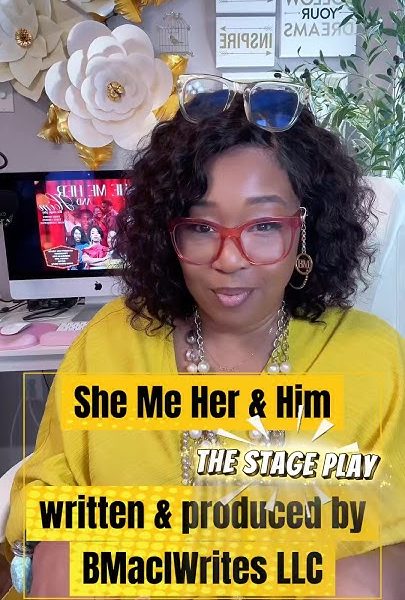
‘She Me Her and Him’ will bring story of life challenges to the stage in Leesburg
“I wanted to give the audience a bird’s eye view of a way to face the challenges of life.”
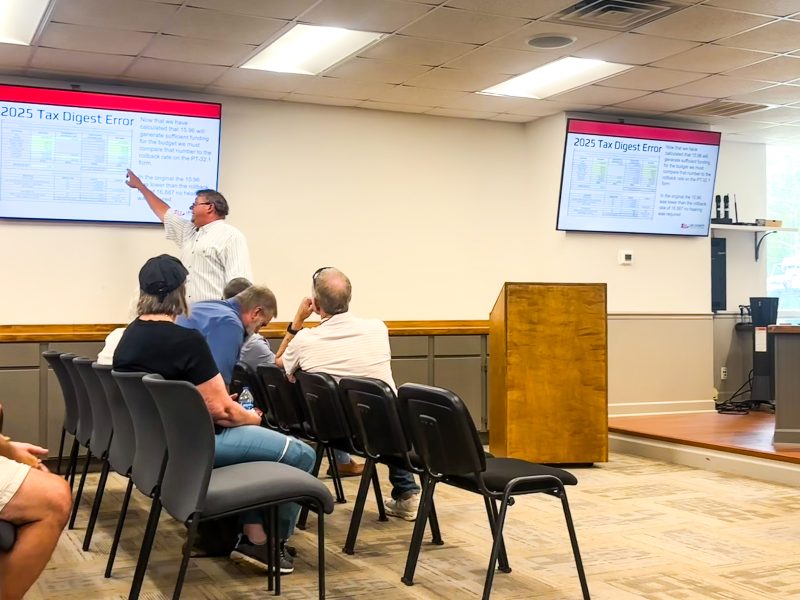
Lee schools approve $97.1M budget; officials defend tax rollback actions, warn of future funding challenges
Dozens of residents attended the public hearing and subsequent board meeting, where Executive Director of Finance Gary Kelley spent nearly 30 minutes outlining the district’s finances, responding to criticism surrounding the 2025 tax digest error and warning of long-term funding challenges facing the school system.
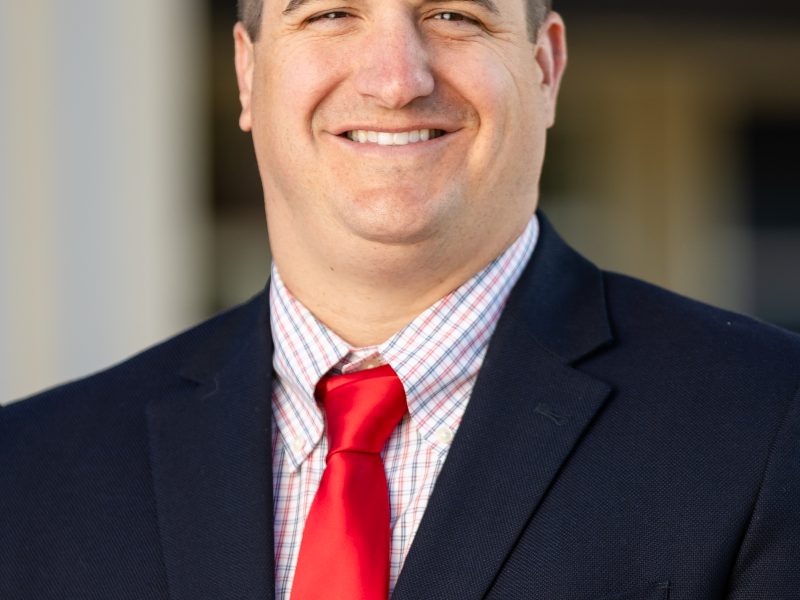
Deerfield-Windsor welcomes new headmaster, John Abernathy
“We have a very talented faculty that cares about these students. I think our faculty strives to meet the needs of our students and makes them accountable to our core values: honor, encouragement, character and service.

