
‘Outsiders’ spark budding renaissance in Clay County
Special Photo: Roxanna Peak Simpson
By Tom Seegmueller
[email protected]
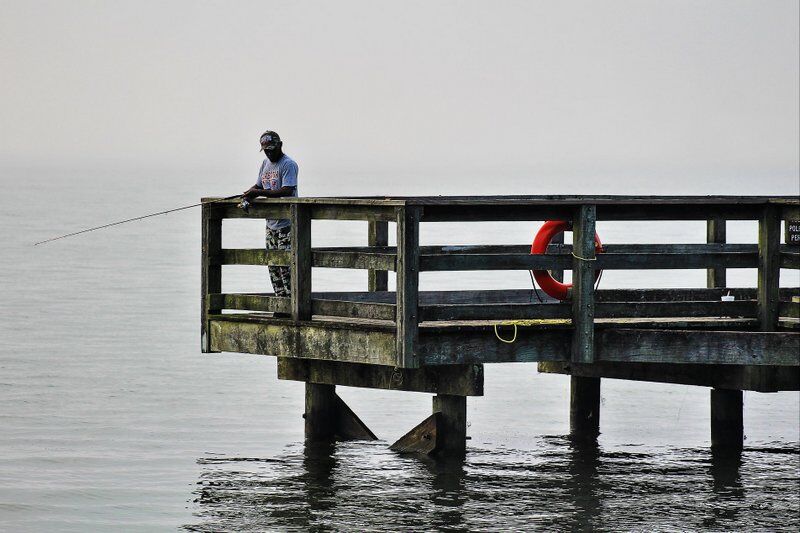
FORT GAINES — Across the country, small, rural communities are disappearing, and the only reminder that they ever existed is a name by a black dot on a map. Fort Gaines was almost an example of this extinction. But the once proud Phoenix of a city may be rising from the ashes of despair.
In 1814, a treaty between the Creek Nation and the United States transferred 24million acres of Creek land to the U.S. as compensation for the destruction of property during the Creek War of 1813-1814. Before the ink was dry on the pact, settlers began pouring into the region to take advantage of the fertile soil and timber in the Chattahoochee Basin.
Obviously, the Creeks living in this region of southwest Georgia were not happy with this arrangement, and a series of forts were established to protect the settlers. Fort Gaines was built in 1815 on the southern border of the new territory where the Cemochechobee Creek flowed into the Chattahoochee.
A community would begin to grow and flourish around the fort, which played a significant role in the Creek and Seminole wars as well as the War Between the States. The city grew and prospered to the point that, in 1854, it was designated as the seat for the newly formed Clay County. While cotton was king and farmers were dependent upon the river for transporting their crops to the Gulf, the community continued to grow and flourish.
The start of the 20th century marked the zenith of the city’s growth, recording a population of 1,300 citizens. With the exception of the 1940 census, a steady downward spiral reduced that number to approximately 960 by 2019.
Data from the 2010 census registered 3,200 residents in Clay County, with 31% living below the poverty line with an average per capita income $16,819. It also reported that 23% of households in the county are headed by single females. The unemployment level is currently around 14%.
“When I talk to people in Atlanta, I tell them you could put the population of Clay County in an end zone section at Grant Field … what you’re dealing with here is poverty and pine trees,” said Ken Penuel. “We have good people. But we have no industry. The largest employer here is jury duty. Actually, other than governmental jobs, it’s working at the nursing home.”
Penuel is a retired Southern Company executive and member of a team working “to get Clay County and Ft. Gaines off life support.”
“We were almost in a fetal position,” agreed Ken Johnson, another member of the team. Johnson is a retired high-tech entrepreneur and chairman of the Clay County Economic Development Council. Tara Gardner rounds out the team with her grant-writing and community organizational skills.
“I call myself a community cultivator,” Gardner said. “I am the voice of the people. I listen to them. I research and collect data, write grants and pass them on to government infrastructure or the organization that needs it to take the lead on projects.”
In 2017, things really started to take off when a Georgia Senate Committee visited Clay County during a state tour of rural parts of the state. During the tour, Dr. Karen Kinsel presented information relating to the medical needs within the county. Following the meeting, state Sens. Freddie Powell Sims and Renee Unterman, along with state Rep. Gerald Greene, worked to keep these needs highlighted at the state Capitol.
These efforts paid off when Penuel received a phone call from the Clay County Administrator stating that the county had received a letter from the state Senate informing them that the county was in line to be awarded a $750,000 grant for a medical center but weren’t sure what they needed to do before a Friday deadline.
“I said you need an application” by Thursday,” Penuel said. The county had one on Friday.
In the 1970s, the Clay County Hospital closed and was sold for $2,700,000 for use as a nursing home. However, hospital officials did not need a 7,500-square-foot wing that included the old operating room, so they locked it up.
“It was like a time warp when we walked in,” Penuel said. “The OR would have made a great movie set.
“In talking to the owner of the property, I had never met him. We only talked by email and over the phone for three years. He knew we wanted to buy the property, but he said it would take lawyers more than the property is worth to untangle things. A week later he called back and said, ‘Here’s what I’m willing to do. I talked to my banker and lawyer, and it’s easier for me to just lease the property to you.’ I told him we had to own it; we have to have title to it to be able to get the grants we need. He said, ‘I’ll lease it to you for 99 years for $1. That’s the same as owning it.’”
With a building secured and the funds for renovation in hand, a plan was drawn up converting the space to a state-of-the-art medical clinic. When word “leaked” out about the plans, the group received a call from Mercer Medical expressing a desire to manage the facility.
Penuel and Johnson are strong believers in the domino effect, and with these two dominos down, more started falling in place. Ft. Gaines has not had a pharmacy since 2018. However, with a medical facility on the way, pharmacists began inquiring about property in the area. The old Bi-Rite Pharmacy is now being remodeled, and Cricket Drugs will be opening in about a month. That’s just in time, it turns out, to begin filling the prescriptions written at the Mercer Medical Center, which is slated to open in about six weeks.
The plans for the medical center left approximately 2,000 square feet of unused space in the wing. It is being remodeled to house the Clay County Health Department, putting the county’s public and private health care providers in one facility. The vacated Health Department will in turn be remodeled to be used as the “new” County Governmental Building.
Another domino ready to fall is the continuation of a proposed project creating a retirement community on the Lake.
“People laid the groundwork in 2008 before the crash,” Johnson said. “We are looking at building lakeside retirement cottages along the waterfront area and then on the other side of Highway 39 we will build an assisted living facility.”
The planned community he described would sit on property leased for the Corps of Engineers, with the Clay County Development Authority holding the deed to the property.
“We had our first meeting with the Corps and they were very supportive,” Johnson said. “The next step is to go to the Mobile District office and lay out the plans to them.”
The idea of creating a retirement resort is not unrealistic. More than 100,000 visitors come to the county each year to enjoy the lake. There is already a golf course in the county, and other amenities are in the works. That is another reason the team focused on a medical clinic, realizing that medical care, low taxes, and recreational opportunities draw retirees.
When it comes to amenities and small businesses, the addition of Riverside Deli and Tara & Company — a new coffee shop — might not seem like much. In Clay County, though, every four new jobs reduce the unemployment level by 1%.
On a larger scale, the county is about to break ground for the construction of a $100 million, 2,000-acre solar farm. Although this high-tech plant will have no employees, its potential economic impact on the county is an impact that can be measured in dollars.
“The only way you will get a solar plant is do a tax abatement,” Penuel said. “The Clay County Development Authority owns the solar plant and leases it back to the developer. The challenge then is to negotiate payment in lieu of taxes (PILOT).
Taxes on a property like the solar facility could run as high as $16 million, so the key to a good deal for the county is to determine how much to waive and how much to charge on the PILOT. Obviously trying to meet somewhere in the middle is the goal for a successful negotiation.
With this in mind, the Clay county PILOT is being levelized, creating a uniform budgetary impact over its lifespan. Interestingly, Penuel explained that a dollar is a dollar to the solar utility company and can be distributed to a variety of entities. Therefore, their PILOT will make payments directly to all recipients, including $7,500 a year to the Downtown Development Authority.
The levelization of payments has another benefit. Corporate forest land comprises a majority of the county, and in Georgia timber is taxed as a crop and the tax is levied upon harvest. So it is difficult for the county to determine income on this resource. Considering it takes about three decades for timber to reach maturity, some years may produce a windfall of taxes and other years may generate a limited amount. Meanwhile the county has a $1.8 million budget, and the city budget runs at about $200,000. The county school system requires $4,360,000 for the 218 students in the system.
Interestingly, none of the team members leading its renaissance is a native of Clay County. Johnson recently retired and moved from Atlanta to a home on the lake. Gardner moved to the county in 2008, and after an outpouring of warmth and support from the community following her mother’s death in an auto accident, said she knew this is where she belonged. Penuel saw the city for the first time in 2003 when he was sent there by his wife and mother to buy mayonnaise and bread to make tomato sandwiches at their lake house.
“Ten seconds can change your life,” he said.
While walking downtown, he ended up discovering a building that was for sale. This is one of the first properties in the county he has purchased.
“One of the first things I proposed here — and this outsider almost got thrown out — was to combine Clay, Quitman and Stewart counties and call it Lake County,” he said.
From the nodding heads at the table, the team still thinks that idea has merit. The fact that their now fellow citizens have appointed each of them to numerous boards and authorities indicates they are now, indeed, “locals.”






Related Articles

Classifieds – June 16, 2026
New Temple Praise Lawn Care: Raymond Kennebrew 229-603-5899 [email protected]
Three summertime fun nights planned for young people at Albany Civic Center
“I think any time you invest in children and youth, you’re always making a great investment. I think it should be a good experience.”

Albany Herald – June 13, 2026
ATC student earns bronze medal at National SkillsUSA competition… Albany Commission eyes another draft at downtown brewery… PUBLIC OPPOSITION SINKS PROPOSED LEE COUNTY SOLAR FARM…

