
Overcoming springtime bass fishing woes
Severely stained or muddy water associated with spring can make fishing difficult
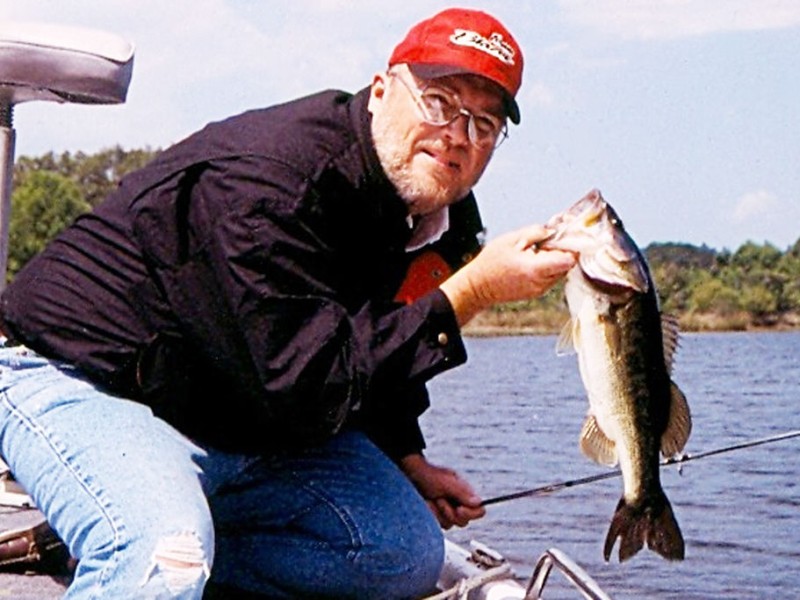
By Bob Kornegay
Editor’s Note: There will be no fishing reports this week. Wednesday’s rain deluge has magnified the stained-water/high-water-level conditions across the area. Coupled with approaching colder temperatures, overall angling prospects don’t look positive for the next several days.
Though it may seem a bit early to discuss any subject related to springtime bass fishing, it is important to remember that spring often comes to our region well ahead of the official date. Fish do not carry calendars and, wherever they live, base most if not all their activities upon regional climatic conditions. It pays to be prepared, even when riding out the fishing doldrums of a too-wet/too-muddy late South Georgia winter.
Most Southern bass anglers have positive thoughts about spring fishing. The majority point to this time of year as a prime time to target largemouths. A good time of year, however, does not necessarily mean the fish are always easy to locate and catch. Area bass fishermen who tout springtime angling are just as quick to point out the bass fishing “glitches” of this up-and-down time of year.
Here are a couple of major springtime bass fishing concerns and some tips on how to make the best of spring fishing problems, no matter when they arise.
Stained water affects the efforts of every bass angler at some time or another. Early in the year, “stained-to-muddy” is often a good description of many area reservoirs. This phenomenon is normally caused by extended rainy periods and the resulting runoff coming down a lake’s tributaries.
Severely stained water can make fishing extremely difficult. Bass will tend to hold tightly to structure and may move very little if the discolored water inundates an entire reservoir. During stained-water periods, largemouths can find baitfish and other prey hard to locate and will expend little energy to actively seek them out.
To cope with stained water, first locate the clearest area of the lake you can find. Often, areas near the backs of creeks will hold water more conducive to increased bass activity. The fish tend to be a bit more active in these spots because shad and other forage fishes naturally gravitate to these “cleaner” locales.
In these upper-creek areas, try fishing 4-to 7-inch worms worked with lighter weights. Fish them slowly and very close to any available structure. If grass or other vegetation is present in clearer-water areas, work deep-running crankbaits close to and along the edges of the grasslines. Occasionally, spinnerbaits may pay off when fished in these same spots early and late in the day. Experiment with different colors, regardless of the type of bait used. Slow presentation and accuracy are vitally important.
Should the upper reaches of the creeks fail to produce strikes during stained-water periods, seek out points that jut into the lake in areas where the river channel runs closest to the shoreline. Bass will often hold on such structure for days at a time when muddy conditions persist. Their depth will vary, depending on water temperature and the presence of forage. Use Texas-rig worms and work the points slowly from shallow to deep.
Fish the entire length of a point before giving up and moving to another location. If active fish are found on any section of the point, a deep-running crankbait retrieved down the point’s slope is a good option.
When fishing the points proves unproductive, it is time to move deeper. Seek out the bass holding fast to the river channel ledges. These fish may prove to be the most reluctant biters of all, but can be coaxed into striking when a bait is presented closely enough.
One-half to three-quarter-ounce jigging spoons may be fished vertically in suspended schools of bass. Big worms fished Carolina-rig style are also popular ledge-fishing baits during stained-water periods.
Fluctuating water temperatures are the second major spring bass-fishing concern. While stained water is often something of a constant during the spring, water temperature in the big reservoirs is far from consistent. February through April is witness to drastic drops and rises.
A warming trend may develop over a 3 or 4 day period, causing the bass to move ever closer toward their shallow-water spawning grounds. Then, just when the angler thinks he has the pattern figured out, a cold front plows through and Old Man Winter makes a valiant last stand. When this happens, the bass and the bass fishermen can become equally confused.
Keep just one thing in mind, say the experts. Remember that bass do not stop feeding after a spring cold snap; they simply stop moving great distances to chase prey. They are full from gorging themselves just prior to the cold front’s passage and refuse to pursue anything that doesn’t swim very near.
Again, one of the best ways to combat this period of largemouth lethargy is fishing slowly and placing the bait directly into the bass’s lair if not right in his mouth. Several local authorities refer to this as “hittin’ ‘em in the head.” During such periods, look for fish on deep structure and use slow-presentation baits like worms and jigs. Don’t overly complicate things. Simply slow down and concentrate on the accuracy of lure presentation.
Remember that early-spring is one of this region’s best times for bass fishing on the big reservoirs. Don’t be discouraged by the sometimes-fickle weather and water conditions. Use them to your advantage and success may be a mere cast or two away.
Related Articles

Caitlin Clark makes history, scores career-high 45 as Fever beat Storm
Caitlin Clark delivered the first 40-point, 10-assist performance in WNBA history as the Indiana Fever defeated the Seattle Storm 110-107 on Friday night in Indianapolis.

Dream ride balanced attack to take down Tempo
Naz Hillmon scored a team-high 24 points, Angel Reese and Jordin Canada had double-doubles and the visiting Atlanta Dream defeated the Toronto Tempo 111-92 on Friday night.

Braves return from break with a bang, dominate Rangers
Drake Baldwin, Matt Olson and Austin Riley all homered and Chris Sale pitched seven scoreless innings to lead the Atlanta Braves to a 15-1 win over the visiting Texas Rangers on Friday in the opener of their three-game set.
