
FREDDIE POWELL SIMS: Consolidation saved higher ed in SW Georgia
GUEST COLUMN: Tough decision by Regents has positive impact on area economy
By Freddie Powell Sims
In 2017, Albany State University had an economic footprint of $289 million in the Albany region, including employment, along with direct and indirect spending, according to a report released in August of 2017 by the University System of Georgia. Albany State’s annual economic impact increased by $4 million compared to the 2015 combined economic impact of ASU and Darton State College prior to the consolidation of those two schools. According to the economic impact report, the consolidated university employed 3,256 people with a $121 million payroll for the southwest Georgia region.
It is absolutely no secret that without this economic agent in this quadrant of the state, serious educational and economic gaps would exist. In fact, the loss of just one large industry in southwest Georgia causes an economic tsunami of despair. The first victims of this tsunami are the employees, who lose a steady source of income to support their families; quality health care, and the ability to contribute to their future through a retirement program. Secure benefits like health care evaporates and retirement plans are altered or deferred for longer time periods. The second victim of the tsunami is southwest Georgia itself. The loss of any industry impacts the economic health of communities.
The consolidation of Albany State and Darton College took place almost two years ago, much to the chagrin of many, and remains a “hot topic” of discussion in southwest Georgia. Be it noted, that Georgia’s Board of Regents has specific guidelines for consolidation of any higher education institution. Albany State and Darton were definitely not the only two institutions that experienced consolidation, nor were they the first or the last.
The consolidation of these two institutions was not meant to be a quick-fix for problems at both institutions. Georgia’s Board of Regents said, “Consolidation must enhance regional economic development; streamline administrative services to maintain and improve quality-level services; create significant potential for economies of scale and scope; avoid duplication of academic programs and optimize access to instruction; improve accessibility, regional identity and compatibility, along with increased opportunities to raise education attainment levels.”
Prior to consolidation, detailed statistical data were copiously studied from both institutions. Albany State and Darton were both experiencing anemic enrollment and insipid retention rates. Taxpayer dollars were not being used strategically or wisely at either institution to resolve these issues. Restoration of both institutions on separate campuses would have been costly to Georgia taxpayers.
Unfortunately, it was a story being played out across the state, mostly below Georgia’s fall-line. Declining populations in South Georgia exacerbated enrollment decline in the area. Students traded in their small-town roots for big city identification, thereby selecting colleges and universities in much larger Georgia cities.
Comparatively speaking, Albany State and Darton both had similar enrollment issues, just as other higher education institutions in the state that faced consolidation. A deeper dive into these consolidations found that in the last five years, Augusta University’s enrollment declined post-consolidation until 2015 and then started increasing again. Georgia State University was down the first year of consolidation but advanced afterwards. Kennesaw State University has increased since consolidation, and Middle Georgia University has declined since consolidation but was on the decline prior to consolidation. The University of North Georgia has increased enrollment since consolidation; South Georgia State College has been lower since consolidation but relatively stable.
The journey through consolidation by Albany State and Darton was never going to be easy or lovingly accepted by all. Albany State is a four-year institution with different entrance criteria, Darton a two-year institution with another set of entrance guidelines. This merger took place under the direction of Georgia’s BOR and former Chancellor Hank Huckaby, who carefully studied the financial and enrollment data of both institutions. Then, Chancellor Huckaby and the BOR saved higher education in Albany by making a somewhat unpopular, yet strategic decision to merge the institutions. It will be several years before we see the total benefit of this consolidation. However, it is my opinion, that Albany and Southwest Georgia will be stronger as a result.
Higher education in Albany is alive and well. Hundreds of jobs were saved through this consolidation, thousands of students call Albany home, and economic and intellectual capital continue to thrive. We must accept and remember that the alternative to consolidation would have been the closure of either or both institutions. Now is the time for community and campus to become “solutionists” for the academic future of southwest Georgia and rally behind Albany State University. I know that interim President Marion Fedrick welcomes those with helpful solutions to move Albany State University forward. We do not have to agree with the consolidation, or its merits, but I am certain that most agree that the loss of these institutions would have been devastating to our hometown and the southwest Georgia region.
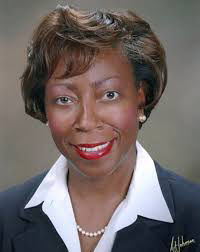
Sen. Freddie Powell Sims, a Dawson Democrat, represents District 12 in the Georgia Senate.
Related Articles
Squawkbox – June 6, 2026
SQUAWKBOX: JUNE 6, 2026

CARLTON FLETCHER: The future of America literally hangs in the balance
Our president has basically taken advantage of a feckless, gutless Congress, a complicit Supreme Court and a sycophantic – but ever-shrinking – percentage of the population to run amok with the very Constitution that has sustained America throughout its existence.
SCOTT LUDWIG: The best birthday party ever
No one says “Happy Birthday, America” better than Donald Trump. Ask anyone wearing a MAGA hat if you have any doubt.

