
‘Watermelon Capital of the World’ goes primetime
Special Photo: Donna Sanders
File Photo
Staff Reports
[email protected]
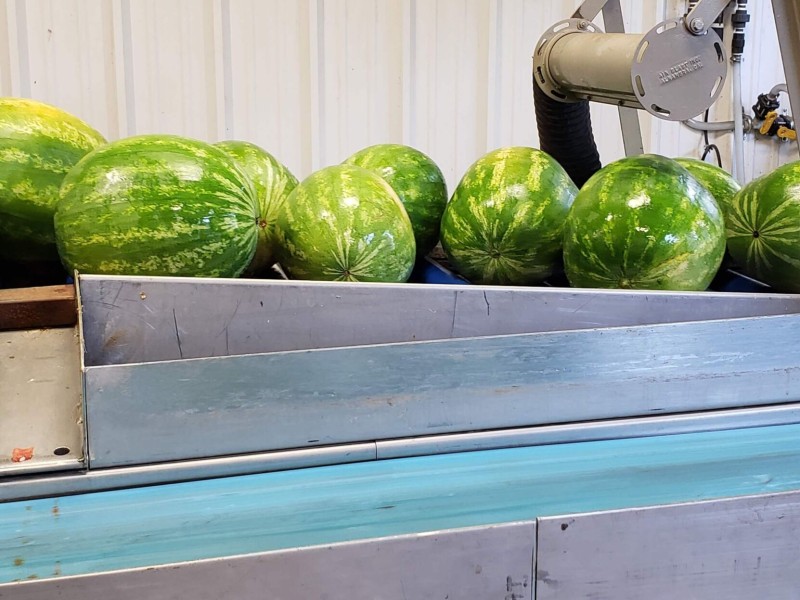
CORDELE – It’s a sweltering, humid Georgia summer morning, not exactly the kind that makes you want to kick off your shoes and skip whistling through a watermelon patch … but exactly the kind of weather that watermelons love. And no place in the world grows better watermelons than this tiny little Georgia town just off Interstate 75, about 40 minutes north of Albany.
Maybe you’re not sure why you came here – the decommissioned Titan missile that’s stood sentinel and drawn visitors since 1966 in a parking lot just off the highway might have prompted you to turn – but now that you’re here, you realize there’s something sweet about this town.
Turns out it’s that watermelons growing on thousands of acres and long judged to be the sweetest, juiciest and crispest in the world, according to the Cordele-Crisp County Chamber of Commerce.
Cordele doesn’t produce the most watermelons anywhere, though it’s among the per-capita leaders, but it’s become the cornerstone of the town and of Crisp County. It’s the economic engine that powers the pocketbooks. And it’s also a point of pride, which is obvious everywhere. Even the local Chick-Fil-A features watermelon beverages you won’t find elsewhere.
From the annual Watermelon Days Festival to the crowning of a new Watermelon Queen each year, Cordele is all about watermelons.
And why not? They’re one of the healthiest foods on the planet, according to the American Heart Association and others. And they’re also just flat out fun. What says summertime better than a nice cold slice of watermelon?
That’s what brought the RFD-TV Network’s (DirecTV, Dish, Cable, Sling) popular series “Where The Food Comes From” to town to film an episode that airs Friday night at 10 p.m. and again at 1:30 a.m. Saturday.
Watermelon fields can look like untamed tangles of foliage to the untrained eye. They don’t come off in a neat orderly fashion, like most crops. They grow right on the ground (that’s why the underside is yellow) and hide in vines and greenery that make harvesting something of an Easter egg hunt. Each vine produces several watermelons, usually at different times – you’ll see one ready to pick, two about halfway there, maybe two more little ones. It’s almost like there’s a cosmic design in place to keep watermelon coming all summer long. And maybe there is.
Jordan Carter never intended to get into the watermelon world. She had an eye on high fashion and got her degree from the renowned Savannah College of Art and Design. After graduation, she came home to figure out her next step and took a summer job with Leger & Son, one of Cordele’s largest watermelon farms.
She never left. Today she serves as the company’s vice president. She also became the first female president of the National Watermelon Promotions Board, a federal marketing group that exists to let more people know about one of America’s favorite year-round fruits.
“I never thought this would be my life,” Carter said. “But after college, I saw this town and the industry in different ways. Watermelon is so critical to who we are here. We fill an important role in Cordele and Crisp County. I kind of fell in love with it, and pretty soon I wasn’t thinking about ever doing anything else.”
The Chamber of Commerce here also makes watermelons a top priority. There are other draws to Cordele. In addition to the Titan missile, there’s an impressive military museum that includes an entire World War II bomber task force, right down to the fighter planes that accompanied those missions. Nearby Lake Blackshear resort is also a tranquil and popular draw.
But pretty much all of that – and everything else that happens here – comes back to watermelons.
“Watermelon gives us a built-in calling card,” Chamber President Monica Simmons said. “Everybody loves it, and we grow the best in the world. It’s fantastic to have something so promotable that has such a great health message and such an unerasable legacy.”
While the chamber is busy planning festivals and promotions about watermelons’ goodness, workers are in the fields hunting through the greenery to harvest this summer’s crop, which starts in early June and sometimes makes it well into September, with a peak in volume and quality in July and August. In other words, if you’re in Georgia, there’s no time like the present.
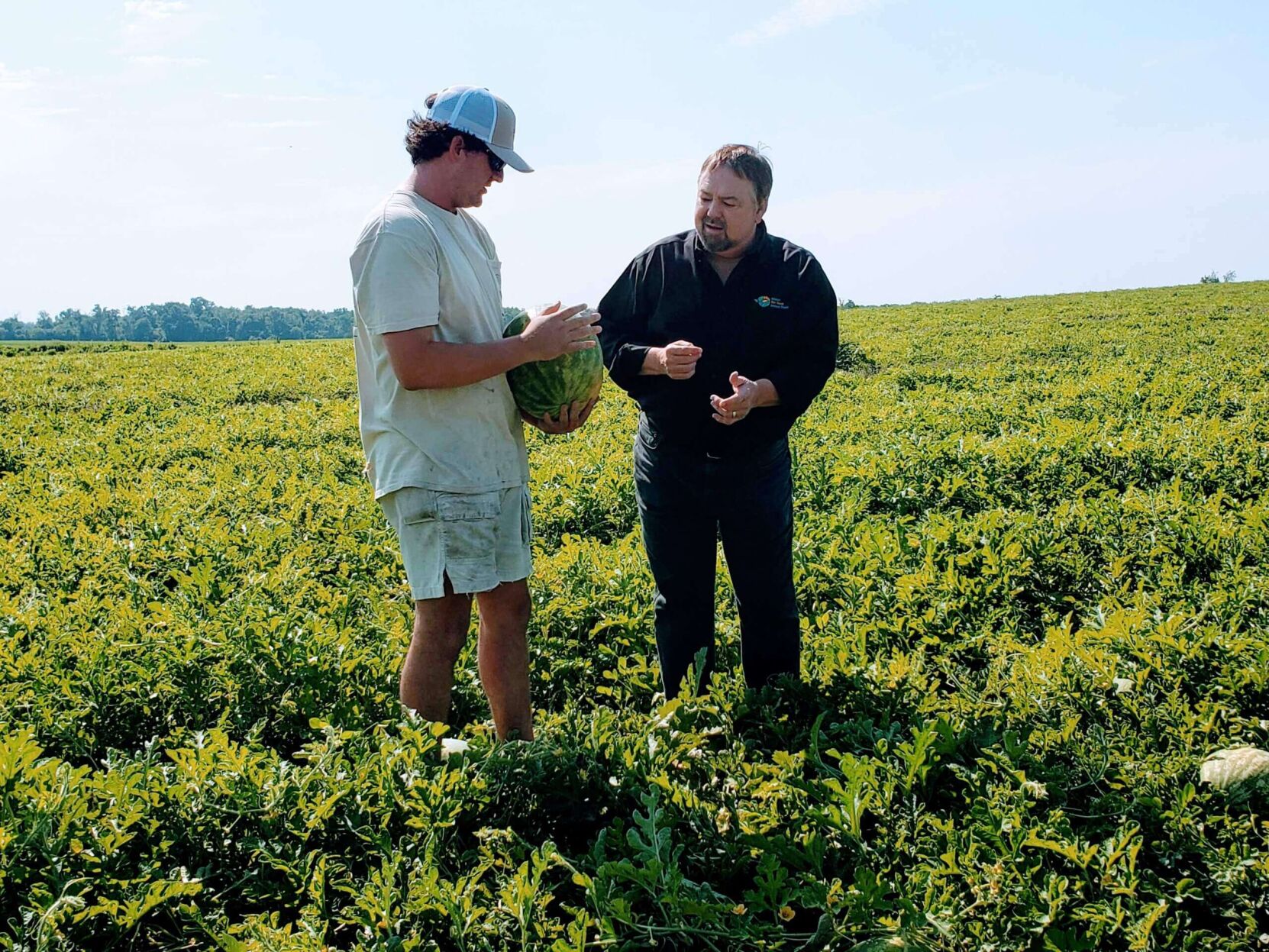
WTFCF host Chip Carter joined the workers on a recent sweaty summer morning, accompanied by third-generation grower Cole Leger, who provides some of the finer tips … like how to pick the perfect watermelon. On striped varieties, the narrower and greener the stripes, the riper the fruit. For all watermelons, the good ol’ thump test applies, but with a bonus trick from Leger: Instead of just thumping away, put one hand on the opposite side you’re going to test. If you can feel the vibration of the thump from the other side, it’s ready to bust open.
“I’m not sure I’ve ever been hotter and sweatier in my life,” Chip Carter said, coming into the welcoming air-conditioned climes of the Leger office and packinghouse. “It’s a good thing we’re not a Hollywood production; they’d have cleaned me up or used a stand-in. But I think it’s incredibly important – and the heart of the show – to let people know how hard farmers work and the conditions they do it in.”
Carter got more than another television episode for his efforts – he and the crew snagged a trunkful of Georgia summer goodness to carry home.
“Best perk of the job,” he laughs.
“Where The Food Comes From” is now in Season 4 on RFD-TV and expanding to other channels as well. The show is focused on the farm, but follows the food supply chain to show all the invisible players who keep us fed. With episodes from fields and packinghouses to seaports and research labs, WTFCF has filmed in locales like Wisconsin, Florida, North and South Carolina and Virginia, with multiple episodes shot in Georgia and more on the way.
For more information on Cordele watermelons or the show, visit WhereTheFoodComesFrom.com.
Author

Related Articles
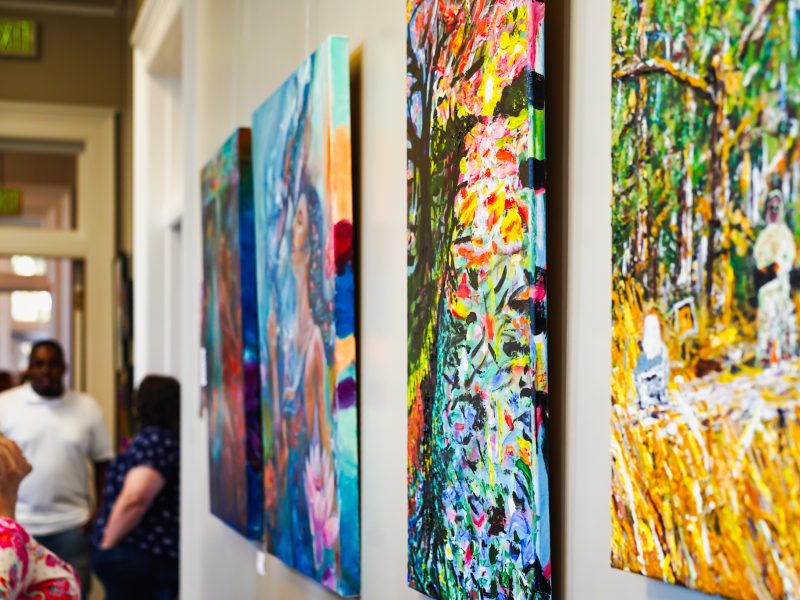
Southwest Georgia artists recognized at packed opening of exhibition
The annual juried exhibition, one of the region’s largest showcases of visual art, features approximately 46 artists and nearly 90 works spanning painting, sculpture, ceramics, photography and mixed media.
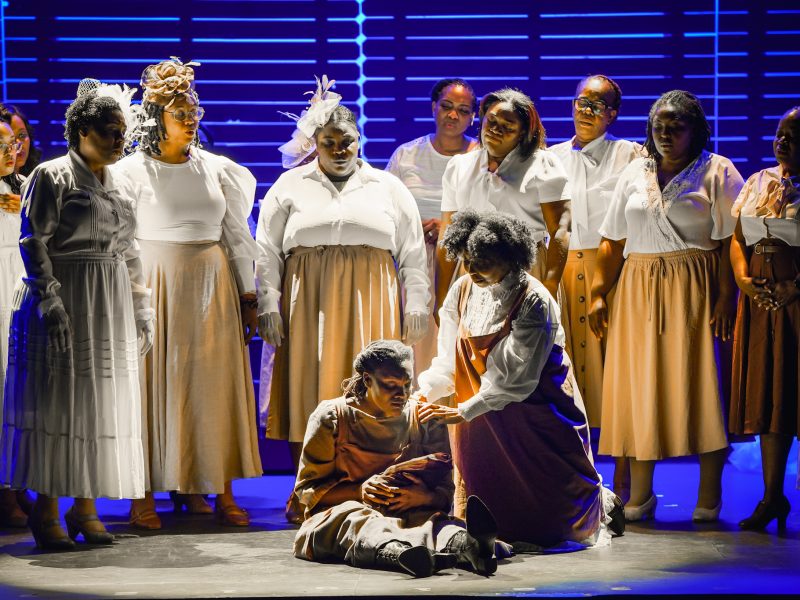
Powerful performances drive Theatre Albany’s ‘The Color Purple’
From the street, strands of purple ribbon wind around the white columns of the historic theater, hinting at the story waiting beyond its doors. Inside the foyer, a carefully curated slideshow flickers across a large screen, cycling through the faces of the cast. Some are seasoned performers. Others are stepping onto a stage for the very first time. Teachers stand alongside former students. Parents perform beside their children. People who worship in different churches, work different jobs and come from different corners of Southwest Georgia gather beneath the same lights to tell the same story.

Annual exhibition showcases southwest Georgia talent, community connections
Now in its 26th year, the exhibition features work by artists from across Southwest Georgia and offers residents an opportunity to engage directly with the area’s creative community.
