
Chehaw contributes to study on turtle aging
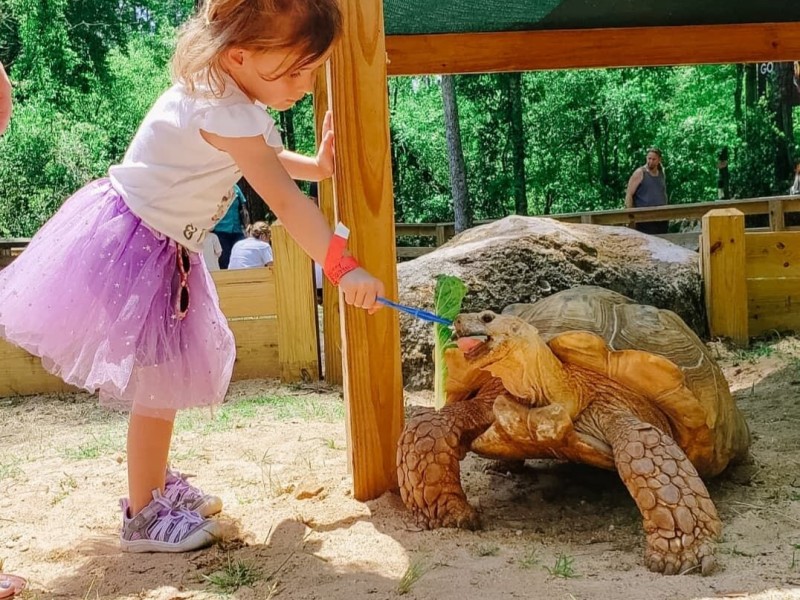
Special Photo: Chehaw
By Morgan Burnette
Chehaw Park & Zoo Director
ALBANY — Even though humans live longer lives compared to their historical counterparts, we cannot escape the inevitability of aging. However, testudines — the order to which tortoises and turtles belong — may buck this trend by following a different pattern of aging compared to humans and other species.
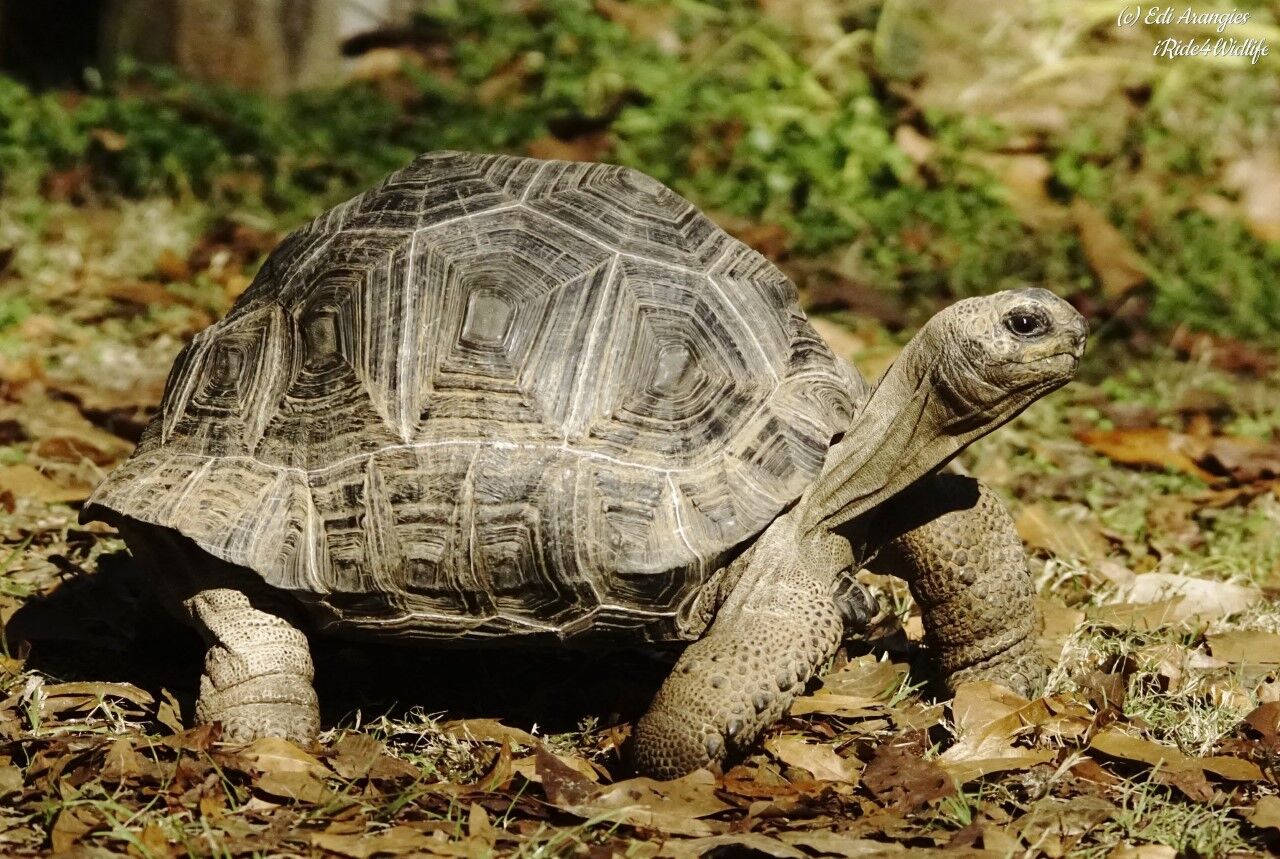
In a new study published in the journal Science, researchers used data contributed by Chehaw Park and Zoo in collaboration with other zoos and aquariums to examine 52 species of turtles and tortoises. The data recorded by Chehaw in the Species360 Zoological Information Management System enabled researchers to discover that, unlike humans and other species, turtles and tortoises defy common evolutionary theories and may reduce the rate of aging in response to improvements in environmental conditions.
Evolutionary theories of aging predict that all living organisms weaken and deteriorate with age (a process known as senescence) — and eventually die. Now, using data captured by Chehaw and others, researchers from the Species360 Conservation Science Alliance and the University of Southern Denmark show that certain animal species, such as turtles and tortoises, may exhibit slower or even absent senescence when their living conditions improve.
Out of 52 turtle and tortoise species, 75% show extremely slow senescence, while 80% have slower senescence than modern humans.
“We find that some of these species can reduce their rate of aging in response to the improved living conditions found in zoos and aquariums, compared to the wild,” study co-author Dalia Conde, Species360 Director of Science, Head of the Species360 Conservation Science Alliance, said. “In addition, modern zoological organizations play an important role in conservation, education and research, and this study shows the immense value of zoos and aquariums keeping records for the advancement of science.”
“As part of our commitment to conservation and animal welfare, our organization records data on the animals in our collection to ensure our animals are well-cared-for and contribute to species population management and conservation,” Chehaw Director Morgan Burnette said. “We are proud that the data we have collected on the tortoises in our collection has contributed to this study and helped researchers better understand aging in these species.”
Chehaw Park and Zoo is a member of Species360, a nonprofit organization which maintains the ZIMS — the largest database on wildlife in human care. As part of Chehaw’s commitment to conservation and providing high standards of animal welfare, it uses ZIMS to keep detailed records of its animal collections. As a holder of 13 tortoises representing six different species, Chehaw has actively collected and shared data in ZIMS which has directly contributed to this study.
Some evolutionary theories predict that senescence appears after sexual maturity as a trade-off between the energy an individual invests in repairing damages in its cells and tissues and the energy it invests in reproduction, so its genes are passed to the next generations.
This trade-off implies, among other things, that, after reaching sexual maturity, individuals stop growing and start experiencing senescence, a gradual deterioration of bodily functions with age.
Theories predict that such trade-offs are unavoidable, and thus senescence is inevitable. In fact, this prediction has been confirmed for several species, particularly mammals and birds.
However, organisms that keep growing after sexual maturity, such as turtles and tortoises, are believed to have the potential to keep investing in repairing cellular damages and are thus thought to be ideal candidates for reducing and even avoiding the harmful effects of aging.
“It is worth noting that the fact that some species of turtle and tortoise show negligible senescence does not mean they are immortal; it only means that their risk of death does not increase with age, but it is still larger than zero,” Fernando Colchero, principal statistical analyst for the Species360 Conservation Science Alliance and an associate professor at the University of Southern Denmark’s Department of Mathematics and Computer Science, said. “In short, all of them will eventually die due to unavoidable causes of mortality such as illness.”
The article is available at https://www.science.org/doi/10.1126/science.abl7811
For more information about the study and other projects using ZIMS data, visit https://conservation.species360.org/in-the-news/.
Formed in 2019, the Artesian Alliance is a partnership between Chehaw Park & Zoo, the Flint RiverQuarium, and Thronateeska Heritage Center. With a mission to develop partnerships and create opportunities that promote discovery, curiosity and adventure, the Artesian Alliance envisions a community that contributes to the betterment of its people, its flora, its fauna and its world.
Author
Related Articles

Southwest Georgia artists recognized at packed opening of exhibition
The annual juried exhibition, one of the region’s largest showcases of visual art, features approximately 46 artists and nearly 90 works spanning painting, sculpture, ceramics, photography and mixed media.
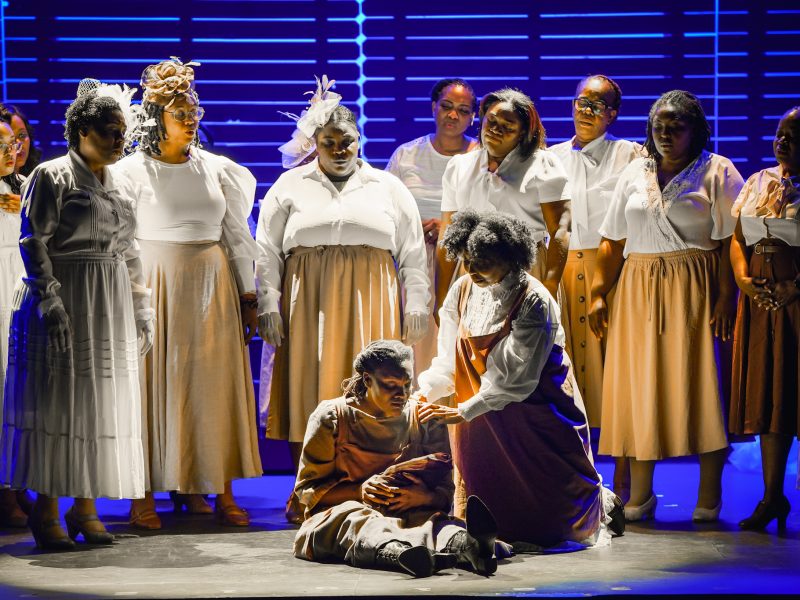
Powerful performances drive Theatre Albany’s ‘The Color Purple’
From the street, strands of purple ribbon wind around the white columns of the historic theater, hinting at the story waiting beyond its doors. Inside the foyer, a carefully curated slideshow flickers across a large screen, cycling through the faces of the cast. Some are seasoned performers. Others are stepping onto a stage for the very first time. Teachers stand alongside former students. Parents perform beside their children. People who worship in different churches, work different jobs and come from different corners of Southwest Georgia gather beneath the same lights to tell the same story.

The Worst Job in the Marines: Telling Parents Their Child Was Dead. It Was Also an Honor
Telling a family their child died in combat is something no one wants to do, but someone has to. Christopher Murphy described his service as a Casualty Assistance Calls Office as miserable but vital.

