
FROM HEART TO HAND: Albany Museum of Art features quilts by African-American women
Exhibits of quilts that are works of art continues through late February
By Jim Hendricks
ALBANY — While they have been overlooked as an art form, handmade quilts are intricately interwoven with culture, especially in the South.
Thirty of the finest examples of that — quilts that are part of the permanent collection of the Montgomery Museum of Fine Art — are on exhibit at the Albany Museum of Art through Feb. 24.
“Quilts have been dismissed a lot of times as just being craft, but they really are an art form,” Albany Museum of Art Executive Director Paula Williams said last week. “I think part of the reason perhaps that they were dismissed as art is it’s a little less traditional than painting, sculpture and photography, but they’re also made predominantly by women, which were largely dismissed in art and still are in many museums. And they were unknown, which is perhaps another reason.”
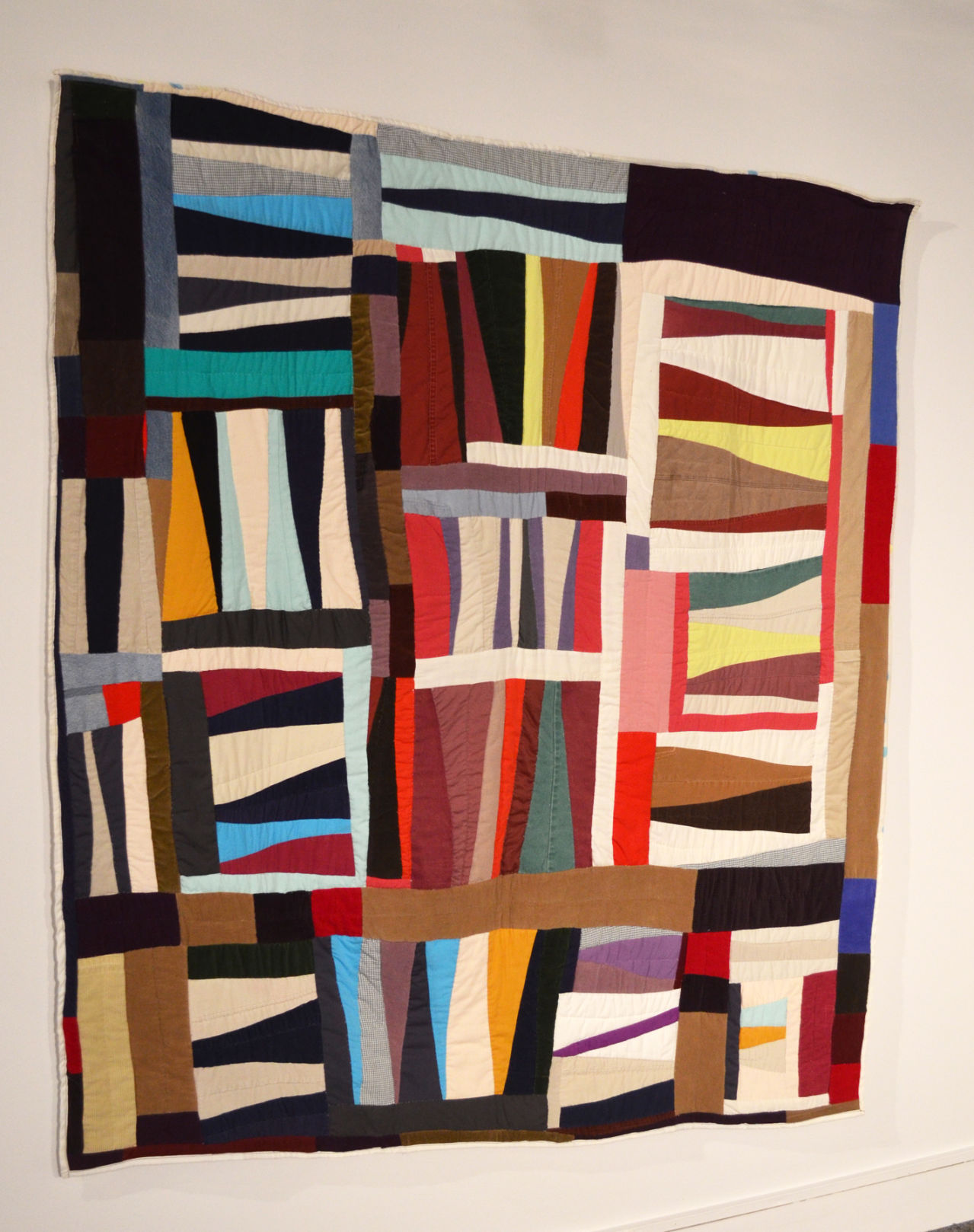
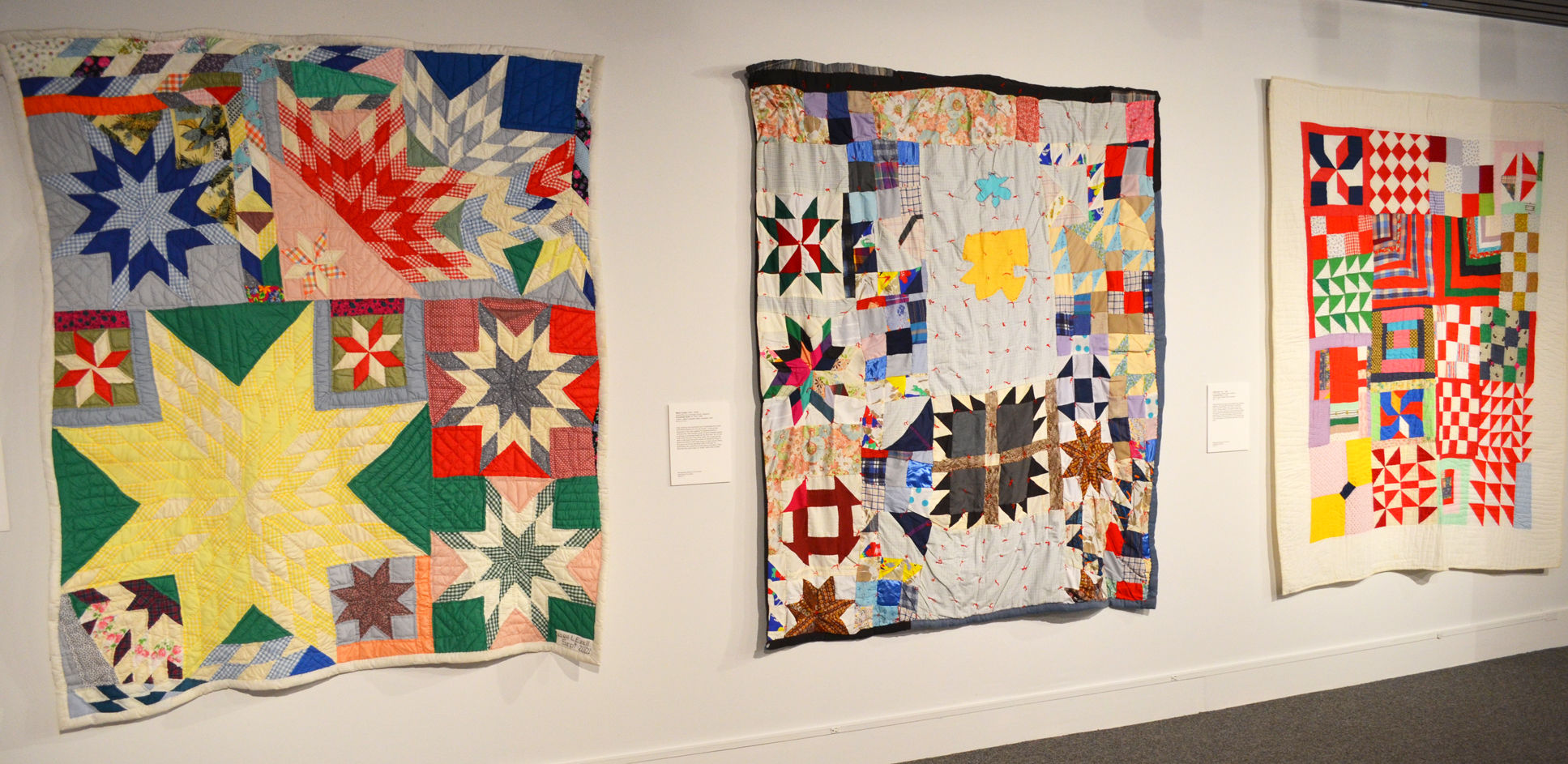
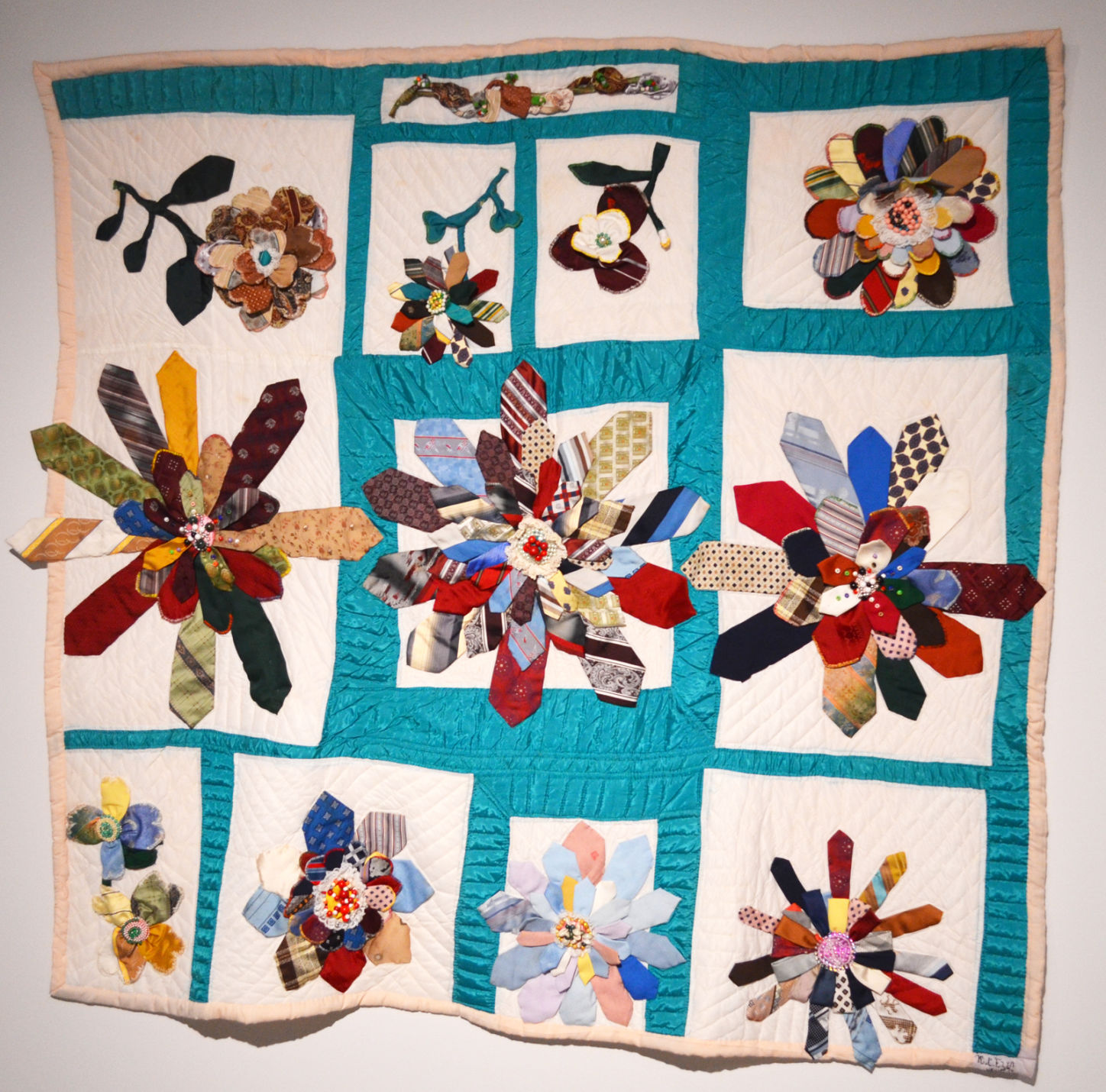
The quilts, created by African-American women primarily in west Alabama, are groups within three sections in the exhibition titled “From Heart to Hand” — Tradition: Patterns from the Past, Improvisation: Practical Invention, and An Unconventional Canvas: The Quilts of Yvonne Wells.
Most of the quilts were created between the 1950s and the end of the 20th century and include examples of pieced quilts, appliqué, improvisational techniques and use of unconventional materials that are common practice for contemporary quilt makers.
“We have one from the 1800s,” Williams said. “They really have a span. Some of the ones made by Yvonne Wells were made this decade.”
It’s an art form that, for many of the artists whose works are being exhibited, started as a necessity.
“They really just started to keep themselves warm, and then with the advent of central heating and air, these quilts ended up just being discarded,” Williams said. “The collector started grabbing these up, not just finding these quilts, but he found it was important to find the artists who made these quilts. Every single one of these has been identified by who the artist is.”
In the late 20th century, Gee’s Bend, Eutaw and other Alabama communities garnered national attention because of the scholarship focusing on the historic context of quilts in the rural environment. That scholarship also inspired a new appreciation for their aesthetic appeal.
The Montgomery Museum of Fine Arts began its collection of the quilts in 2004 when it acquired the collection of Kempf Hogan of Birmingham, Mich. He had assembled his collection over a period of years with the guidance and expertise of the late Dr. Robert Cargo, of Robert Cargo Folk Art Gallery, formerly of Tuscaloosa, Ala.
They identified the most important quilt-makers working in the region and began collecting pieces that best represented the range of their talent and creativity. The museum’s quilt collection now includes more than 60 quilts made by master quilters including Mary Maxtion, Lureca Outland, Nora Ezell and Yvonne Wells.
“I saw these a couple of years ago in New Jersey at a museum there and I said, ‘We have to have this show here.’ For me, I just get so excited talking about them,” Williams said. “They’re gorgeous quilts and they tell beautiful stories. I think even kids looking at this can derive so much from shape and color and geometry. Symbolism, history and all those things they learn at school are in these quilts.”
She noted that Wells “has become quite famous. We’re bringing her here to talk about her quilts (on Feb. 13). Her quilts are very different from the others in that she’s a storyteller. She was a schoolteacher for 39 years and then she retired. She started making quilts — her mom made quilts, but she didn’t in the early days and picked it up later. Hers are totally different from the others.”
Wells’ quilts tell stories ranging from social commentary to religion.
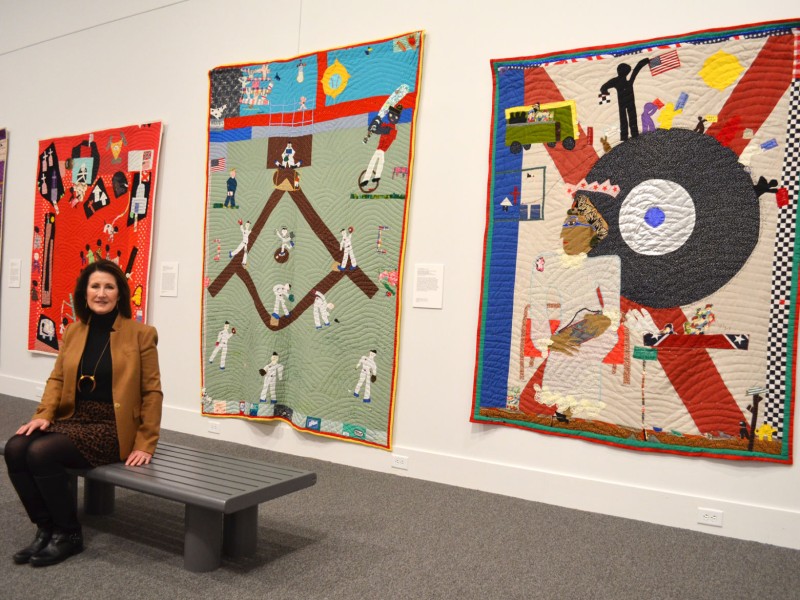
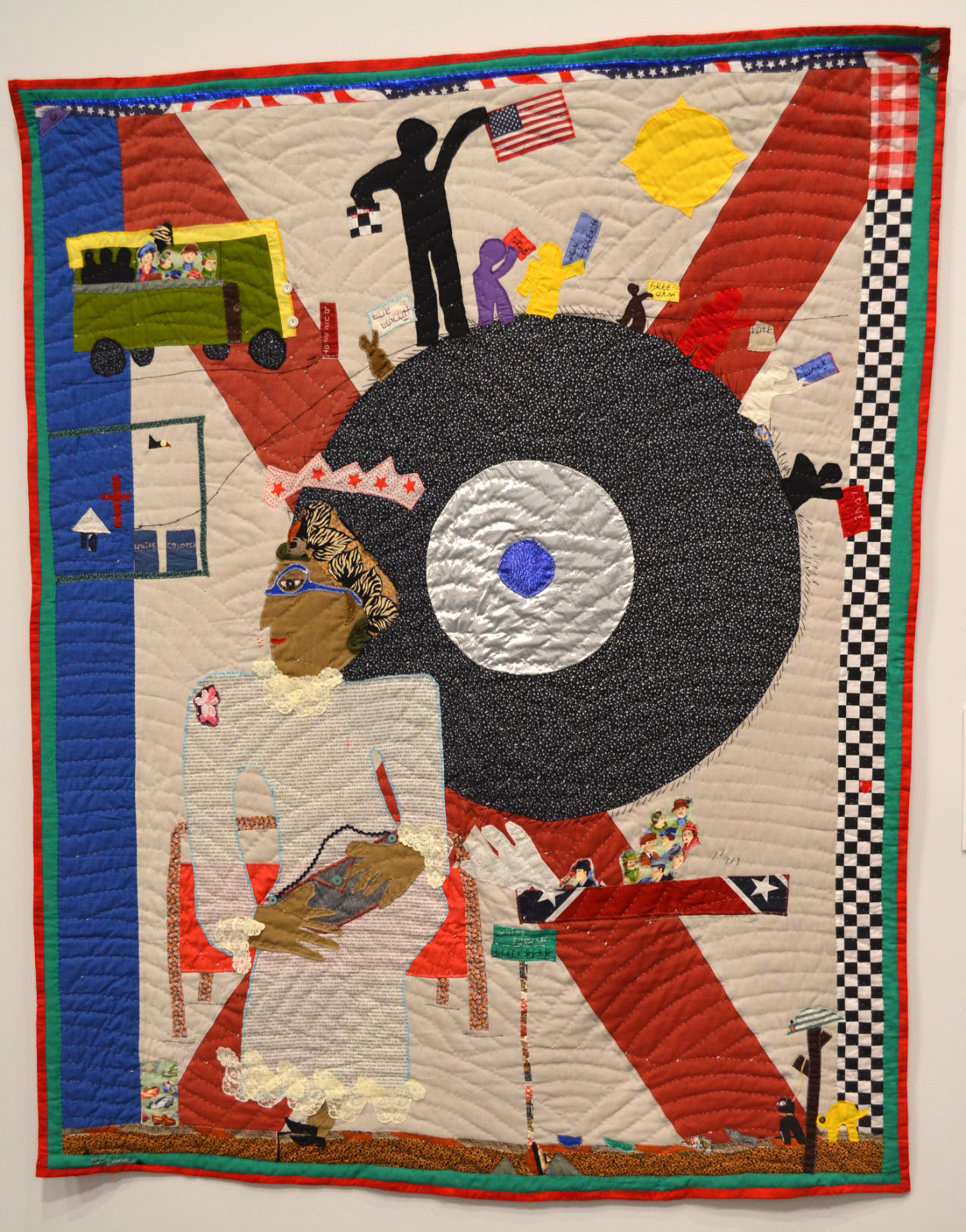
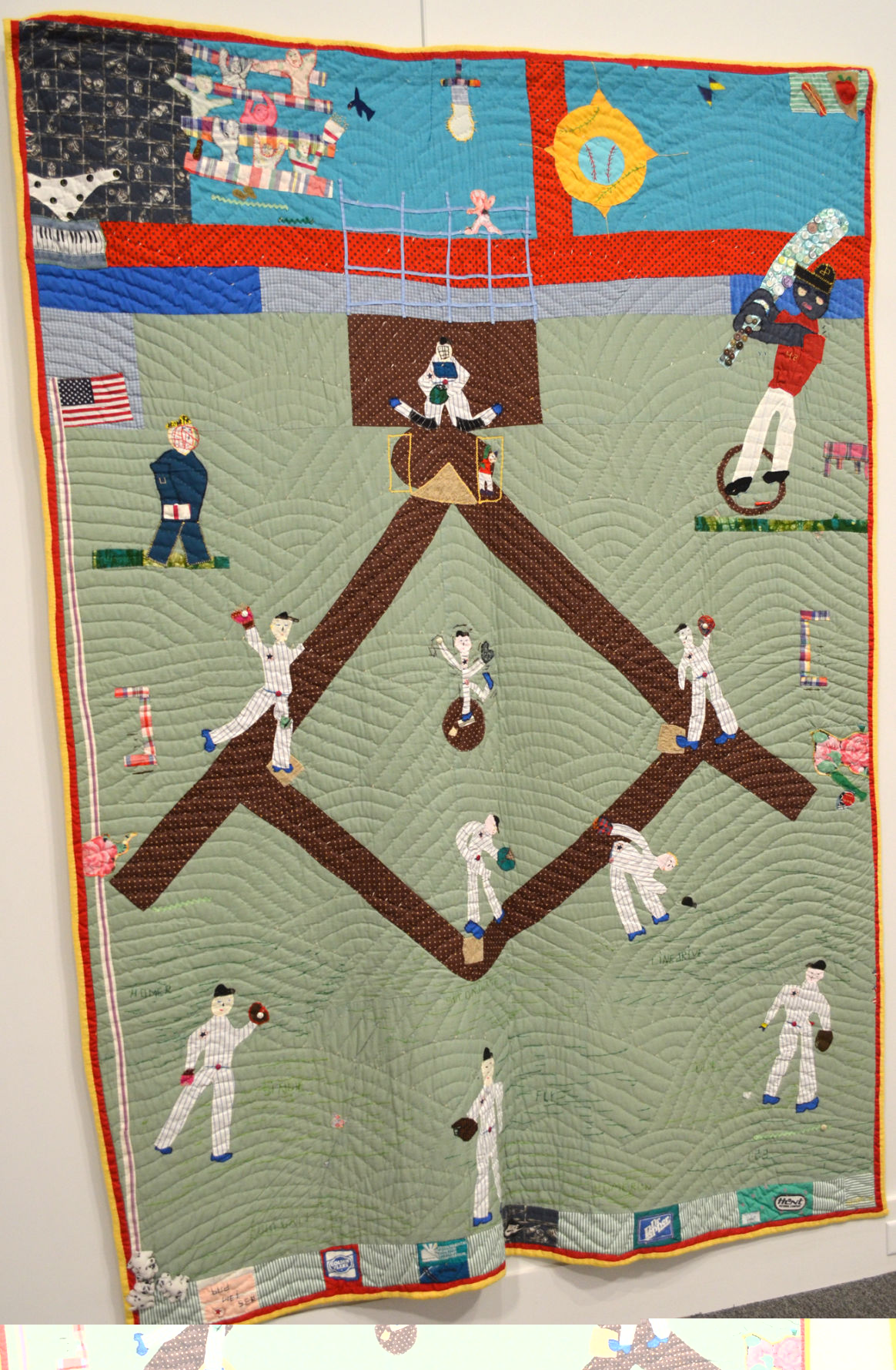
One honors Rosa Parks, the civil rights pioneer from Alabama. Another depicts Helen Keller, also from Alabama. Cairo native Jackie Robinson, who broke Major League Baseball’s color barrier, is shown as a giant in a baseball stadium, waiting in the on-deck circle for his turn at bat. “He’s larger than life,” Williams said.
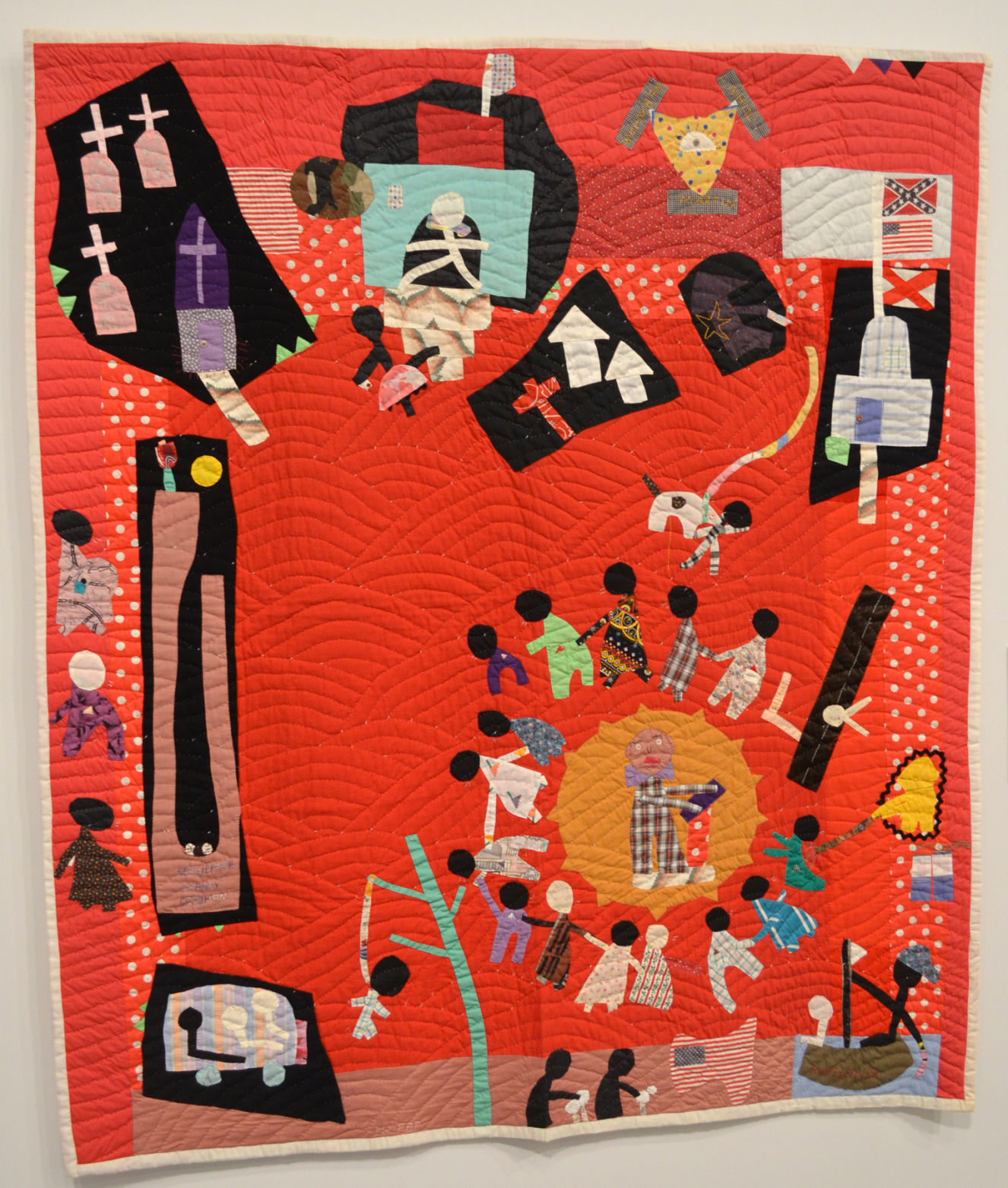
A quilt by Wells that draws the eye is “Yesterday: Civil Rights in the South.” The bold red background symbolized bloodshed, fire and the tumultuous times of the civil rights movement. Images include a statehouse shown with the Confederate battle flag above the U.S. and Alabama flags. A group of civil rights activists encircles the Rev. Martin Luther King Jr., who’s aglow. In one part, African Americans are laboring a cotton field next to a man who has been lynched. Civil rights workers killed in Mississippi are shown at the bottom of a dam and a black man handles the oars of a boat, bringing a white man from the Mayflower to the American shore. Rosa Parks seated on the back of a bus is shown.
“It gets me choked up, looking at some of the imagery of this quilt and some of the things that have happened in my lifetime,” Williams said. “And I don’t think we’re through, we still have a long way to go. That’s a pretty powerful quilt, to me. … It’s one of my favorite quilts, but it’s one of the most powerful quilts.”
In addition to Wells’ visit, other activities associated with the exhibit are planned.
“We’ll be having a quilt-making class so that you can learn if you’re inspired by looking at these quilts,” Williams said.
On Feb. 17, she said, two guest lecturers will be in town for a program called “Courageous Conversations About Racism.”
“I think that particular program talks about a very important issue and a very sensitive issue in this city that, for us to move forward, we’re going to have to figure out,” Williams said. “It’s a way to talk about race and racism using art as a backdrop and giving you a different way to talk about it. They’ll use some of the pieces in this exhibition and they’ll have examples from others as well.”
Teachers who attend will get professional credits, but they’ll also learn how to handle sensitive occurrences that may arises in their classrooms “and turn things around,” she said.
“I think awareness is just very, very important for our community,” Williams said, adding that starting a conversation is what art does.
She said she hopes the exhibit by female African-American artists will help the AMA expand its role in the Albany community.
“The museum is trying really hard to reach all segments of the community and truly make this a community museum,” Williams said. “I think this one has a real broad appeal.”
And that appeal doesn’t have an age qualification.
“We had Toddler Tuesday and the kids loved it,” Williams said. “They made little quilts themselves. As we’ve had different events, we’ve invited people to make their own square. Toward the end of the show, we’re going to put them all together and make our own community quilt.”
When it’s all said and done, Williams said it’s an important show for the museum and the community.
“I’m pretty excited about this show,” she said. “I’m proud we were able to bring this here.”
Admission is free at the AMA, which has expanded hours through the end of the exhibit. The AMA will be open 10 a.m.-5 p.m. Tuesdays-Fridays, noon-5 p.m. Saturdays and 1 p.m.-4 p.m. Sundays.
Related Articles
From cotton to cloud: In the data center debate, is rural Georgia once again being asked to carry the cost?
Across much of rural Georgia, the abandoned cotton warehouses and shrinking tax bases remain — enduring reminders that industries built to serve distant markets do not necessarily stay rooted in the communities that first sustained them.
My Grandpa Was Killed in World War II. I Met Him Through His Letters Home
Gina Wolf’s grandfather died before she was born. His letters sent to her grandmother from Europe during World War II made it possible to know what kind of man he was.
‘Sounds Like a Mutiny.’ Secret Recording Exposes Claims of Toxic Leadership After a Marine’s Suicide
This week’s War Horse story follows the systemic failures before and after the death of Cpl. Drew Mobley who was the third in two years at Marine Corps Base Quantico to die by suicide.
