
Invasive Asiatic Clams dying in the lower Flint River
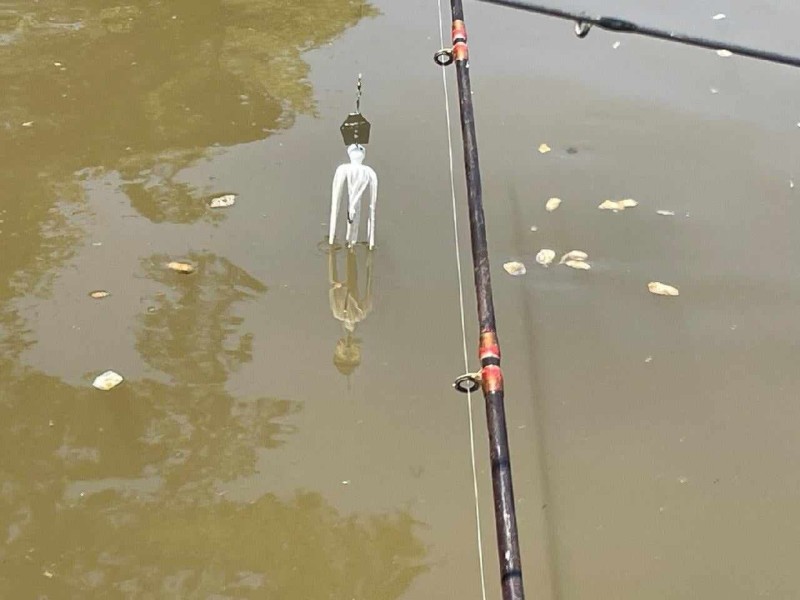
Photo Courtesy of Danny Driggers
By David Dixon
[email protected]
ALBANY — The invasive Asiatic Clam is undergoing its annual mass die-off in the Flint River. Millions of these dead and dying clams were seen Friday floating in the Flint below the Lake Blackshear Dam down to the Georgia 32 Bridge.
The species was confirmed as Corbicula by two field biologists from the Jones Center who happened to be on the water during the massive die-off.
“We saw it thick from Warwick all the way to Highway 32 (bridge),” Biologist Jamie Rogers said. “But we didn’t go any farther than that. However, we were in Albany yesterday and didn’t see any, so it would seem that it’s happening either in Lake Blackshear or just below Warwick.”
This clam is originally from eastern Asia, and since 1924, has spread rapidly across North and South America. It is theorized that most of the clams came across the ocean in the ballast water of commercial ships; however, it is also popular as a food source in Asia and in the aquarium trade, which may have also led to its introduction elsewhere.
The clam does serve a useful purpose as a filter feeder, clarifying the water. However, in some areas, like the invasive Zebra Mussel, it is an extreme nuisance as it reproduces quickly, leading to clogged machinery such as water intakes and pumps. In the lower Flint, it is less problematic and actually has become a good food source for many fish, birds and mammals.
Corbicula is well-known for massive die-offs in the American South during heatwaves, due to low dissolved oxygen and high water temperatures. These conditions are very common in the Southern waters, so such events are frequent for this species, although they are not commonly reported.
The observance of millions of floating aquatic creatures is a concern, and that is why this particular event or any wildlife issue on the Flint is important to be reported, regardless if it is “natural” or not. Both Flint Riverkeeper and the DNR Wildlife Resources Division were notified of this event by concerned citizens.
“We are thankful for the property owners and fishermen who reported this to us,” Riverkeeper Gordon Rogers said. “And we are further grateful for the expertise provided by the biologists at both Georgia DNR and the Jones Center that helped us to rapidly pinpoint the species, the cause, and the frequency of this event.”
“It (the die-off) is a week later than normal,” Rob Weller of Georgia DNR wrote. “It is usually the 4th of July weekend. It has been hypothesized that these die-offs are part of the normal life history of these creatures. A positive spin is these episodes could be considered a temporary additional food source opportunity for turtles, birds and catfish.”
“These die-offs are widely reported for Corbicula,” Stephen Golladay, an aquatic biologist from the Jones Center, reported. “As long as turbulence and re-aeration are occurring, native fauna aren’t affected.
“Corbicula are less tolerant to high temperature and low dissolved oxygen than native species. Last year a die-off occurred on the lower Flint neat Lake Seminole.”
All unusual events such as this or fish kills in the watershed should always be reported to the Georgia DNR and Flint Riverkeeper for investigation.
Author

Related Articles

From cotton to cloud: In the data center debate, is rural Georgia once again being asked to carry the cost?
Across much of rural Georgia, the abandoned cotton warehouses and shrinking tax bases remain — enduring reminders that industries built to serve distant markets do not necessarily stay rooted in the communities that first sustained them.

My Grandpa Was Killed in World War II. I Met Him Through His Letters Home
Gina Wolf’s grandfather died before she was born. His letters sent to her grandmother from Europe during World War II made it possible to know what kind of man he was.
‘Sounds Like a Mutiny.’ Secret Recording Exposes Claims of Toxic Leadership After a Marine’s Suicide
This week’s War Horse story follows the systemic failures before and after the death of Cpl. Drew Mobley who was the third in two years at Marine Corps Base Quantico to die by suicide.
