
JACK PARKS: Discovering the essence of Stan Lee
TALK NERDY TO ME: Finding the proper perspective to appreciate comics giant
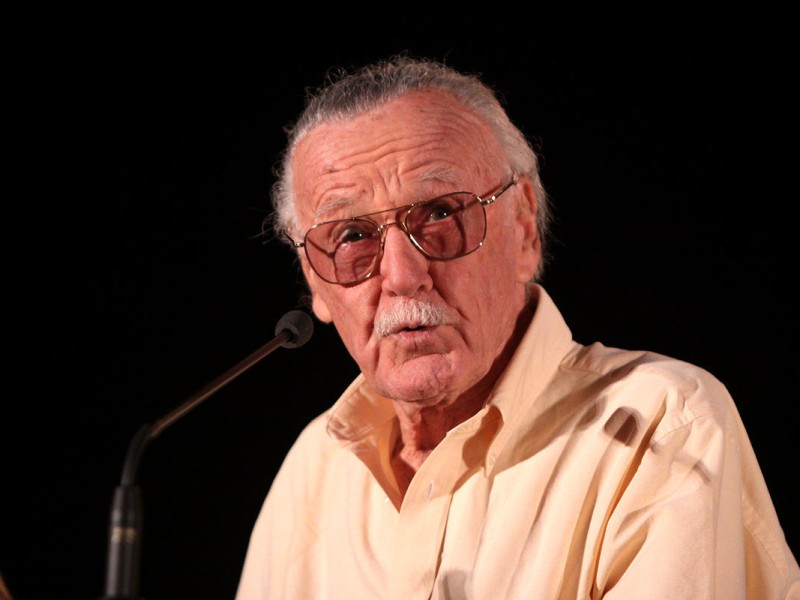
By Jack Parks
Greetings, Jackolytes! I come bearing sad tidings, the likes of which have ne’er been heard in all the land.
Although really, truth be told, you probably are already aware of it by now. But on the off chance you have been living under a rock that’s under a branch that fell off a tree that’s in a valley in the middle of a hole in the bottom of the sea, the legendary Stan Lee has died at the age of 95.
It’s not altogether surprising, but it was still a bit of a shock because it seemed he would go on forever. And indeed, with several future cameos already filmed, he will continue to appear in Marvel movies for at least a few more films.
But something has been lost. A man whose influence on entertainment saw super hero comics rise from mere escapist fantasy to strong, sometimes biting social commentary. Who created characters so beloved they spawned dozens of films grossing more than $10 billion combined? Who was one of, if not the, centralmost figure in all of nerd culture.
So why don’t I care more?
I first heard that he died on Facebook, as is the norm these days. One of my friends posted about it, and the first thing I did was try to find a source for it. The story had spread rapidly, and I very quickly scanned enough mainstream sites to determine that it was most likely for real and not a hoax.
I have been affected emotionally by several celebrity deaths. Ryan Dunn, Robin Williams, Gene Wilder, and Carrie Fisher were big ones. Chester Bennington of Linkin Park hit me much harder than I would have thought.
If anyone’s death would have an effect on me, you’d think it would be Stan Lee. I’d think it would be Stan Lee. Yet when it actually happened, I felt nothing.
As more of my friends shared the story, accompanied by “RIP” and crying emojis, I kept waiting for it to hit me. To feel the enormity of it fall upon me. But it never came.
And so I had to ask myself why? The answer I found shocked me much more than his death.
Stan Lee wasn’t a real person.
That seems like an awful thing to say, but it’s the truth. He created the Avengers, the X-Men, Spider-man and many more. But, with the exception of the Spider-man newspaper strip, he hasn’t been creatively involved with any major titles on even a semi-regular basis for longer than I’ve been able to read.
He hasn’t been involved with the films except in honorary capacity. His cameos, while enjoyable, function mainly as nostalgic Easter eggs. He has a larger-than-life image due to his legacy and his willingness to interact with fans, but while his characters will stay strong for years to come, most of his impact on the comics I read happened decades ago.
My awareness of him was superficial. Unlike other popular figures who have died, I never found a reason to relate to him, and any feelings of endearment I felt when I saw pictures or stories about him were because of what he did, not who he was.
He wasn’t a real person to me, and that didn’t feel right. So I decided I would read about his life and share with you some of the real Stan Lee.
Stan Lee was born Stanley Martin Lieber, the son of Romanian immigrants. He grew up in New York City, which would later be home to his creations. As a young man, he worked several part-time jobs before graduating high school at the age of 16 and going to work at Timely Comics, which would eventually become Marvel Comics.
He enjoyed writing, and like many aspiring writers dreamed of one day writing the “Great American Novel.” He even adopted the name “Stan Lee” as a pseudonym while at Timely so that people wouldn’t associate his “real work” with comic books. It seemed he had a knack for comics, though, and he was made editor-in-chief at the age of 19.
Lee served in the U.S. Army during WWII, classed as a “Playwright” and serving in the Signal Corps. Two years after the war was over, he married Joan Clayton Boocock, a marriage that ended only at Joan’s death 69 years later. They welcomed their first daughter in 1950, and sadly lost a second daughter in 1953.
In the late ’50s, Lee grew disillusioned with comics and considered leaving for a new career. This changed when he was tasked with creating a new team of superheroes and, with his wife’s encouragement, his new superheroes were different. Unlike the ideal, perfect heroes of the day, Lee’s were superhuman, but with flaws, worries, tempers, illnesses and even bills.
This helped readers connect with their heroes, and Lee took that connection a step further and began crediting all contributors to each story, including news, and teasing future stories in a bulletin page, and regularly interacting with readers on a first-name basis on the letters page of each book.
It also gave him the opportunity to address issues like racism and drug abuse. Comic books could be used as a platform for social commentary. The ability to tell stories that people could relate to and connect with not only changed the landscape of comics, it apparently changed Lee’s mind as well. Instead of leaving the business, he stayed active in it for another 60 years.
As Lee told the Washington Post in a 2014 interview, “I used to be embarrassed because I was just a comic-book writer while other people were building bridges or going on to medical careers. And then I began to realize: Entertainment is one of the most important things in people’s lives. Without it they might go off the deep end. I feel that if you’re able to entertain people, you’re doing a good thing.”
And entertain people is just what he did. For the rest of his life, Stan Lee devoted himself to bringing superheroes to new audiences in whatever medium he could. From comic books to television, to cartoons and videogames, to the big screen and digital apps, his work has entered every sphere of entertainment in almost every corner of the world.
For someone who just wanted people to be able to enjoy the work he’s done, few can lay claim to the kind of ongoing legacy that Stan Lee leaves behind. As it turns out, just knowing that people liked what he wrote was enough for him.
So I guess it’s okay that I didn’t know very much about the man himself. That connection with his characters is what he was going for all along. As long as people are enjoying his work, they’re connecting with him. And that’s something I can really relate to.
Like his superheroes, all it took was a different perspective to gain a new appreciation of the man. I can almost hear him gleefully exclaiming, “Excelsior!”
Here come the waterworks.
Jack Parks writes the Talk Nerdy to Me column and other various works for The Herald. He has come to this office before in full-on Captain America garb … so he’d best get right with Stan Lee.
Related Articles

From cotton to cloud: In the data center debate, is rural Georgia once again being asked to carry the cost?
Across much of rural Georgia, the abandoned cotton warehouses and shrinking tax bases remain — enduring reminders that industries built to serve distant markets do not necessarily stay rooted in the communities that first sustained them.
My Grandpa Was Killed in World War II. I Met Him Through His Letters Home
Gina Wolf’s grandfather died before she was born. His letters sent to her grandmother from Europe during World War II made it possible to know what kind of man he was.

‘Sounds Like a Mutiny.’ Secret Recording Exposes Claims of Toxic Leadership After a Marine’s Suicide
This week’s War Horse story follows the systemic failures before and after the death of Cpl. Drew Mobley who was the third in two years at Marine Corps Base Quantico to die by suicide.
