
Phoebe vs. COVID: For front line providers, COVID was ‘overwhelming, exhausting’
Staff Photo: Carlton Fletcher
By Carlton Fletcher
carlton.fletcher
@albanyherald.com
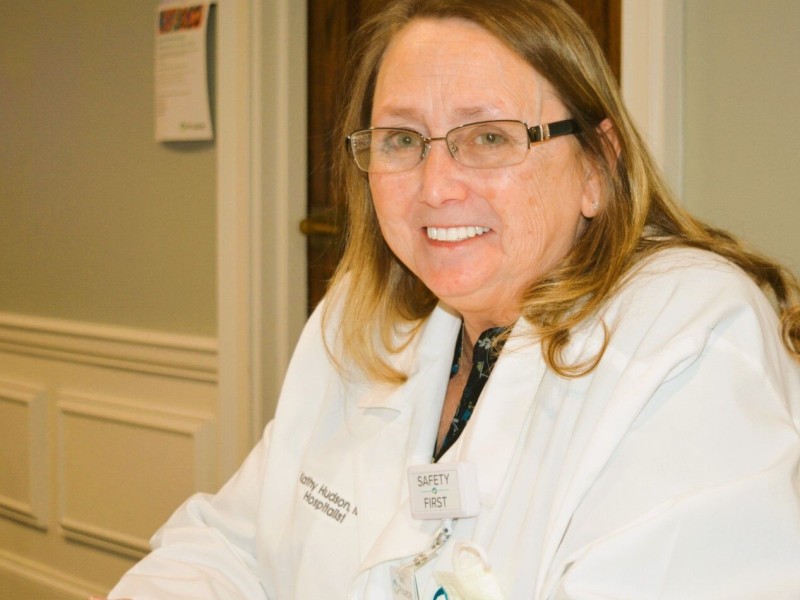
ALBANY — After an extended stint on medical leave, Dr. Kathy Hudson came back to work at Phoebe Putney Memorial Hospital in the first week of March, 2020.
Hudson, who is the regional medical director for hospitalist groups at Phoebe Putney Health System facilities in Albany and Americus, says now she had only the faintest idea that she was coming back to a nightmare.
“My first shift back at the 7T Unit, I walked in to 10 COVID patients,” Hudson said. “Four of them were moved into the Intensive Care Unit, and of that four only one survived. That’s probably the most terrifying moment I’ve ever experienced in my career.”
There would be more terror for Hudson and her fellow Phoebe health care givers. Lots more.
“As a hospitalist, I’d treated patients with influenza, pneumonia, all those diseases,” Hudson said. “But those patients don’t typically come into the hospital in respiratory distress. For the COVID patients in those early days, there was no medical treatment. It was really just a matter of giving them the best supportive care that we could.
“At times, the whole thing was just overwhelming; every day was exhausting.”
Hudson, who served for a period as chief medical officer at Phoebe Albany in the immediate aftermath of Dr. Steve Kitchen’s retirement from that position, said a kind of we’re-all-in-this-together mindset evolved as staff at the hospital sought to deal with one of the world’s worst COVID-19 outbreaks.
“Everyone — Phoebe in general — stepped up to the plate,” she said. “Critical care doctors came in to take care of COVID patients as this thing started to snowball; nurses had to learn to care for critical care patients. And we weren’t Atlanta, Savannah or Augusta. We are the hub in this region, so we had no (other health care facility) to share the burden.
“The administration, though, took some important steps that allowed us to manage. First, they stopped all elective surgeries and even moved some patients to other hospitals in the region. We had to; we had no beds available. And while other hospitals started laying people off who were not directly involved in the everyday care of COVID patients, it was all hands on deck here.”
Hudson said it was the unknown nature of the COVID virus that confounded health care personnel the world over.
“It made no sense,” she said. “No one could understand why three people in a family might get COVID — and some of them even die from it — but there were other family members who were not affected. And there were those surges, when we’d think we were getting things under control and the virus would mutate.”
Like most in the medical community, Hudson is not ready to say COVID has been beaten. She warily admits that she’s “feeling better about things” now that numbers have diminished drastically. But …
“It’s still lurking,” she said. “Yes, we’re able to manage things better now, and we’ve returned to a level of normalcy. But I don’t think this virus is ever going to completely go away.
“Still, I’m proud to work at a hospital that rose to the challenge of COVID. And I’m proud of the support we got from this community as we battled the virus. The outpouring of love we received was one of the best things to come of this. We survived this battle at Phoebe because we all worked together against a common enemy. We faced the unknown, and we came out stronger for it.”
Author
Related Articles

From cotton to cloud: In the data center debate, is rural Georgia once again being asked to carry the cost?
Across much of rural Georgia, the abandoned cotton warehouses and shrinking tax bases remain — enduring reminders that industries built to serve distant markets do not necessarily stay rooted in the communities that first sustained them.
My Grandpa Was Killed in World War II. I Met Him Through His Letters Home
Gina Wolf’s grandfather died before she was born. His letters sent to her grandmother from Europe during World War II made it possible to know what kind of man he was.
‘Sounds Like a Mutiny.’ Secret Recording Exposes Claims of Toxic Leadership After a Marine’s Suicide
This week’s War Horse story follows the systemic failures before and after the death of Cpl. Drew Mobley who was the third in two years at Marine Corps Base Quantico to die by suicide.
