
The future of education is now at Albany’s 4C Academy
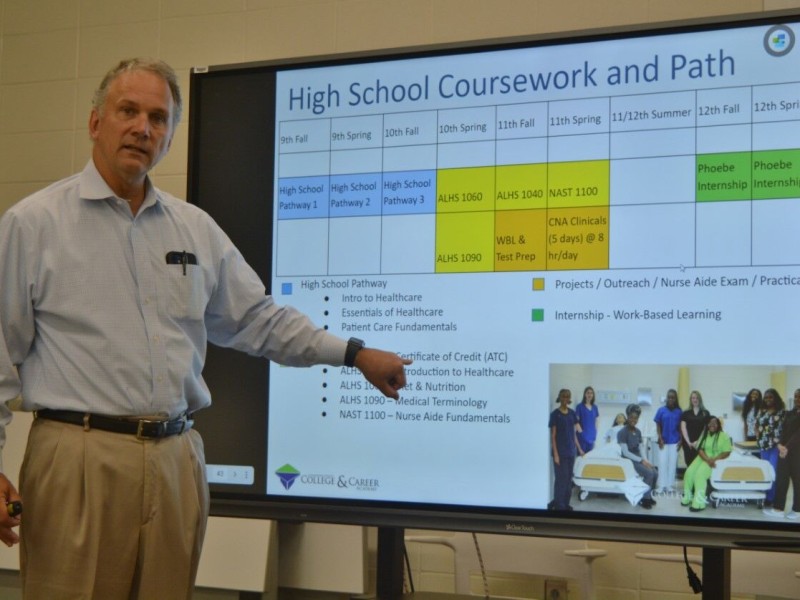
Staff Photo: Carlton Fletcher
By Carlton Fletcher
[email protected]
ALBANY — The building it’s located in may have been built circa 1957, but that’s pretty much the only thing that’s old-school about the Commodore Conyers College and Career Academy.
Most everyone in the surrounding area who has even a remote interest in local education has heard of the school. But it takes a visit to the so-called 4-C Academy, a first-hand view of what it offers, to appreciate the new age of education it has birthed in a region that lags far behind the rest of the state and most of the country in academic success.
Those who grew up on education’s “Three R’s” — Readin’ ‘Ritin’ and ‘Rithmatic — will be hard-pressed to fathom the nature of what’s offered at the Albany school, which kicks off its fifth year on Monday.
“Our whole mission has been to be nimble, to get an understanding of local needs and react to those needs as quickly as we can,” 4C CEO Chris Hatcher said before taking a guest on a tour of the facility. “We’re preparing our students for what comes next.”
And while many high school-age kids have no idea what may come next in their lives, the college and career academy helps them start thinking about that reality. Students select one of several pathways that are offered at 4C Academy and immerse themselves in studies that not only prepare them for future careers, they offer internships — many paying internships — that introduce students to the real business world that awaits.
“A couple of fun facts about our current students, about Generation Z,” said Hatcher, who came to the 4C Academy from that business world, a perfect match for an educational concept that is built around a partnership between the local public school system, local businesses and local institutions of higher learning. “Their full attention span averages about 8 seconds, and they average 10 hours of (electronics device) screen time a day. A typical 50-minute lecture is torture for kids like that.
“Even in an academic setting, you have to reach today’s kids in a different way. So we try to guide them toward relevant pathways, focus on college and career readiness and help them develop the ‘soft skills’ that businesses are looking for. Those skills — how to shake hands, build a resume, conduct an interview — believe it or not, are the No. 1 things businesses are looking for when they’re looking for employees.”
The Conyers Career Academy uses all of the data its staff has collected from local businesses, educators and colleges to provide an instruction program that looks nothing like the high school curriculum of days gone by. There are still traditional core classes, but students are guided toward project-based learning that ushers them into what for many are new concepts, like problem-solving, teamwork, work ethic.
“There are no formal classes here on Fridays,” Hatcher said. “Every student is involved of one of 10 projects that are community-oriented. Research has shown that 85% of the jobs of the future don’t even exist now. The world is changing, so we look for projects that force students to adapt, think critically, collaborate and use available resources to solve problems.
“On any given Friday, 50% of our students aren’t even in the building. They’re out in the community working on these projects.”
Hatcher said the 4C Academy uses the first two years of students’ high school careers to take care of core requirements. During part of their sophomore year and their junior year, the students work on industry certification in their pathways. Then, ideally, during their senior year, students are working on internships, getting a jump-start on work opportunities that allow them to use the skills they’ve learned while being provided an inside shot at future careers.

“It’s all about exposure, exposure, exposure,” Hatcher said. “If we get them to those internships, that’s where the rubber meets the road. And our business community has certainly gotten on board. I can’t think of anyone we’ve talked to who’s said ‘no’ when we talked about internships. In fact, businesses love our interns. Many have called to ask ‘how can we get involved?’”
Hatcher said that in an effort to maintain relevancy in the southwest Georgia business climate, career academy staff stays in touch with local businesses in an effort to meet changing needs. Since agriculture is Georgia’s No. 1 industry, he said an agribusiness pathway has been added to the 4C academy’s offerings for the 2021-22 school year.
Megan Verner, whose personal experience in agriculture is with livestock, will lead students who elect to take the ag pathway.
“We’ll look closely at urban agriculture and at agribusiness,” Verner said. “There are all kinds of careers in agriculture that these students may not know about.”
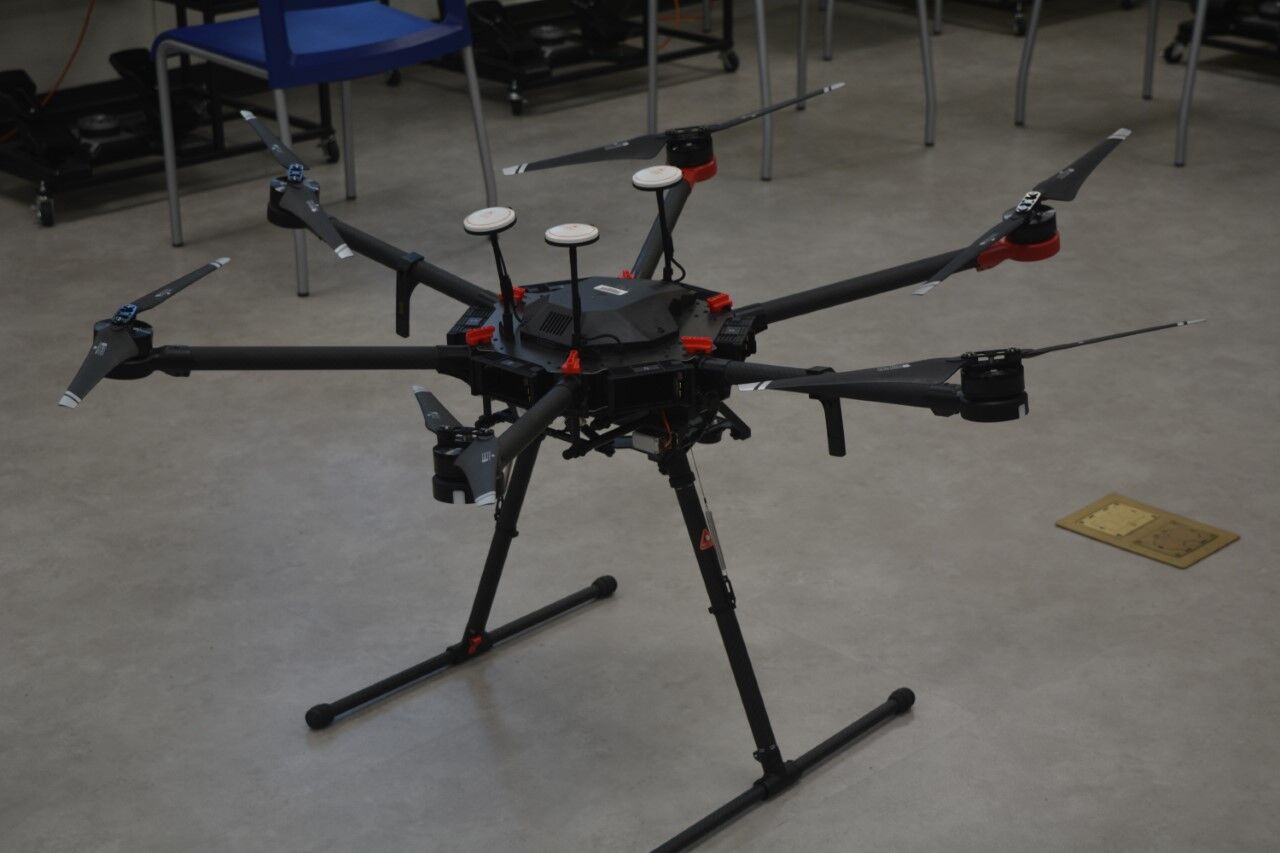
Touring the 4C Academy is like taking a step into the future of education. There is a robotics gymnasium developed by the school, classrooms that are set up for work in aviation, engineering, film, graphic design, health informatics, marketing and many other areas. And these are “classrooms” only in the sense that they are designed and utilized in a manner that gives students hands-on experience in each pathway.
All of which mean nothing if students don’t grasp the magnitude of possibilities and embrace the educational opportunities.
“We have 200 students per class, per cohort,” Hatcher said. “And there’s no doubt that a lot of them are not going to come here motivated. But it’s like that thing about a rising tide lifting everyone. Most kids, once they get involved and they see what the more motivated students are doing, they get on board.
“That’s what we have to do as educators at the 4C Academy. We’ve got to motivate our kids to embrace these programs. Those that do, they quickly see that they’re in a position to be 100% marketable as they look to a future job or college enrollment. We can take those kids who’ve been swimming upstream all through elementary and middle school and really open their eyes.”
Author

Related Articles
My Grandpa Was Killed in World War II. I Met Him Through His Letters Home
Gina Wolf’s grandfather died before she was born. His letters sent to her grandmother from Europe during World War II made it possible to know what kind of man he was.
‘Sounds Like a Mutiny.’ Secret Recording Exposes Claims of Toxic Leadership After a Marine’s Suicide
This week’s War Horse story follows the systemic failures before and after the death of Cpl. Drew Mobley who was the third in two years at Marine Corps Base Quantico to die by suicide.

Southwest Georgia artists recognized at packed opening of exhibition
The annual juried exhibition, one of the region’s largest showcases of visual art, features approximately 46 artists and nearly 90 works spanning painting, sculpture, ceramics, photography and mixed media.
