
USDA financial program offers assistance to minority farmers who faced discrimination, ramping up outreach in southwest Georgia
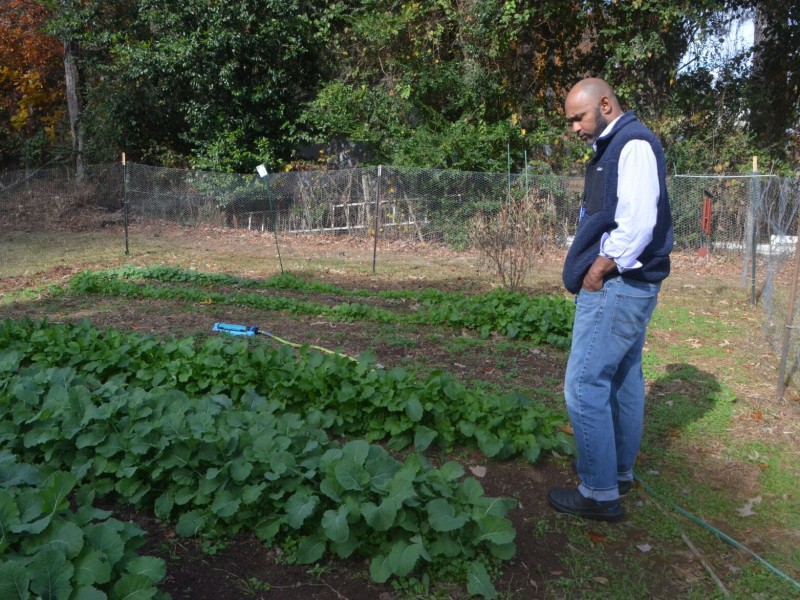
After a tedious application process that required him to get documentation from the same office that had discriminated against him, a Valdosta farmer said he finally received his check from the Discrimination Financial Assistance Program on July 31.
File Photo
By Lucille Lannigan
[email protected]
ALBANY — The first time a black, Valdosta farmer walked into a local USDA Farming Service Agency seeking financial assistance to start up his farm, he said he didn’t feel welcome. After going through the process, he said, he was denied financial assistance.
He tried again in 2019 and was denied again.
The farmer, who asked that his name not be used in this article for fear of retribution, said he believes the denials were made on the basis of racial discrimination.
Farmers of color and women farmers from across the country have filed lawsuits against the USDA alleging discrimination through the denial of access to low-interest loans, loan servicing, grant programs and other assistance. This discrimination, the complainants say, resulted in millions of dollars in economic loss as well as land loss through foreclosures.
The Valdosta farmer and other minority farmers who say they were discriminated against prior to 2021 may now be eligible to receive up to $500,000 from the USDA Discrimination Financial Assistance program.
The U.S. Congress provided $2.2 billion for the program, which is part of President Biden’s Inflation Reduction Act. It directs USDA to provide financial assistance to farmers, ranchers, and forest landowners who experienced discrimination in USDA farm lending programs prior to January 2021. The assistance application period opened July 7 and originally closed Oct. 31.
After receiving feedback that more time was needed, the USDA extended the deadline to Jan. 13.
There were more than 1,200 applicants by the end of October throughout the Eastern region of the United States, Myles Caggins, the program’s East regional spokesman with Windsor Group LLC, said.
There are 20 outreach offices across 29 states throughout the East, and there have been more than 600 outreach events across the region. Events are planned for Camilla, Fitzgerald and Fort Valley in November and December, Caggins said.
Farmers can apply in four ways:
— Online at https://22007apply.gov/ (recommended);
— By telephone at 800 721-0970 or the local number (404) 325-3030;
— At home by printing out the application, filling it out and mailing it in;
— In-person technical assistance offices in Decatur, Fort Valley and Montgomery, Ala.
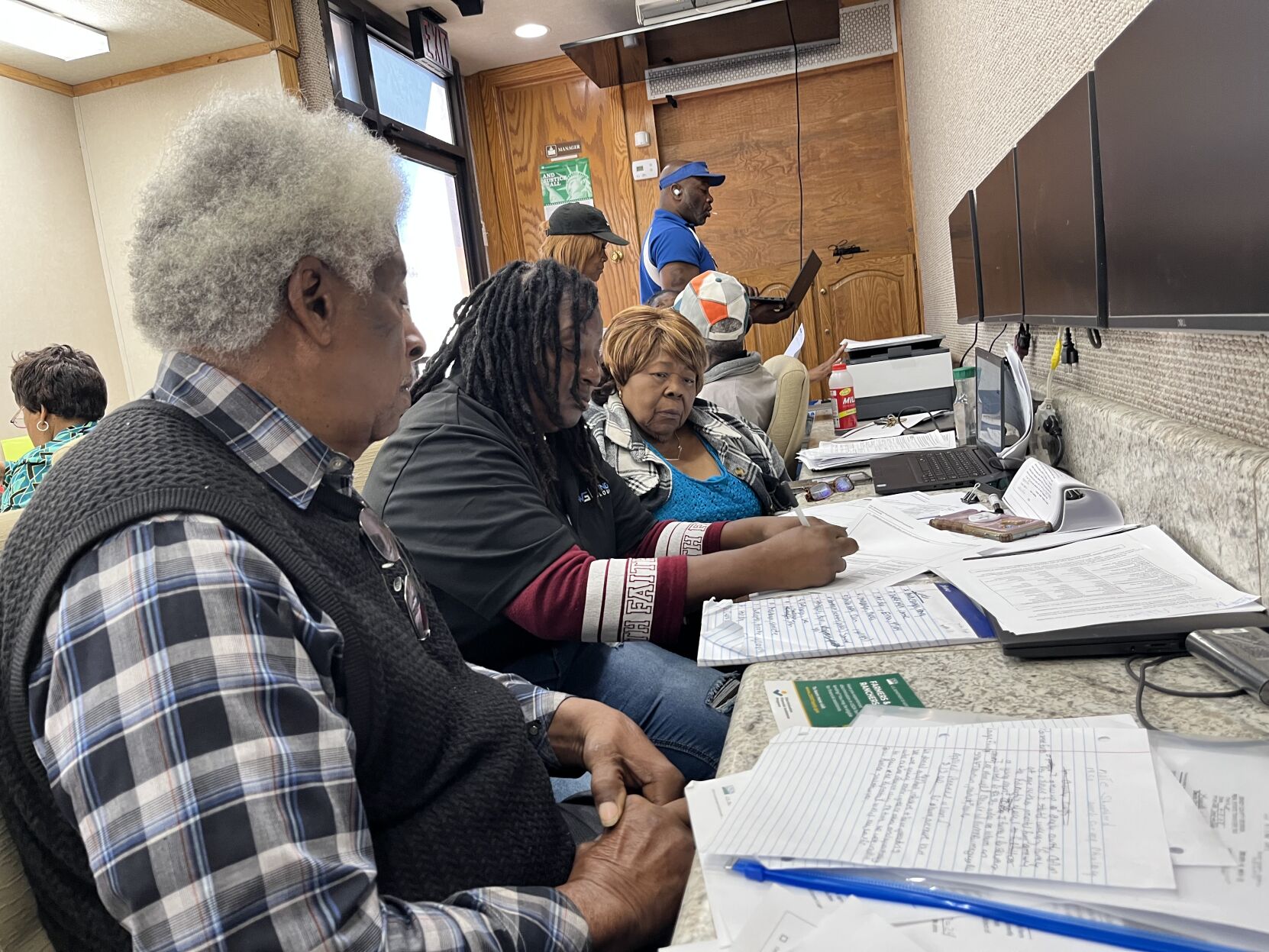
The Valdosta farmer first began his application process in October at the 2023 Sunbelt Ag Expo in Moultrie, where program outreach had mobile units to assist farmers. It was a good thing they were doing, he said, but the application process is far from easy.
Stacks of documents are laid out in the farmer’s house. Most are documents he had to request from the Valdosta FSA office that prove he’d been discriminated against, along with four affidavits from colleagues affirming the discrimination. He also has a thick stack of at least 100 pages — the program application.
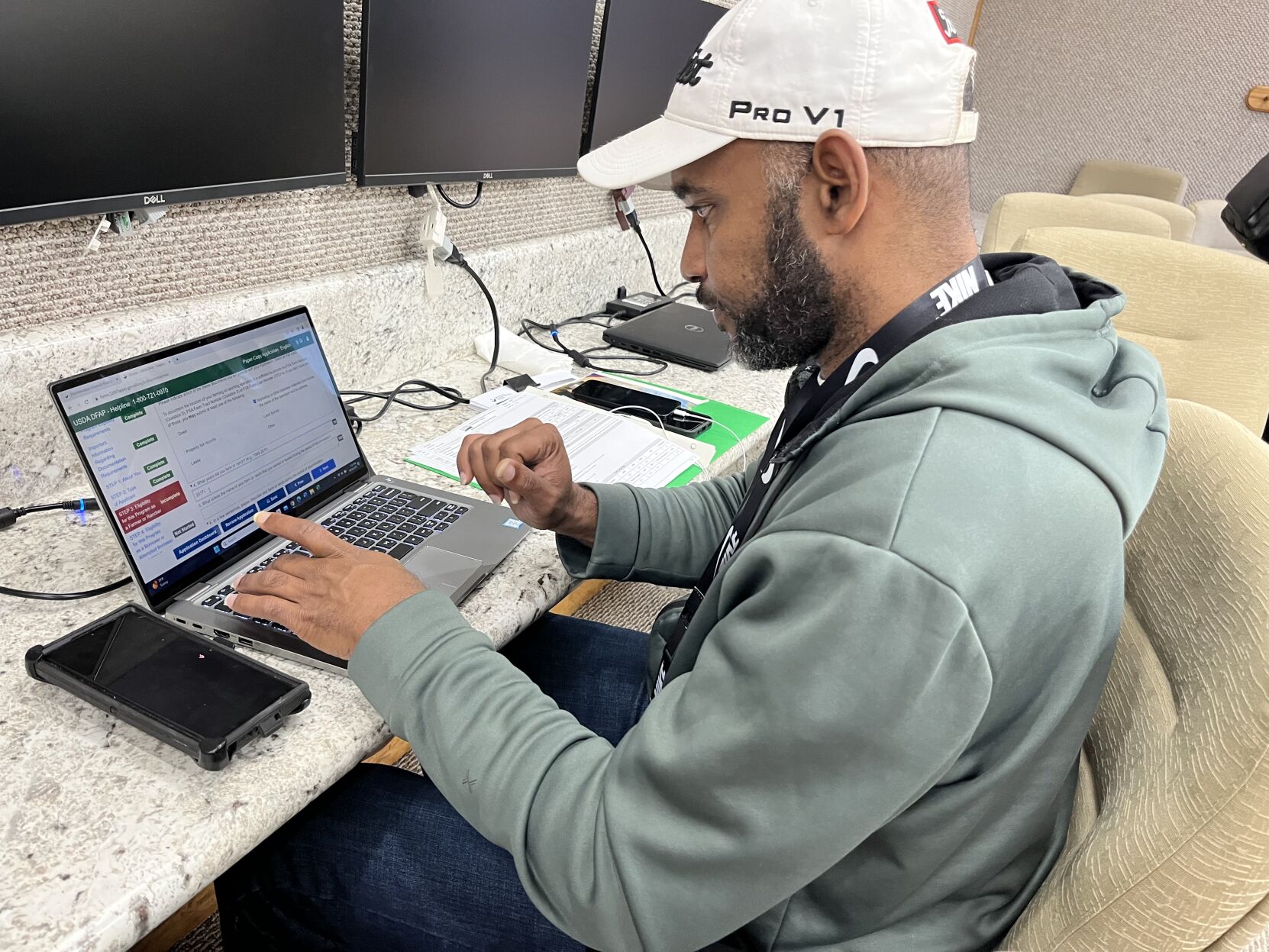
The length of the application and the required documentation make it a precarious process for farmers, he said. He opted to fill out his application online.
“To put that into perspective, how in the world is someone going to read through all of those pages and know exactly what to file?” the farmer said.
Nonetheless, he’s acquired paperwork that details his experience from the last eight years.
The Valdosta man said he started his farm with aspirations that it would one day sustain his family and be his sole source of income.
When he entered FSA offices, he was told he didn’t have enough experience. The atmosphere was cold, he said, and he felt that he wasn’t receiving the same level of care as his white counterparts.
The farmer, along with two other colleagues with backgrounds in higher education, farming and technology, developed a plan for an innovative farming operation. Not only did they want to grow crops, but they had plans for a sustainable fish farm as well as a goat farm, which would produce fertilizer.
They planned to use technology that would look toward climate change solutions and keep carbon dioxide emissions low, he said.
They also hoped to combat food deserts in southwest Georgia by producing nutrient-rich food that would be put back into the local community. The scope of what they were trying to achieve was a lot larger than a small amount of money, he said.
However, when he requested loans of higher amounts, he was consistently diverted to a smaller amount of funding. This, he said, was the first way the office intentionally discriminated against him. He watched as white farmers received attentive help and larger dollar amounts when requested.
The repeated denials of needed financial assistance left his farmer in disarray, he said. He is unable to afford the equipment to actually farm his land. He had to sell off everything — hogs, cows, goats and chickens.
“It looks horrible,” he said. “Now I have nothing on the land, and I’m waiting to get back and start again.”
The farmer also has had to pick up other jobs to support his family, he said.
Now, his application is in the queue for submission. He, along with other applicants, will receive a decision in late spring, early summer, Caggins said..
“I just wanted to live off the land,” the farmer said. “It’s been very stressful.
“It’s put me in economic hardship. For eight years, I haven’t been able to produce enough income for myself and my family. It’s a tactic used to get people to lose their land.”
This systemic land loss has impacted generations of farmers and is a huge factor in the level of poverty experienced by black people, Erma Wilburn, founder and CEO of Feed My Sheep at Wilburn Farms, said.
Feed My Sheep is a program that brings youths out of the Albany metro area to farms and shows them where their food comes from.
Wilburn is also creating a co-op of black farmers to farm together to go after larger markets.
The group wants to be self-sustaining and able to make enough money to build family lives back on the farm. It’s about reconnecting black people with the land and agriculture. At one point, family farms meant success, she said.
Now, young people are going off to college and not returning to the farm. For many, being black and farming has painful memories, she said.
Wilburn started the first Black Farmers Sustainability Conference in the region. The second conference was held the weekend of Oct. 21 and had representatives of the USDA Discrimination Financial Assistance Program in attendance.
About 40 farmers attended the conference, and Wilburn said she knows of at least three who were able to begin the application process. They’re excited, she said, adding that the problem is much more complex than the financial assistance program suggests.
Black farmers have faced discrimination historically — especially in the 1970s when Wilburn became a part of New Communities Inc., an organization created to advocate for black farmers.
Farmers, including her husband, were underpaid rent because white people knew they could take advantage of their ignorance, she said. The USDA and local FSA offices wouldn’t give black farmers the same loans given to whites, she said. This caused people to lose their farms, contributing to the major land loss experienced by black people — thousands of acres of land just in Lee County, she said.
The issue is that many of these farmers will lack the proper records to prove they’ve been discriminated against — especially those who are older and who experienced discrimination before the 2000s. Many, she said, didn’t bother trying to get loans because of discrimination stories they heard.
This, she said, has had a generational impact. It’s far greater than receiving a couple of thousand dollars for a loan you were denied at some point.
The problem with the program is that it set aside billions of dollars to address the issue knowing full well that a lot of people experienced this so regularly or so long ago that they won’t have the documents to prove it.
Few will benefit, Wilburn said, although farmers are vital.
“We need farmers,” she said. “It’s not just something to right the wrongs of discrimination; it’s also to help this country have some level of food security.”
Discrimination is still happening today, and black farmers are still being taken advantage of, Wilburn claimed. Even through this program application, there are people lying to naive farmers, saying it costs money to apply.
Caggins emphasizes that the USDA Discrimination Financial Assistance program has a free application process and that the money received isn’t a loan or a grant. It’s a check to acknowledge the impact of discrimination, he said.
The Windsor LLC Outreach group is trying to stay visible through outreach events across the region by attending events like the Sustainability Conference and Ag Expo. Outreach coordinators watched awareness of the program increase greatly this way — especially through word of mouth.
“The most trust in the program comes farmer to farmer,” Caggins said. “In the South, we often see neighbors accompanying neighbors … one farmer is an influencer and encouraging others to apply.”
This is a story about community and family, Caggins said. Outreach groups are trying to meet farmers where they’re at.
Author

Related Articles
PHOTOS: Albany State’s Got Talent
Click the arrow to scroll through the photos.
The Arc’s ‘beep ball’ tournament opens eyes to a new way of playing baseball
Beep ball is baseball for the blind.
PHOTOS: Albany’s Special Olympics send off
Click the arrow to scroll through the ephotos.
