
Fox squirrels larger, more colorful than grey cousins
File Photo
By Tom Seegmueller
[email protected]
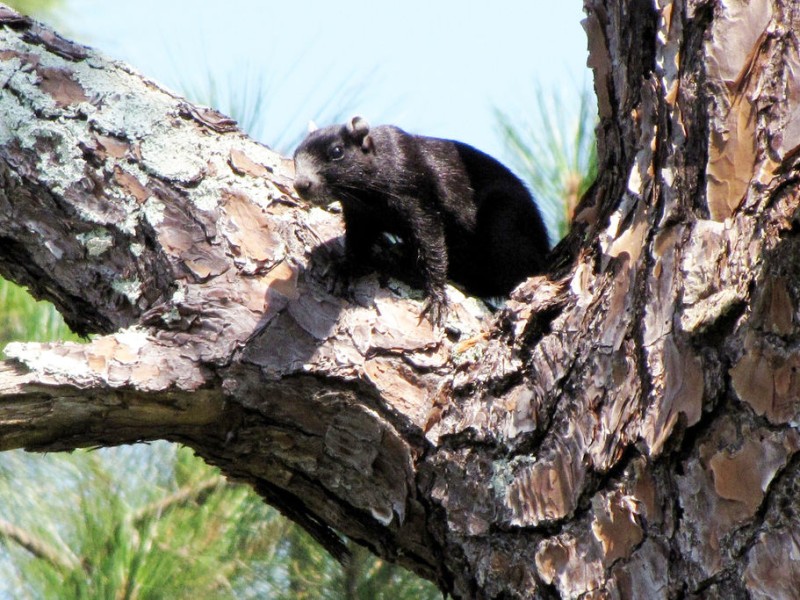
ALBANY — Georgia is home to the largest species of tree squirrel living in North America. The fox squirrel (Sciurus niger) can regularly be seen in southwest Georgia sitting upright scanning its territory in the same manner as a meerkat on the plains of Africa.
Here, fox squirrels prefer a habitat consisting of stands of mature pines with a very clear and grassy understory bordered by hardwood and/or fields. The front area of Chehaw Park is a great example of this habitat and an excellent place to go and observe members of the species in their natural habitat.
Fox squirrels are easily distinguishable from their smaller cousin, the gray squirrel. A mature fox squirrel will weigh up to 3 pounds, which is three times the average weight of a gray. The extreme length of its tail is also a distinguishing factor and may lend to its common name. When running along the ground, the combination of its gait and movement of the tail are very similar to that of a running fox. The fox squirrel’s coloring ranges from the more common brownish-black with a yellow belly to stunning solid reddish-brown and black.
Although they are tree dwellers, fox squirrels tend to spend a good deal of their time on the ground while searching for fallen mast, insects, bulbs, flowers and bird eggs. As previously stated, when interrupted, they will sit upright to observe interlopers as opposed to immediately running to a tree to hide like their smaller cousins. When they do feel threatened, they will lope to a towering pine and attempt to hide in the crook of the highest limbs.
When it comes to nesting, a natural cavity or those created by woodpeckers are preferable. Where these do not exist, the fox squirrels will build a nest or, drey, of tightly woven sticks and grasses. They are also known to build a cooling bed during the summer months from loosely woven sticks where they lounge and catch a breeze.
Fox squirrels breed twice a year, generally in January and again in June, with an average litter size of three. Although some captive fox squirrels have lived for up to 18 years, the average lifespan in the wild is about a decade. They are solitary animals and, unlike their smaller gray cousins, are seldom seen in groups.
Although fox squirrels are territorial, establishing colonies in specific areas, they are not immune to wanderlust. In the late 1990s, the Georgia Department of Natural Resources attempted to re-establish a population at Dawson Forest Wildlife Management Area. The released fox squirrels were tagged, and some were fitted with radio transmitters. One squirrel was tracked traveling more than 25 miles from the point of release.
It is legal to hunt fox squirrels in Georgia with a liberal daily limit of a dozen gray or fox squirrels per hunter. However, for many, just observing a fox squirrel is a thrill in itself. Experienced hunters report seeing 30 to 50 gray squirrels for every fox squirrel sighting. Most choose to count coup, letting the fox squirrel walk unless the specimen is so striking they harvest it as a trophy worthy of the taxidermist’s art.
Hopefully these considerations will lead this species, which has declined in numbers due to habitat destruction, to thrive across the state once again.
Author

Related Articles

Dawson police arrest wanted suspect after Flock Safety camera alert
According to police, May drove into the yard of a nearby residence instead of complying with officers’ commands. He then exited the vehicle and ran into the home on foot.
Lee County stands alone without E-SPLOST. Here’s what that means for schools, taxpayers and the county’s future
Following the defeat of its referendum, Lee County became just the second of Georgia’s 159 counties without voter approval for an active ESPLOST, leaving the school system without the state’s primary local funding source for major construction, renovations, school buses and other capital improvements.
Chamber celebrates new businesses, invites community to Coffee and Connections event
The Terrell County Chamber of Commerce is continuing its efforts to strengthen local business relationships through community celebrations and networking opportunities, recently recognizing two new businesses with ribbon-cutting ceremonies and announcing its next “Coffee & Connections” event in Sasser.
