
Restoration of longleaf pine woodlands addresses conservation issues
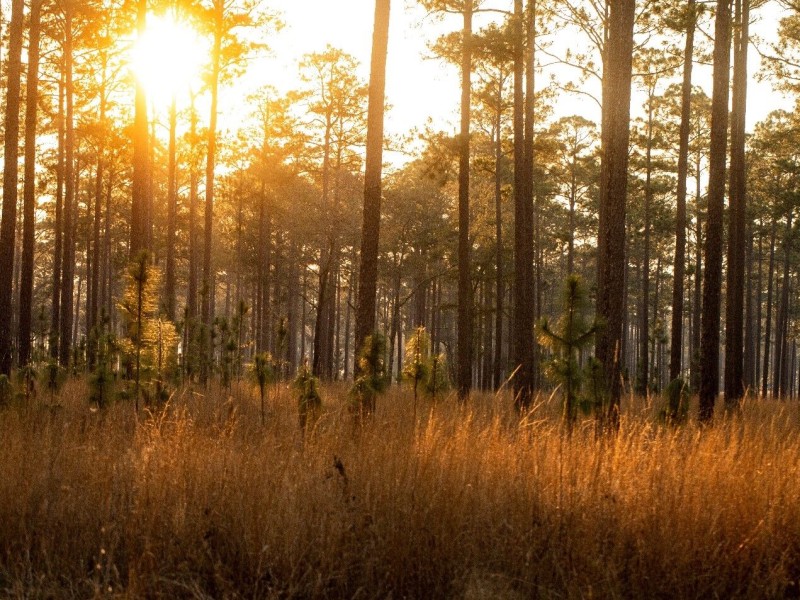
Special Photo: Matt Hanner
From staff reports
NEWTON — The Southeastern U.S. faces water scarcity issues that concern farmers and conservationists alike. But new research shows that restoration of longleaf pine woodlands can enhance stream flow while conserving an endangered ecosystem — addressing two pressing conservation issues at once.
The study was conducted by a team of scientists from the Jones Center at Ichauway — a nonprofit research center in southwest Georgia — and was recently published in the journal Science of the Total Environment. The team investigated 21 watersheds in rural parts of the Southeastern U.S. and found that areas with abundant longleaf pine woodlands had 17% more streamflow on average and 92% higher streamflow during droughts.
Although rainfall is abundant in the Southeast, severe droughts, increased water demands from agriculture, and growing populations can strain freshwater resources and lead to seasonally low stream flow. Low stream flow is problematic because it threatens freshwater wildlife like fish and mussels. At the same time, expanding cities have reduced forest cover and changes in forest management have degraded native Southeastern forests, which are home to many rare and endangered species.
The finding that forest restoration promotes stream flow is intriguing to farmers and conservationists because it suggests that two pressing environmental issues, water scarcity and forest degradation, may both be eased by the same solution.
“Forests actually use a substantial amount of water,” the study’s lead author, Seth Younger, said. “So when we talk about forest restoration, we don’t mean planting new trees. We mean managing existing forests better, which often means maintaining fewer trees.”
Currently, many forests are dense, have a thick midstory, and use water inefficiently. On the other hand, longleaf pine trees use water conservatively, and when restored are maintained as open woodlands with lower tree density and grasses below the canopy that are also water conservative.
“The low tree density and water-conserving species in longleaf pine woodlands mean that more rainfall makes its way into the soil and to streams rather than being taken up by trees and understory plants — boosting streamflow, especially during times of drought,” study co-author Steven Brantley said.
“Longleaf pine forests were once the most abundant forest type of the Southeast, but they have been reduced to less than 5% of their historic range, imperiling many associated wildlife and plant species” ecologist and co-author Jeffery Cannon said. “These results are exciting because they show that ongoing forest conservation efforts also will contribute to water conservation in a meaningful way.”
Protecting water resources through forest restoration is feasible as many regional efforts are already underway to promote longleaf pine restoration in the Southeastern U.S. One program, America’s Longleaf Restoration Initiative, is working to increase longleaf pine coverage to 8 million acres on private and public lands.
Forest restoration is not the only approach toward addressing water scarcity. The Georgia Flow Incentives Trust, led by the Georgia Water Policy and Planning Center, is seeking to protect streams by testing novel incentives to reduce water use among south Georgia farmers using an innovative auction process. Similar economic incentives in longleaf restoration may help to reach water conservation goals even faster.
“We have long looked to protect water resources by improving agricultural efficiency, but this study lets us see that forest restoration can also help reach that goal,” Brantley said.
Author

Related Articles

Lee County homeowners have until Aug. 1 to claim property tax exemptions
Lee County homeowners have until Aug. 1 to apply for homestead and other property tax exemptions for the 2026 tax year, a deadline members of the Lee County Board of Tax Assessors highlighted Monday as they encouraged eligible residents to take advantage of available tax relief.

Dawson police arrest wanted suspect after Flock Safety camera alert
According to police, May drove into the yard of a nearby residence instead of complying with officers’ commands. He then exited the vehicle and ran into the home on foot.

Lee County stands alone without E-SPLOST. Here’s what that means for schools, taxpayers and the county’s future
Following the defeat of its referendum, Lee County became just the second of Georgia’s 159 counties without voter approval for an active ESPLOST, leaving the school system without the state’s primary local funding source for major construction, renovations, school buses and other capital improvements.
