
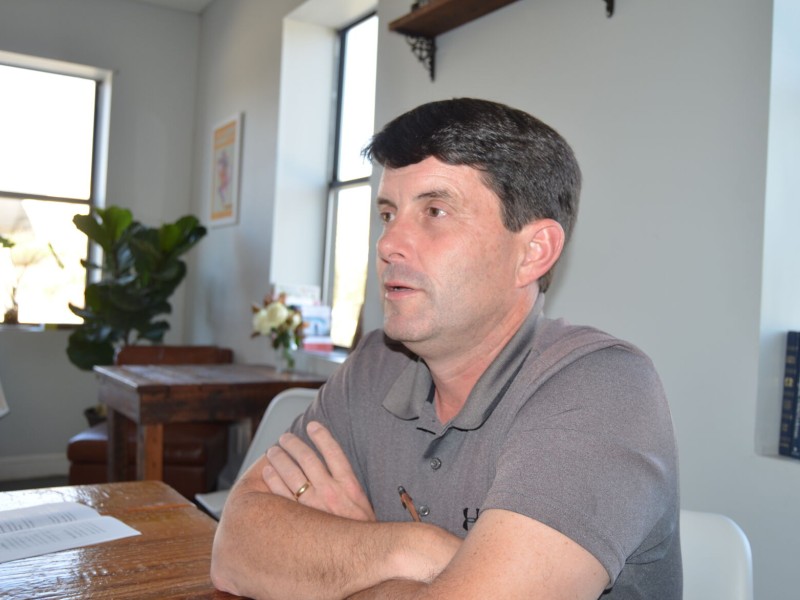
Albany Ward IV Commissioner Chad Warbington makes case for another four years
File Photo
By Alan Mauldin
[email protected]
ALBANY — Listing accomplishments of the Albany City Commission over the previous four years, Commissioner Chad Warbington said great strides are made in crime prevention, economic growth and housing, all done while cutting property taxes each of those years.
The Ward IV incumbent is seeking re-election this year, and faces two opponents — Marion Gaines-Jones and Larry Harris — in the Nov. 7 municipal election.
“Those are three areas I feel like the community would (care) the most about,” he said. “I feel like we have made progress in all three areas. I can say after four years we’ve changed a few things, we’ve moved the needle and we’re definitely on a different course than we were four years ago.”
On the topic of public safety, the incumbent, who serves on the Public Safety Committee, said that the commission has worked to attract and retain more law enforcement officers by increasing salaries significantly and to a level that is higher than any of the other agencies in the region. The result has been a sharp increase in the number of individuals going to the police academy with the intention of working in Albany after graduation.
“The (police) chief has said his applicant pool has doubled,” Warbington said. “There’s more applicants, and some people who were getting ready to retire are going to stay on a few more years.”
The commission also has invested in gunshot-detection devices and a real-time crime center, which should make the police department more efficient and better able to react to incidents, the commissioner said.
In Albany, as everywhere else, COVID-19 had a big impact on the economy, he said, but as the pandemic receded, there have been some wins.
Most recently, the commission approved a hotel project that will encompass the former Water, Gas & Light Department and former Albany Herald building downtown as well as a revitalization project for the Harlem District that will bring some $70 million in private investment to the city. Earlier, a developer brought a project to the commission to turn the former Davis Exchange building at the corner of North Washington Street and West Broad Avenue into a work force apartment complex.
“If those three projects come together, it’s going to be tremendous,” Warbington said. “COVID clearly put a huge dent in the economy. But the last couple of years we’ve seen a lot of interest, a lot of projects.”
The commission also helped in clearing some big obstacles for the Phoebe Putney Health System’s Living and Learning Center, which is now under construction, Warbington said. Once completed, the facility will educate Albany Technical College students, with the hope that many of them will pursue careers in the local area.
“You’re going to have 200 college students just two blocks from downtown,” Warbington said. “When you combine that with the other projects, this is going to be a different place in a few years. All that happened under our watch. While I certainly do not take credit for it, it’s a team effort. We easily could have lost the Phoebe project.
“Probably the biggest impact from an employer standpoint was the Outdoor Network, which brought over $10 million in investment. Not only that, it took a building that was blighted, the former McGregor building, and breathed new life into it. Those are high-paying jobs, and (the company) is paying taxes here.”
The commission used its job incentive fund to help make the Outdoor Network project a reality, the candidate said.
Warbington also was part of the group that included state Rep. Gerald Greene, R-Cuthbert, who put together a project that brought in a $923,513 grant from the state to fund a 29-unit single-family housing development at Gillionville Road and Lockett Station Road.
The city also is managing to fund the massive combined sewer overflows project, enlisting assistance through grant funding with a minimal increase of about 5% in customer sewer rates, Warbintgon said.
The city is under a mandate to complete the work by June 2025.
“We knew there was an issue, but when the EPD (Georgia Environmental Protection Division) came down with that deadline, we had no choice but to come up with $150 million,” he said. “That’s a severe deadline. We didn’t have a choice.”
Author

Related Articles
Albany recycling center enacts material separation rule
Mixed items will no longer be accepted at the Albany recycling center at its 2521 Meredyth Drive facility. Individuals will now be required to separate items befor they will be accepted.

Wild Game Dinner marks 34 years as South Georgia Scouting reaches for next generation
More than a century after organized Scouting first took root in Southwest Georgia, local leaders say the program is working to preserve its traditional mission while adapting to a new generation of young people.
Albany City Commission takes action on proposed downtown hotel, two theater renovation projects
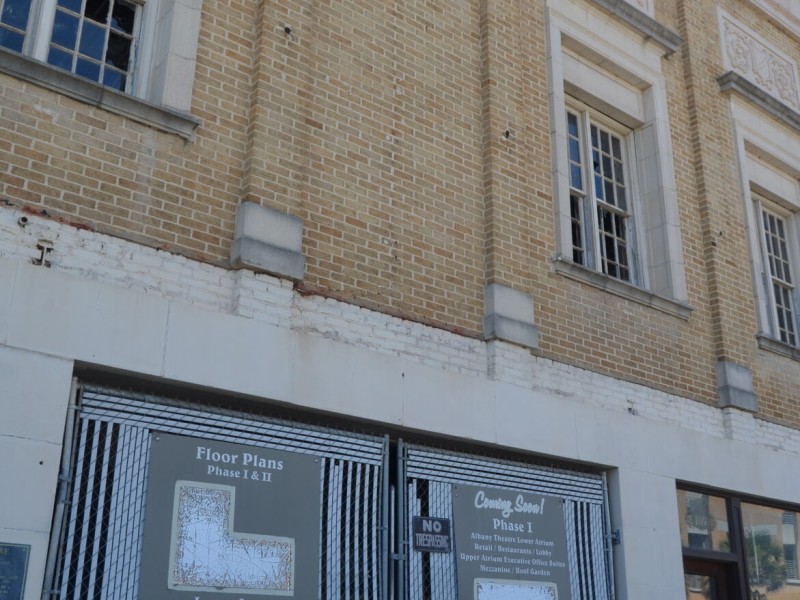
“We’re taking the original building back to, hopefully, it’s glory days. One of the cool things about the project is we are going to restore the balcony. It’s going to have a balcony, so it’s going to be super cool.”
