
Colleges do little planning for monkeypox outbreak
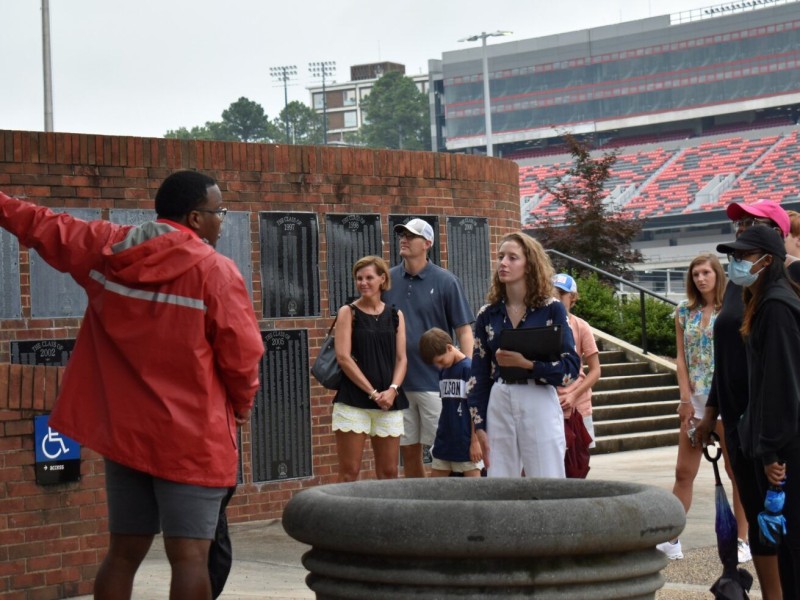
Ross Williams/Georgia Recorder
By Jennifer Shutt
Georgia Recorder
WASHINGTON — College students are heading back to campus following more than two years of a pandemic that led many schools to empty out for full semesters and later move to hybrid schedules in a struggle to curb the spread of COVID-19.
But the attempt by colleges and universities to return to something resembling normal could be truncated by monkeypox, the virus that has steadily increased throughout the summer, challenging both the federal government and state and local public health officials.
Higher education plans for dealing with monkeypox appear opaque or nonexistent. Schools have begun sending students information about monkeypox through websites and newsletters, but large public colleges contacted by States Newsroom were unable to explain how they’ll help students isolate or keep up with their classes during the two to four weeks they’ll be contagious if they contract monkeypox.
Case counts throughout the United States began increasing after a Massachusetts man was diagnosed on May 17 and have since risen to more than 14,100 people in every state except Wyoming. The White House has declared this outbreak a national public health emergency.
American Public Health Association Executive Director Georges C. Benjamin said colleges should be preparing for the year by assuming they’ll have monkeypox cases on campus.
“My advice to universities is that, while we’re all trying to rapidly return to normal, the truth of the matter is they ought to have contingencies to provide support to students in a hybrid manner,” such as providing options for online study, he said in an interview. “Anybody who’s not making plans for that is going to find themselves deeply disappointed.”
Student health centers and health care providers that regularly treat college students should become extremely familiar with how the rashes and lesions are presenting in this monkeypox outbreak, he said.
The virus, which is a cousin of smallpox, is characterized by a rash or lesions that can look like acne or mosquito bites. The virus can come with flu-like symptoms and painful muscle aches, though sometimes it can present with just the rash. No one in the United States has died in this monkeypox outbreak.
Unlike COVID-19, which is a respiratory virus that can spread somewhat easily from person to person, monkeypox is spread by direct physical contact with someone who has been infected. It can also spread by touching fabrics, such as bedding or towels, or surfaces an infected person has touched.
The current outbreak in the United States has spread predominantly among gay, bisexual and men who have sex with men, though cases have been diagnosed outside that population as well.
Among colleges and universities reviewed by States Newsroom, there’s no guidance about how students should address missed lectures, exams, labs, or work-study programs that might be critical for students’ financial aid. Colleges don’t offer insight on how students on academic or athletic scholarships might be affected if they miss a month of instruction, or practices due to monkeypox.
The university guidance also lacks information about how administrators will respond if several cases crop up in a dorm, or other on-campus housing.
The University of Georgia, where students are already back on campus ahead of the fall semester, says on its website the University Health Center’s “clinical staff are trained and fully prepared to identify any patient presenting with signs and symptoms consistent with monkeypox infection.”
The University of Florida guidance, sent out this week, plainly tells students the “overwhelming majority of cases in the U.S. have been transmitted through intimate sexual contact.”
“It is important that you consider this in deciding how widely to engage in intimate activities,” it says.
A spokesperson for the University of Florida said the student health center plans to “increased promotion of health hygiene and safe sex messaging” to try to reduce spread.
Rachel Mack, a spokesperson for the American College Health Association, said in a statement that “many colleges are still working on their plans to prevent and manage monkeypox outbreaks.”
At the moment, she said, “there isn’t much guidance specifically for colleges and universities,” including on how to address “unique considerations” like isolating students, making academic accommodations for students who contract the virus, providing extra cleaning and administering testing.
Since anyone can contract monkeypox, Mack emphasized that colleges “should communicate it as a public health concern for all. However, campus communications can be tailored to different audiences to be most effective.”
Benjamin said student health centers need to understand how to access the antiviral drug Tpoxx that federal officials are using to treat monkeypox cases. At the moment, the federal government requires an “onerous” amount of paperwork to dispense the prescription medication for monkeypox patients, he said.
Colleges and universities, he said, should be able to keep cases at bay if they follow some best practices. That includes explaining the virus during orientation, preparing the student health center to test and get test results quickly, planning for the complicated process required to order the antiviral being used to treat monkeypox, providing a bridge between students and the health departments distributing the vaccine and having a plan in place to isolate students who test positive.
“It’s something that universities have to be proactive about because it’s likely that they’re going to have people that have cases on their campuses,” Adalja said. “And I think if they’re managed swiftly and competently, you won’t have much sustained spread.”
CDC Director Rochelle Walensky said this week that 98% of monkeypox cases are in men and that “among cases with known recent sexual history and gender, 93% of cases were among men who reported recent sexual contact with other men.”
Monkeypox is transmissible from the time symptoms begin through when the rash has completely disappeared and a new layer of skin has formed, a trajectory that typically lasts between two and four weeks.
That timeline, much longer than with COVID-19, could create significant problems for students, many of whom don’t have remote classes anymore and would likely miss much of their coursework.
College students also often live in crowded houses and apartments where completely avoiding contact with someone who tests positive or all the fabrics they may have touched could be especially challenging.
The federal government began the outbreak as the only entity allowed to test for monkeypox, but has since opened up testing to commercial laboratories.
Author

Related Articles

Classifieds – June 20, 2026
ALBANY HERALD CLASSIFIEDS JUNE 20, 2026

Albany Herald – June 20, 2026
City Albany faces shortfall for police… Women’s Anchorage tentatively set to… Commissioner, school leaders clash over…
Public safety drives Leesburg’s $4.2 million Fiscal Year ’27 budget
The adopted spending plan reflects modest growth in city revenues and continued emphasis on maintaining core municipal services, particularly public safety and sanitation, which together account for a significant share of general fund expenditures.
