
Committee on Navigable Streams mull access to only 5% of state waters
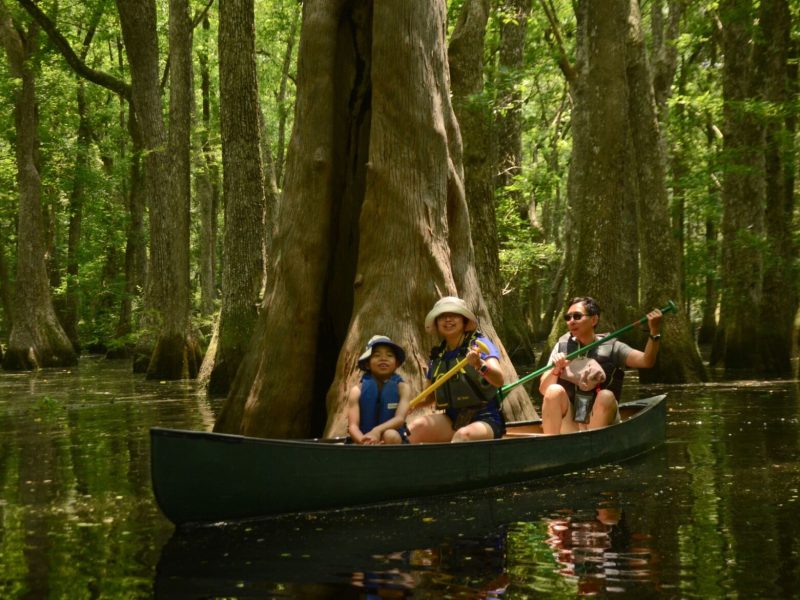
A state House committee’s ruling could limit recreational boaters to only 5% of the state’s 70,000 miles of waterways.
Special PhotoStaff Reports
[email protected]
[email protected]
ATHENS — The special House Study Committee on Navigable Streams, organized to determine where Georgians should have the right to boat, fish and hunt on Georgia’s streams, has thus far hinted at taking a narrow view of these rights. The stance could spell doom for many small businesses and have a chilling effect on Georgia’s record-setting tourism industry, according to outdoor recreation advocates.
One proposal put forth during the 2024 legislative session and referenced in committee documents would ensure the public’s right to boat, fish and hunt on just 5% of the some 70,000 miles of streams and rivers in Georgia.
“Public access to Georgia’s rivers and streams is crucial to sustaining Georgia’s outdoor recreation economy, ” Amanda Dyson Thornton, executive director of the Georgia Association of Convention and Visitors Bureaus, said during the committee’s Sept. 20 meeting in Helen.
But at that meeting, committee members balked at suggestions that the public should have the right to float down small streams in canoes, kayaks, rafts and other small vessels.
Rep. James Burchett, R-Waycross, who sits on the Navigable Streams Study Committee and authored the legislative proposal guaranteeing public access to just 5% of Georgia’s streams, cited the state’s 1863 definition of “navigable” streams to assert that the public has no right to float down the state’s small streams.
“In navigable water, you have the right to hunt, fish and pass,” Burchett said at the Sept. 20 committee meeting.. “You can float in non-navigable water if you have permission from the landowner.”
Some legislators have previously asserted that to float down small but popular outdoor recreation streams like South Chickamauga Creek in Catoosa County or Ebenezer Creek in Effingham County kayakers should first seek permission from every landowner along those creeks.
“That’s an untenable policy and one that could have devastating impacts to small businesses that operate canoe and kayak liveries along these streams,” Suzanne Welander, American Whitewater spokesperson and author of Canoeing and Kayaking Georgia, a comprehensive guide to the state’s paddling destinations, said. “It also contradicts Georgia’s long-standing legal tradition that protects boating passage on small streams.”
The Freedom to Float Coalition, consisting of Georgia Canoeing Association, Georgia Rivers, the Tennessee Valley Canoe Club, American Whitewater and American Canoe Association, in a recent letter submitted to the committee urged the members to recognize and reaffirm the public’s common law “right of passage” to boat down Georgia’s streams.
“The right of common passage is firmly grounded in Georgia law and has governed the public use of waterways since prior to statehood,” Georgia Rivers Executive Director Rena Ann Peck wrote in the letter. “Georgia’s rivers and streams served as the state’s first public highways, and unfettered passage down them was critical to all citizens. Today, recreational use of these rivers and streams remains equally important to our state’s growth and economic development.”
The committee is set to hold its final meeting Nov. 13 beginning at 9 a.m. at the Donald W. Nixon Centre for Performing & Visual Arts in Newnan. The meeting is open to the public and there will be an opportunity for members of the public to provide testimony before the committee. The committee’s recommendations could have far-reaching impacts to the state’s tourism-based economy.
In 2023, the state welcomed a record 171 million visitors. Those visitors generated $79.7 billion in total economic impact and supported more than 430,000 jobs. In 2022, outdoor recreation accounted for 2.1% of Georgia’s gross domestic product; boating and fishing alone generated $1.1 billion in economic activity. Some 70 small businesses offering canoe, kayak, tube, raft and paddleboard rentals, and hundreds of independent fishing guides depend on access to the state’s network of rivers and streams. Additionally, three Georgia-based companies manufacture kayaks.
Author

Related Articles
Albany Herald – June 6, 2026
The boy who drove the bus and helped,,, Property owner removes debris from northwest… POWERFUL PERFORMANCES DRIVE THEATRE…

Classifieds – June 6, 2026
CLASSIFIEDS: JUNE 6, 2026
Squawkbox – June 6, 2026
SQUAWKBOX: JUNE 6, 2026

