
Dougherty Coroner Michael Fowler: God called me
Carlton Fletcher
ALBANY — It didn’t take Dougherty County Coroner Michael Fowler long to determine that, even though he’d decided on a possible new career path as something of a lark, he’d made the right choice.
When your first day on active call during Mortuary Science studies is to pick up a decapitated body and you’re OK with that … well, perhaps you’ve found your calling.
“My friend (Judge Ashe, who is now the city of Albany’s cemetery manager) and I were studying Mortuary Science at Gupton Jones College in Atlanta, and we’d worked out an arrangement where we would sleep at Meadows Mortuary (in Atlanta) to save money,” Fowler, who was elected coroner of Dougherty County in 2012, said. “We arrived at Meadows and hadn’t even taken our luggage out of the car when the funeral director said, ‘Come go with me.’ We were called to pick up a body at the site of an automobile accident.
“When we got to the scene, we saw that the woman in the one-car accident had been decapitated. Neither of us had ever touched a dead body before, but we had no problem with it. After we loaded the body, we searched and found her head. After it was over, I realized that I’d felt no kind of fear. I believe God gave me the strength, and I told myself, ‘I can do this. I’ve seen the worst.’”
Unfortunately, Fowler was wrong in that assessment. He’s since seen some of the most gruesome sights that his profession entails. But he says he was correct in his firm belief that his faith would give him the strength to do his job.
“I believe this profession has to be a calling,” Fowler, 56, said. “And I don’t believe any person is strong enough to do it without God’s help. I’ve prayed to God for strength every day of my career, and He has given me that strength. I believe God put me in this profession for a reason.”
A native of Columbia, S.C., who graduated from Dougherty High School in 1976, Fowler considered college but decided to join the work force when he hired on at the Firestone Tire and Rubber plant in Albany. When the plant closed in 1986, workers were offered a choice of a severance package or an opportunity to further their education. Fowler wanted to study computer science at Albany State College, but the classes were filled when he applied.
“There were six of us who decided we’d go to Gupton Jones and become morticians,” Fowler said. “It was kind of a joke at first, but we all went through with it. Part of our deal (with Firestone) was that we got a stipend each day for living expenses, but to save that money Judge and I stayed at the funeral home. We moved bunk beds into a room upstairs.
“We were both a little leary at first. We’d hear noises in the night, and that was creepy at first. We joke about it now, but Judge and I slept with guns and Bibles in our room. We were prepared for anything, living or spiritual.”
While his five contemporaries returned home after completing their yearlong studies at Gupton, Fowler stayed on for an additional six months to complete requirements for an additional degree. It was during this time, while on call, that he discovered that the decapitated body had not been the worst he would experience.
“We were called to this two-story house, and once we turned the corner a block away, we could smell the body,” he said. It was bloated and covered with insects.
“We had to put that body in a body bag,” Fowler said. “That was the worst.”
When Fowler completed his studies, he worked at Marion Graham Mortuary in Jacksonville so that he could get his mortician’s license in Florida. He returned to Albany a short while later when his wife, Rosa, a minister, was called to lead a church in Americus. Fowler worked at Marine Corps Logistics base-Albany as a materials handler for two years, but he also worked independently as an embalmer at several area funeral homes.
The Flood of 1994 brought dramatic change to Fowler’s career path.
“Federal officials were looking for people locally to help them identify and rebury the remains of (438) bodies that had washed up during the flood,” Fowler said. “No one was signing on. When I mentioned that I was considering it, one of the funeral directors where I was doing work told me if I helped them, I’d never work there again.
“But these were my neighbors. If it were my loved ones, I’d want to know there were local people who cared enough to do what was right for them.”
Fowler worked tirelessly with federal officials, helping identify and rebury all but 95 of the bodies that washed up during the flood. When his work ended, he told GBI Chief Medical Examiner Bryant Dawson, “If you ever need someone, give me a call.”
A week later, Dawson called. Fowler was hired on as a forensic pathology assistant at the newly opened GBI Crime Lab in Moultrie, where he worked for a decade. When that facility was closed due to budget cuts, Fowler was transferred to the agency’s Atlanta office. He worked there until retiring, driving to and from his Albany home each day so that he would have more time with his family, which by this time included children Ullainee, Michael Jr. and Rosalynn.
Eventually, he was put on a rotation schedule, traveling to all parts of the state for calls.
“I actually loved the travel,” he said.
While working with the GBI, Fowler became part of the National Disaster Medical System’s Disaster Mortuary Team that travels to disasters the world over to assist with forensics duties. As part of DMORT, he’s traveled to 17 disaster sites, including the Egypt Air Flight 990 crash site in Rhode Island, the 2001 terrorist bombings of the World Trade Center in New York, the tornado that ravaged Camilla in 2003, the 2005 tsunami that hit Thailand, and Hurricane Katrina, which devaststed New Orleans and the U.S. Gulf Coast later that same year.
“I always ask God for strength when I’m working because I feel I need to be strong for the family (of the deceased),” Fowler said. “But it’s so hard at times. For the first time of my career, I felt the grief and lost it for a bit working at the World Trade Center. It was so difficult looking for bodies of Americans in all that rubble, knowing their families were standing around the site, hoping for some kind of information.
“It was also difficult in Thailand, seeing football fields of bodies laid out and walking among them with family members who were trying to identify their loved ones. There were 114,000 bodies, and their survivors had to determine whether they wanted their relatives’ body added to a mass funeral pyre or a mass grave.”
Fowler retired in 2010 after his third back surgery convinced him he’d had enough.
“I hurt my back lifting the bodies,” he said. “The last guy I lifted weighed over 300 pounds, and that one messed up my back pretty bad.”
While working with the GBI, Fowler had long considered running for coroner, but the agency deemed the position a conflict of interest. Freed of that restriction, Fowler said he started to pray about the possibility.
“One night, just before (election) qualifying, God said, ‘Run,’” Fowler said. “Since God told me to do it, I had faith that it was what I was supposed to do. I decided if it took everything I had, I’d run for office.”
Fowler defeated incumbent Emma Quimbley in the 2012 coroner’s race and has since become a familiar presence in the community, attending numerous civic functions and government meetings.
“I try to be an active part of the community, to give back,” he said. “I do work with the Rotatry Club and the (Albany Area) Chamber (of Commerce), and I work with interns from both Albany State and Darton College. I feel like it’s important to pass on your knowledge, and I try to do that.”
Spirituality is a large part of Fowler’s life, and he said his relationship with God allowed him to perform the most difficult duty of his life recently.
“Rosa was my joy,” he said. “And when she died, I embalmed her. She’d told me she didn’t want anyone else to do it, and when she passed, I just prayed to God for the strength. That was the final thing that I gave her.”
Related Articles

Albany Commission OKs $400,000 purchase of Chamber building
“It’s just a (big) space that was going to take a considerable investment. It’s a great building that really doesn’t meet our needs anymore.”
Former Edison city clerk faces 10 years in prison for federal program fraud
Former Edison City Clerk Tami Fincher has admitted in federal court that she used taxpayer money for personal purchases and pleaded guilty to one count of federal program theft before U.S. District Judge Leslie Abrams Gardner on Thursday.
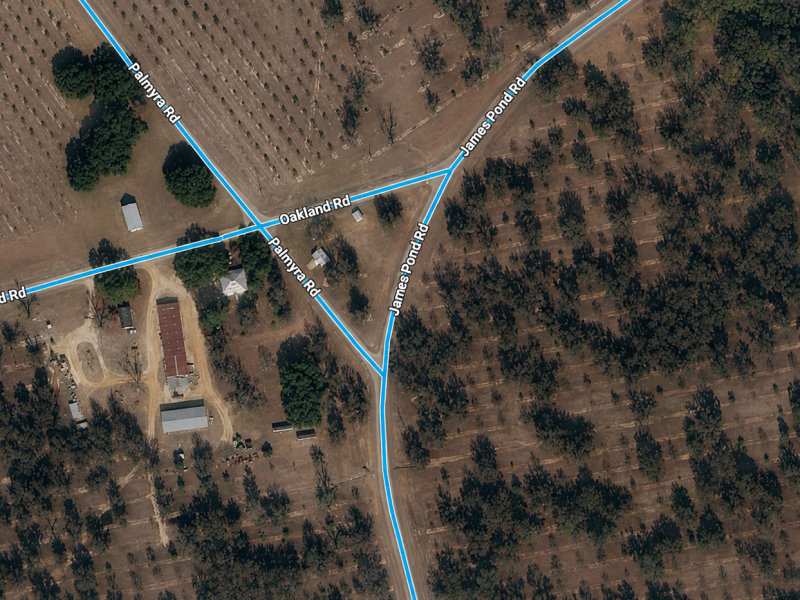
Lee Commissioners to vote Aug. 11 on roundabout after 48 emergency calls since 2021
Lee County commissioners will decide Aug. 11 whether to apply for state funding to build a $2.3 million roundabout at a three-way cluster of intersections where emergency responders have been dispatched 48 times since 2021.
