
Drainage of coal ash plant in Dougherty County set to start in February
By Alan Mauldin
[email protected]
ALBANY — Georgia Power Co. officials gave an update on Thursday on the draining of coal ash ponds and release of treated water into the Flint River in Dougherty County.
The state’s largest utility company will begin the process at the site in Dougherty County at the decommissioned Plant Mitchell in February. The plant was in operation from 1948-2016, with coal- and gas-powered generators at the site.
The company will remove some two million tons of coal ash from the site that will be recycled through the production of Portland cement and other construction products.
“When we announced the closing of all of our ash ponds in 2015, the years have been dedicated to planning how we could do that safely,” Scott Hendricks, the company’s water and natural resources permitting manager, said during a Thursday online meeting.
The virtual tour of the site was held remotely due to the current spike in novel coronavirus cases and was attended by media and elected officials, including Dougherty County Commissioner Anthony Jones and state Rep. Joe Campbell, R-Camilla.
The three ponds in Dougherty County eventually will be filled in and the site planted with grass.
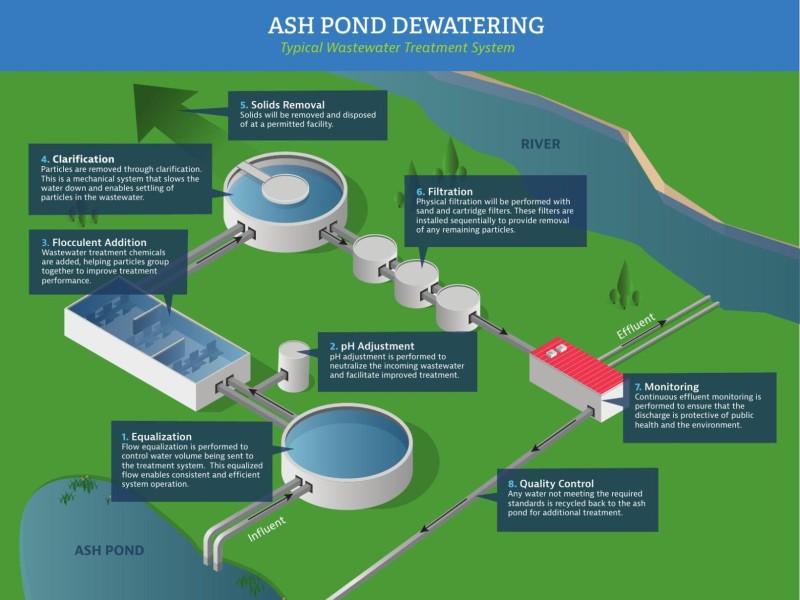
During the drainage/dewatering process, three third-party contractors will provide engineering and monitoring services to ensure the water is safe to be returned to the river, Hendricks said. Solids will be separated for recycling during the process.
The process is approved and will be monitored by the Georgia Environmental Protection Division.
“Everything we do is highly regulated by the Environmental Protection Division,” Hendricks said.
During the drainage process, water will go through a filtering system to remove contaminants and toxic substances to the permitted levels, the company said. Monitoring during the process will detect any water that has not been treated properly, and the system has a shut-down mechanism to prevent transfer into the river.
An alarm will notify operators, and any suspect water will be returned to the ponds for additional treatment.
Water quality both upstream and downstream of the plant will be monitored by third-party vendors.
In all, Georgia Power will remove water from 29 coal ash ponds across the state. Each location required a site-specific plan for cleanup.
In addition to reporting results to the EPD, the company will provide reports available to the public on its website.
Jones, whose Commission District 6 includes the site in Dougherty County, said he was impressed by the information given during the presentation.
“Here’s what’s important: They are transparent about everything they are doing,” he said during a telephone interview following the presentation. “At the end of the day, water quality is everything, whether you need it to drink or to swim in.”
Author

Related Articles

City Commission discusses fate of Albany Civic Center
Are the Albany Civic Center’s days numbered?

PHOTOS: Grand Opening of Albany State Spirit Store
Three galleries, click the arrow to scroll through the photos.

Terrell schools bring in outside financial team after CFO departure
The Terrell County Board of Education has approved an agreement with Mauldin & Jenkins to provide CFO-level consulting and financial support as the school system continues rebuilding its finance department following months of turnover and identified longstanding weaknesses in its financial processes.
