
Economic recovery could occur in Dougherty County, nation — if COVID is kept in check
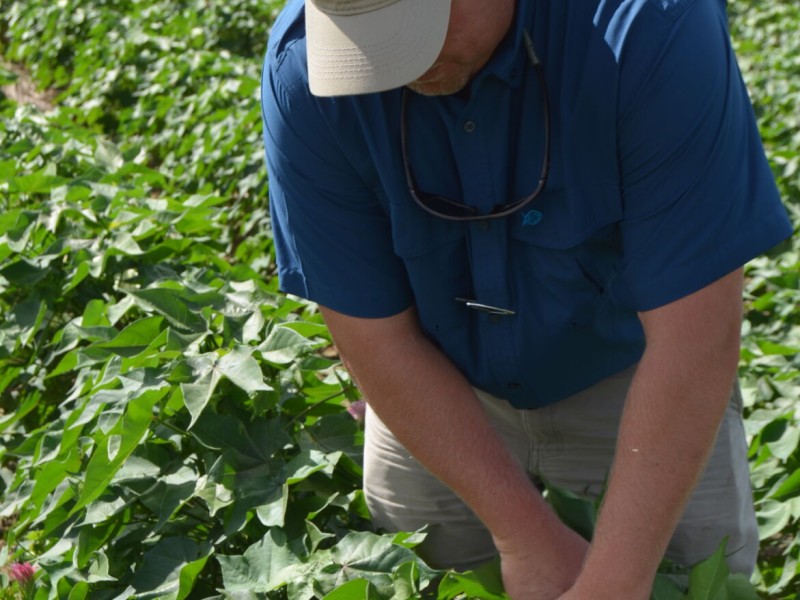
File Photo: Alan Mauldin
By Alan Mauldin
[email protected]
ALBANY — Fans of the “Game Of Thrones” book and television series know the ominous meaning of the phrase “Winter is coming.”
In the current reality, for the United States it means a potential for massive increases in COVID-19 cases but also a rough time for the economy as well for the winter of 2020-2021 and perhaps well into next year.
For economist Jeffrey M. Humphreys, that means a period of “slog” before the potential for greater-than-average growth beginning in the summer of next year.
Humphreys, director of the Selig Center For Growth at the University of Georgia, recently released his analysis for the coming year that begins with this caveat: “If we avoid another lockdown of the population and broad shutdown of the economy, the COVID-19 recession is over.”
The economic downturn precipitated by the shutting down of businesses in the initial period of the global pandemic was one of the worst in the nation’s history, at least temporarily.
The 32 percent freefall in the economy during the second quarter of 2020 was the steepest ever recorded, with 22 million jobs — one in seven — lost during this period. The unemployment rate jumped from 3.5 percent in March to 14.7 percent in April.
Despite that massive hit, the economy began to pick up again once states began re-opening parts of their economies, Humphreys said.
The economist’s report anticipates a new wave of the coronavirus to strike in the winter, so his analysis takes this into account. The number of new cases and hospitalizations hit record numbers this week, and some states have issued new restrictions.
“Nothing I’ve seen so far is surprising,” Humphreys said during a Friday telephone interview. “Basically, this second wave was highly anticipated and expected.
“It would take a much bigger increase before I would start to worry, (such as) a series of lockdowns and business shutdowns.”
While the nation as a whole saw a decline of 14 percent in jobs and the state 11 percent, Dougherty County’s drop was less at 9.7 percent. That’s because primary economic drivers for the area are government, retail, health care and agriculture, Humphreys said.
“Most of those industries suffered less than most others,” he said.
Like other governments, Albany and Dougherty County received economic stimulus money from the federal government that helped it weather the storm so far.
The economist’s report also bakes into the recipe another economic stimulus on the federal level to assist the unemployed and governments to help the economy during the “slog” in coming months.
“I’m expecting an economic stimulus of about $1 trillion in the first quarter of 2021,” he said.
The slog period will include “stops and re-starts” and sustained recovery is only expected after a vaccine is widely distributed, probably in mid-2021, or the nation develops “herd immunity.”
“If this proves to be true, then GDP (gross domestic product) will increase by 3.5 percent in 2021, which compares favorably to the 4.2 percent decline estimated for 2020,” Humpreys said in his report. “Since the decline in GDP that occurred in 2020 was large — a peak-to-trough contraction of 10 percent — and the projected rate of 2021 GDP is modest, GDP will not surpass its previous peak until early 2022.”
Humphreys also predicts that job growth will trail that of GDP during this time, with an expansion of nonfarm employment at 0.9 percent.
“That compares well to the 6 percent decline estimated for 2020, but the labor market will not recover the 22.2 million jobs lost to the COVID-19 recession until 2024,” the report said. “Only then can the U.S. economy be considered healed, but it will be a very different economy.”
Tourism and travel will continue to suffer for some time, for example, and thus the hospitality industry is in for a longer recovery, Humphreys said. Also, many businesses have adapted to virtual meetings and likely will not return to live meetings and holding conventions even after the pandemic is under control, at least for some time.
One potential roadblock to recovery is a severe worsening of the pandemic, and that could push the economy back into recession, Humphreys warned.
Author

Related Articles
PHOTOS: Albany State campus tour with Senator Jaha Howard
Click the arrow to scroll through the photos.

Foreclosures jump 52.9% across the region as buyers regain negotiating power
In Dougherty County, the number of residential properties advertised for foreclosure has nearly doubled this year. In neighboring Lee County, developers are preparing to add hundreds of new houses and apartments, including homes aimed at buyers who have struggled to find newer housing at an attainable price.
PHOTOS: Albany State New Employees Luncheon
Click the arrow to scroll through the photos.
