
Funds allocated for opioid abatement strategies in Georgia
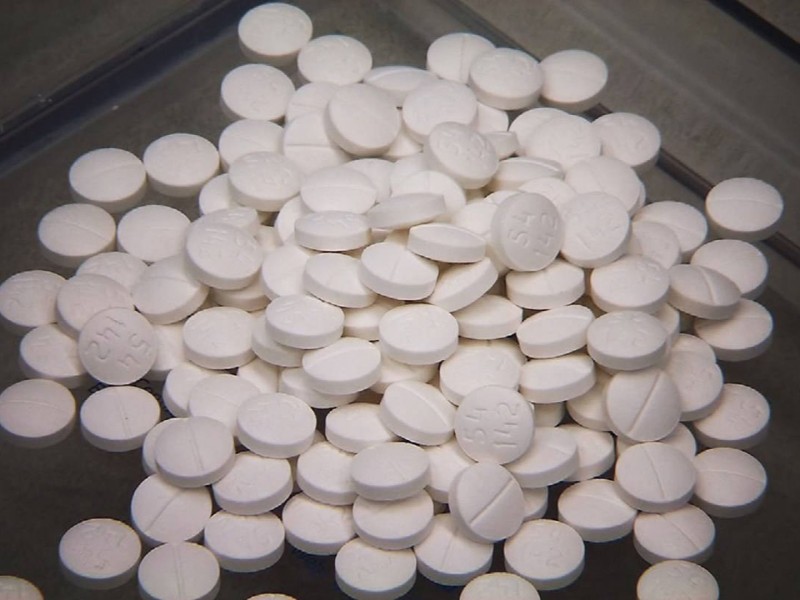
File Photo
From staff reports
ATLANTA — Gov. Brian Kemp announced the award of $13,081,929 in funds from the state of Georgia’s settlement with McKinsey & Co. to be used to address the negative effects of opioid misuse and to invest in opioid abatement strategies. The funds will be utilized to expand Medication Assisted Treatment availability, increase detoxification service capacity, promote stigma reduction, increase access to naloxone for emergency service providers, and expand training on naloxone to community providers.
“The opioid crisis has affected — either directly or indirectly — almost every Georgia family,” Kemp said. “We appreciate the Office of the Attorney General for working to represent the interests of Georgians throughout this litigation, and we look forward to ensuring these funds are leveraged to help us combat the scourge of opioid misuse in our state.”
Funds will be distributed through Memorandums of Understanding between the Department of Law, the Department of Behavioral Health and Developmental Disabilities and the Department of Public Health.
“We are using all tools at our disposal to protect Georgians and to help our state heal from the devastating effects of the opioid crisis,” Attorney General Chris Carr said. “This includes holding accountable those who have contributed to this epidemic and securing much-needed resources for victims, families and communities already struggling with addiction. With the alarming increase in opioid overdose throughout the pandemic, these funds will make an immediate impact by allowing our public health agencies to connect even more Georgians with support services to recover and rebuild their lives.”
Breakdown of Recommendations:
♦ Medication assisted treatment program enhancement: DBHDD; $4,750,000
♦ Detoxification services capacity expansion: DBHDD; $3,250,000
♦ Stigma reduction public awareness campaign: DBHDD; $2,064,000
♦ Naloxone purchase for Emergency Medical Services providers: DPH; $2,017,929
♦ Naloxone training expansion: DBHDD; $1,000,000
MAT is the use of FDA-approved medications, in combination with counseling, behavioral therapies, and social support to provide a whole-patient approach to the treatment of substance use and opioid use disorders. Benefits of MAT include reducing illicit drug use, disease rates, and overdose events in patients. Further, across the criminal justice system, MAT has been found to reduce criminal activity and arrests, as well as probation revocation and reincarceration. Through the investment of State Targeted Response and State Opioid Response grant funds from the Substance Abuse and Mental Health Services Administration, DBHDD has expanded MAT programs across the state. While DBHDD currently contracts with 24 MAT providers, gaps in access to services still exist.
$4,750,000 will provide for DBHDD to expand funding for MAT service providers, including providers not currently contracted with DBHDD, that already have the training, staff capacity, and ability to offer MAT. DBHDD intends to also utilize funding to ensure sustainability of MAT programs over a three-to-four-year time period.
DBHDD contracts with three providers to provide medically monitored residential withdrawal management services, also known as detoxification services, to individuals when a bed at a crisis stabilization unit is not available or is not the most appropriate level of care for an individual. The purpose of detoxification is to provide medical oversight to safely manage withdrawal symptoms for individuals who have stopped using alcohol and certain drugs, specifically opiates. $3,250,000 will allow for DBHDD to contract for detoxification beds with multiple existing detoxification service providers and to invest in system capacity across the state. This increase in bed capacity will reduce the number of individuals waiting for treatment and increases those individuals’ chances of successful recovery.
Stigma surrounding opioid use disorder discourages individuals struggling with OUD from accessing services or choosing to work towards recovery.
$2,064,000 will fund a two-year pilot program for DBHDD to create a public awareness campaign to reduce stigma regarding opioid use disorder statewide. The campaign will include formative research, stakeholder outreach and recruitment, campaign execution, and evaluation.
Emergency Medical Service providers personnel indicated to DPH the ongoing need for naloxone kits. $2,017,929 will provide for DPH to distribute approximately 326,000 naloxone kits to EMS providers.
$1,000,000 will support DBHDD’s current SOR-funded program to support training on naloxone administration and safety, specifically among community-based treatment and recovery providers. DBHDD will utilize this investment to focus on educating providers on addiction as a brain disease, creating and sustaining cultures of recovery, and naloxone administration. Additionally, training will focus on bringing providers from all levels of the substance use treatment continuum of care to improve linkages in service and cooperation between providers.
Author

Related Articles

Classifieds – June 9, 2026
CLASSIFIEDS: JUNE 9, 2026

Albany Herald – June 6, 2026
The boy who drove the bus and helped,,, Property owner removes debris from northwest… POWERFUL PERFORMANCES DRIVE THEATRE…

Classifieds – June 6, 2026
CLASSIFIEDS: JUNE 6, 2026

