
IDing useful and harmful lawn and garden insects
Special Photo; Sod Solutions
By Sod Solutions
[email protected]
There are so many great things about summer, but it’s also prime insect season. Oftentimes, common summer insects will continue to cause problems into the fall months. While flying insects can be a nuisance for your outdoor enjoyment, it’s important to pay special attention to the insects you oftentimes can’t see; they can cause problems for your lawn and headaches for you.
Chinch Bugs: What do chinch bugs look like?
The Southern chinch bug is often dark red, black or brown with a white band across its body, and some adults have two white spots on their backs. The young are bright red or grayish with a white line on their back.
Chinch bugs are tiny and are oftentimes not seen while damage is being done to the lawn. They like to hang around the soil level in the thatch of the grass.
The chinch bug is a pervasive pest found throughout lawns in the southern part of the United States. This insect has a favorite food — St. Augustine grass — which is why chinch bugs are very common in Florida and Texas.
What are the signs of a chinch bug problem? Chinch bug damage looks like drought damage, so it can be difficult to diagnose a chinch bug problem. Chinch bugs in the adult form are about the size of the head of a pen, making them difficult to spot.
Check the edges of your lawn near sidewalks and driveways to see if any are present or conduct a float test.
How do I control chinch bugs? Opt for non-chemical strategies like less thatch and fertilizer to control pests and promote beneficial insects. If chinch bugs cause damage, use suitable pesticides like bifenthrin. To prevent resistance, rotate pesticides each season, a practice known as “rotating modes of action.” Read the product labels for a full set of application instructions.
Sod Webworms: What do sod webworms look like?
Tropical sod webworms are a type of lawn caterpillar that are most common in the late summer and fall. The adult form is a small, lawn moth that is tan in color. It lays eggs on the blades and in the thatch of grass. Within about a week, small caterpillars hatch and begin to feed on the blades of turfgrass.
What are the signs of a sod webworm problem? The damage looks like transparent grass blades as they “skelentonize” grass.
How do I control sod webworms? Products that contain Spinosad, Like Natural Guard Spinosad, are best for treating a current sod webworm infestation. Read the product labels for a full set of application instructions.
Fall Armyworms: What do fall armyworms look like?
The fall armyworm is a larger lawn caterpillar than the tropical sod webworm and outbreaks are common in the United States in the late summer to early fall timeframe. Fall armyworms are the larval stage of the fall armyworm moth.
Armyworms in the larval (caterpillar) stage have an inverted “Y” shape on their heads and feed on the blades of grass.
What are the signs of a fall armyworm problem? Fall armyworm damage includes small, brown areas of damage throughout the lawn and “skeletonizing” of the grass blades to create a transparent look in the grass.
How do I control fall armyworms? Products made up of chlorantraniliprole, such as Scotts GrubEx Grub Killer, and acelepryn are most effective for treatment. Bifenthrin products and permethrin are also effective. Read the product labels for a full set of application instructions.
White Grubs: What do white grub worms look like?
White grubs, also referred to as grub worms, are the larval stage of a number of different types of scarab beetles like the Japanese beetle, European chafer, masked chafers, June beetles or May beetles.
Grub worms feature C-shaped bodies with yellow-brown heads, six front legs, and dark-tinted abdomens from soil on their exoskeletons. They’re identifiable by their cream-colored bodies.
What are the signs of a grub worm problem? While adults don’t bother turfgrass much, the damage to lawns comes while in the larvae form underground. White grubs feed on the roots of the grass. While most common from the spring to fall months, the worst lawn damage usually shows in late summer and early fall.
How do I control grub worms? Effective grub worm treatments include Acelepryn, Chlorantraniliprole, Imidacloprid, and Triclorfon, with the first three also serving as preventative measures. While some grubs, like those from May and June beetles, live for 2-3 years; others last only a year. Dylox 6.2 is effective against grubs at any stage of their lifecycle, irrespective of their lifespan.
Hunting Billbugs: What do hunting billbugs look like?
The hunting billbug is a type of weevil with a long, crooked snout. It’s characterized by small, hole-like punctuations behind its head and a distinctive, smooth, black, Y-shaped marking down its middle. Often noticeable on the blades of grass or on sidewalks near a lawn, hunting billbugs are especially fond of zoysia and bermuda grass lawns.
What are the signs of a billbug problem? Splotchy dead spots in your lawn could indicate billbug damage, among other issues.
How do I control hunting billbugs? Bifenthrin products are best for effective treatment of hunting billbugs.
Spittlebugs: What do spittlebugs look like?
Found predominantly in centipede grass, spittlebugs are small, winged insects that are black or dark brown with a bright red abdomen when their wings are lifted and two obvious red stripes across their backs. The spittlebug nymph hatches and begins sucking the juices out of the grass.
What are the signs of a spittlebug problem? Telltale signs are a frothy substance down in the thatch level that the bugs typically live in, or a purple or white stripe running along the grass blade. Walking through a lawn infected with spittlebug adults is quite obvious as the bugs will fly to another section of the lawn as you walk through the area.
How do I control spittlebugs? Spittlebugs can be treated with a lot of different insect control products, but bifenthrin is the most effective.
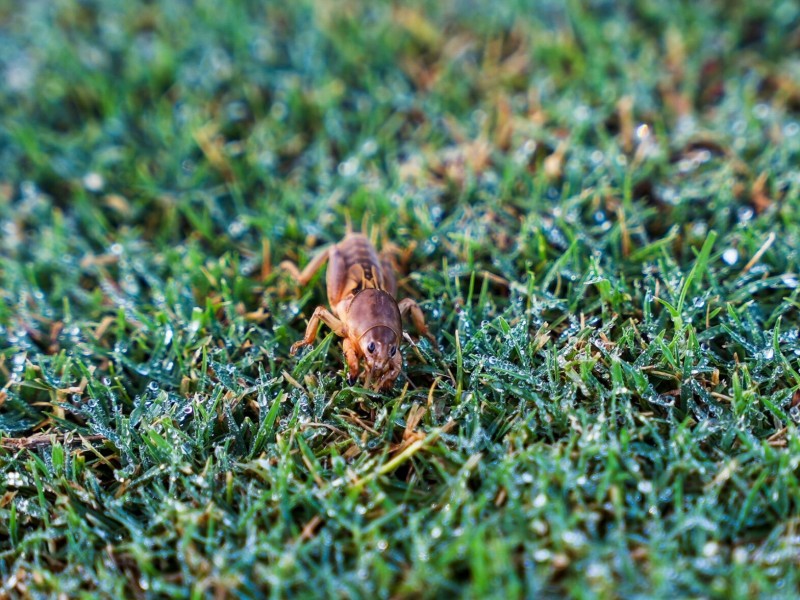
Mole Crickets: What do mole crickets look like?
Mole crickets are found throughout the southern United States and are not hard to see if they happen to be above the surface of the soil. Mole crickets are distinct from other cricket types as they live underground most of the time and use their “hands” to dig through the soil.
What are the signs of a mole cricket problem? Mole cricket infestations are marked by tunneling that raises soil and grass, alongside brown, dying grass from their feeding. In spring, their mating season, they create small soil mounds with visible openings for egg-laying. The damage from mole crickets comes from severing grass roots as they tunnel underground.
How do I control mole crickets? To control mole crickets, liquid or granular insecticides need to penetrate the soil where they reside, with bifenthrin, carbaryl, imidacloprid, gamma cyhalothrin, deltamethrin and permethrin as key ingredients.
Applying insecticides in fall is crucial to reduce populations before winter burrowing, but treatments in late spring, particularly in June and July, can also be effective when adults are active.
Insects can be difficult to find unless you know exactly what you are looking for. So, if you suspect there might be an insect invasion in your lawn, one simple way to find out is to use a soap flush.
Mix four to five tablespoons of dish detergent with two gallons of water and then pour on a 4-6-square-foot area of the lawn. Insects will come to the surface over the course of the next five minutes. If you see them in large numbers, you need to treat them with an insecticide.
To identify insects in your lawn, look for specific physical traits and symptoms of damage. For example, billbug damage resembles drought stress while sod webworm and fall armyworm damage often involves the “skeletonizing” of grass blades. Insects are often found near the soil level in the thatch of grass.
Author

Related Articles

Albany police make arrests in murder, robbery cases
Officials with the Albany Police Department have announced a number of arrests in cases that involved a homicide and a pair of thefts.

Dougherty Jail graduates first class of female GED recipients
“It was an escape. I can say this has been challenging. I want to express my gratitude for being able to attend this program.”

From cotton to cloud: In the data center debate, is rural Georgia once again being asked to carry the cost?
Across much of rural Georgia, the abandoned cotton warehouses and shrinking tax bases remain — enduring reminders that industries built to serve distant markets do not necessarily stay rooted in the communities that first sustained them.
