
Legislative committee recommends funding home- and community-based disability care
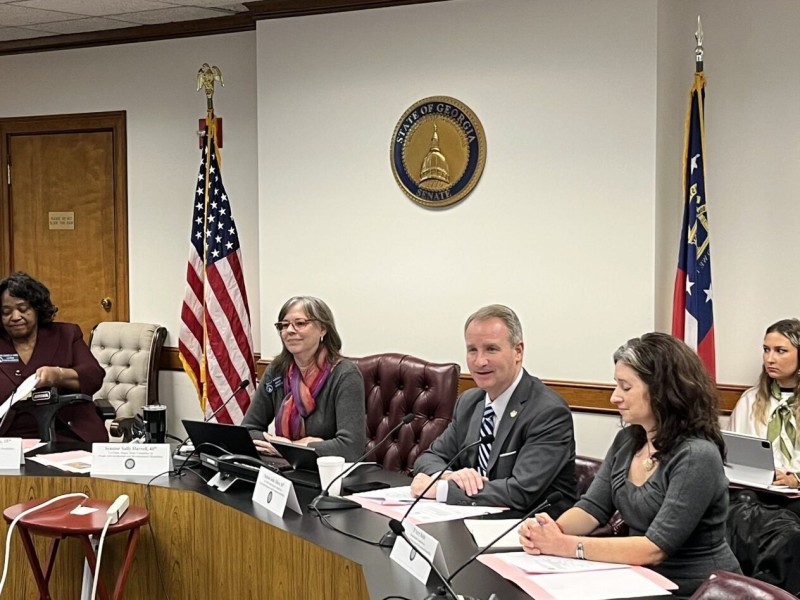
Special Photo: Georgia Recorder
By Rebecca Grapevine
Capitol Beat News Service
ATLANTA — Georgia should add 2,400 slots for serving people with intellectual and developmental disabilities in their homes and communities in next year’s budget, a state Senate study committee has recommended.
“We’re looking at hopefully being able to eliminate the waiting list over a three-year period,” state Sen. Sally Harrell, D-Atlanta, co-chairwoman of the committee, said.
The waiting list currently has more than 7,000 people on it.
The program pays for support services for people with an intellectual or developmental disability so they can remain in their homes and communities and not languish in large institutions.
Increasing the funding for the program so that the waiting list can be cleared has long been a priority of the disability advocacy community, and the study committee’s recommendations may be the crucial first step toward decreasing the length of the waiting list.
The study committee, which held several public meetings this fall, grew out of a resolution passed earlier this year that aimed to address the waiting list and other problems faced by Georgians with intellectual and developmental disabilities. The panel adopted 14 recommendations.
Key among them is that Georgia set up a special commission devoted to improving services for people with intellectual and developmental disabilities along the lines of the state’s Behavioral Health Reform and Innovation Commission. That commission, formed in 2019, spearheaded the drafting and passage of a sweeping mental health reform bill earlier this year.
The intellectual and developmental disabilities commission would include not just legislators but key staff members from state agencies, experts, family members and people who have developmental or intellectual disabilities.
Georgia also should consider refining how the waiver waiting list works, the study committee’s report suggested. The waiting list should take into account people’s current and future needs, their current supports, age, region and other factors. The list also should be made more transparent so the public can better understand how it works.
The committee also issued several recommendations for addressing the state’s shortage of direct-support professionals, the frontline workers who help disabled people with daily tasks and other support.
The shortage in the field is due in part to the low pay for the job. The committee recommended increasing wages in Fiscal 2024, noting that pay should be sufficient for workers to cover transportation and housing.
The committee did not provide a specific amount for the wage in the report. However, the state Department of Behavioral Health and Developmental Disabilities recently issued a draft report suggesting the rate for direct support professionals be raised to just above $15 an hour.
Sen. John Albers, R-Roswell, the committee’s other co-chairman, said he thought $15 would likely not be enough to address the worker shortage, especially given recent inflation.
“We know that our end goal is not yet achieved [with the $15 recommendation],” he said. “[But] this is advancing the ball.”
The report also recommended the state consider finding a way to add retirement, health care and other benefits for direct support workers to incentivize entering and remaining in the field. The state should also consider adding a professional credentialing process for direct-support jobs.
The committee also suggested the state find a way to pay family members who act as caregivers for people with intellectual and developmental disabilities.
Another suggestion included in the report is that Georgia consider shifting medical care for people with intellectual and developmental disabilities to a managed-care model currently used in many other areas of health care. The state would pay a private insurance company to provide medical care for people in the program.
If the state wants to move forward with the idea, the report recommends first setting up a pilot program enrolling about 1% of the people who need the services, around 130 to 150 Georgians, to test out whether the managed-care model would deliver quality care for this population.
“We are so grateful to everyone who came forward and told their stories,” Harrell said. “Each story helped to highlight a different piece of the puzzle. Once we put that puzzle together, it was clear that this community is in crisis with tremendous unmet needs.”
Author

Related Articles

Terrell County invites community to celebrate Independence Day with July Fest
Families from across Southwest Georgia are invited to gather in Dawson on July 4 for an afternoon of food, fellowship and fireworks as the Terrell County Recreation Department hosts its annual July Fest celebration.

DOT says delay in Oglethorpe Bridge opening should be brief
“We know it’s not going to be July 22. We don’t think it’s going to be much later than that.”

City of Albany has big July 4 celebration planned for Saturday
“It’s going to be a lot of moving and shooting them off in a short time. It’s going to be a big show.”
