
Legislators expect busy session in January

Special Photo
By Alan Mauldin
[email protected]
ALBANY — After the state budget, among the more important priorities of state government is a House committee looking at improving the lives and economic opportunities for residents in southwest Georgia and other rural areas.
The Georgia General Assembly convenes on Jan. 13.
The House Rural Development Council has identified internet access as one key areas that needs addressing. And, officials say, some progress could be on the horizon for improving broadband in areas that have little or no internet service.
“We’re working with (phone and internet provider) Windstream,” said state Rep. Gerald Greene, R-Cuthbert. “They’re looking at ways to expand in our area. We’re looking at loans from the state for companies to try to do something with the rural areas.”
The issue is a crucial one because the internet plays a vital role in many aspects of people’s lives, he said.
“For our schools, for our businesses, if you are not involved in the technology today, we’ve got real issues,” Greene said. “The chambers of commerce are proposing the same thing. They want to see a real connectivity to the main line areas of the business world and the world wide web. We have to do something.”
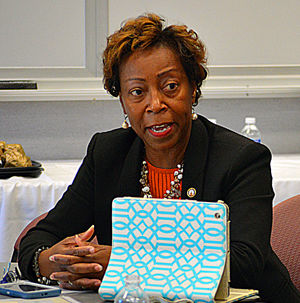
Training and education for the jobs of today and tomorrow also are lagging in the state’s less-populated areas, said state Sen. Freddie Powell Sims, D-Dawson.
Some high school graduates in the area delay entering technical education programs by a year or two before realizing the need to further their education, she said. Some start in traditional colleges and universities before they transition to technical courses. The result is a lack of trained workers, she said.
“Each day hundreds of jobs in southwest Georgia are left without workers because there is a lack of skilled, qualified workers to do those jobs,” she said.
Greene also is involved in drafting legislation to regulate vaping.
One of the core provisions of that legislation will be to make sure that young people cannot legally purchase the products that have caused lung injuries and deaths throughout the country. Younger users have been affected more by the illnesses than other groups, and three of the deaths have occurred in Georgia.
As of Dec. 17, there had been a total of 2,506 hospitalizations, in what the U.S. Centers for Disease Control and Prevention has declared a national outbreak, from e-cigarette or vaping product use-associated lung injury (EVALI).
The illnesses have occurred in all 50 states, Puerto Rico and the U.S. Virgin Islands.
“We should have a formal document next week,” Greene said. “We are getting a pushback from certain groups that feel we are invading their rights with something that is helping them get off cigarettes.”
The federal government also has indicated it will take steps to limit vaping use among teens.
“National leaders are looking at vaping,” Greene said. “They’re looking at some of the things we want to do. We’ll continue to look at what we need to do.”
For state Rep. Winfred Dukes, D-Albany, addressing mental health care in the state is a priority when the legislature convenes in January.
“What is happening is we are having pressure put on our other institutions — our educational system, law enforcement, our jails,” he said.
Dukes also said he would like to address what he said is a disparity in funding for child care in rural areas compared to larger counties.
“It denies our kids quality care,” he said. “Our day care centers in our rural areas cannot provide the same level of care.”

Author

Related Articles

New commander takes helm as Marine Corps logistics adapts to evolving battlefield
Brig. Gen. Kevin G. Collins assumed command of Marine Corps Logistics Command during a change of command ceremony at Marine Corps Logistics Base Albany, succeeding Maj. Gen. Keith D. Reventlow after four years leading the organization responsible for sustaining Marine forces around the globe.

Classifieds – July 2, 2026
Cemetery lots for sale: 5 burial plots in Riverside Cemetary… Health: Private Caregiver…Full-Time Job: Irrigation Tech needed…

Albany Herald – July 2, 2026
Dougherty schools prepare for bell-to-bell… From Ledo to Coston, Lee County’s summer road… Lee County moves another step closer to issuing…
