
Effort continues to prevent patient falls within Phoebe Putney Health System
Officials say system implemented in January prevents thousands of adverse incidents at Albany hospitals
By Jennifer Parks
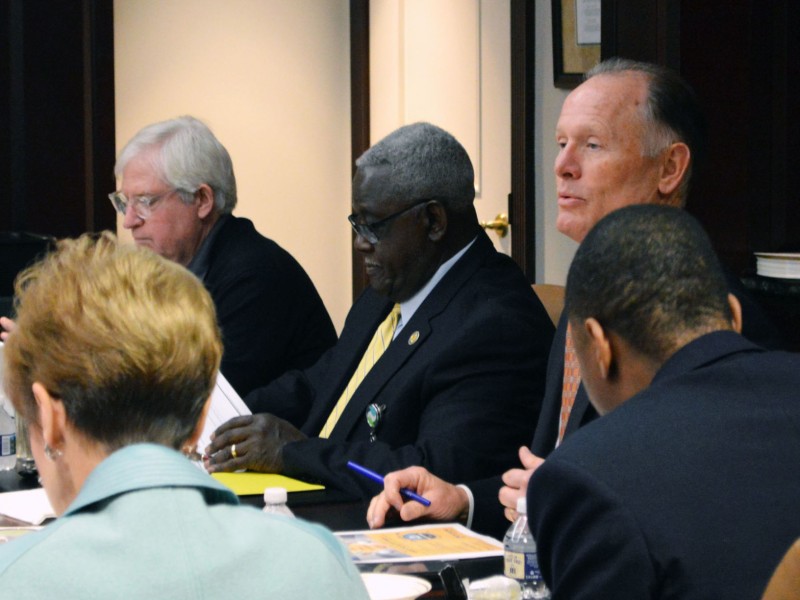
ALBANY — The Phoebe Putney Memorial Hospital Board of Directors got its first look Wednesday at a new piece of technology meant to help prevent patient falls.
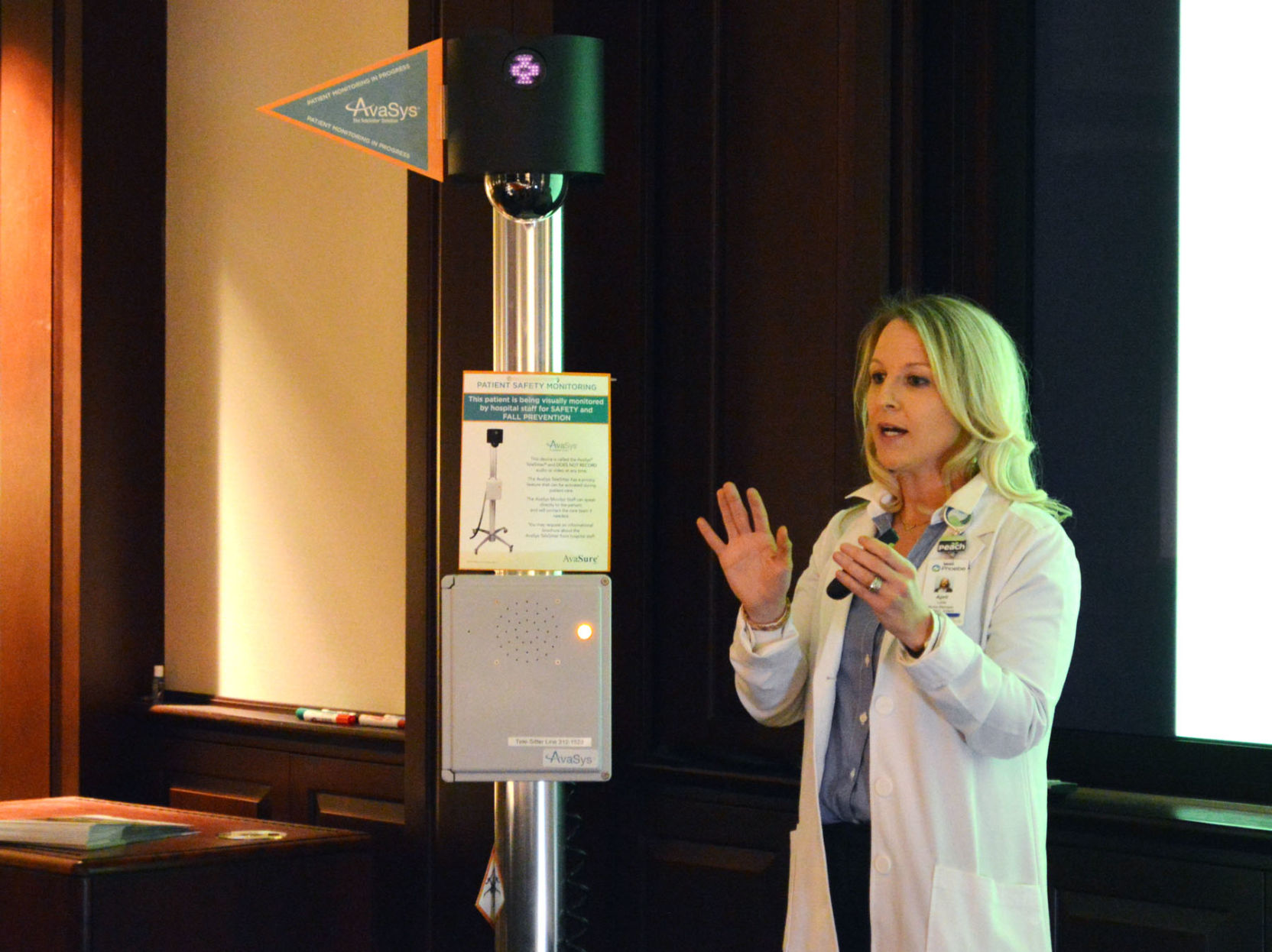
The AvaSys Telesitter program, which has 12 units between the main hospital and Phoebe North, works by putting more eyes on patients.
Equipped with an infrared camera and two-way audio, it is set up in rooms of patients identified as high risk for falls. One technician can monitor live feeds on the units from those rooms at a central station.
If a patient tries to get out of bed, the observer can interact with the patient with a reminder to wait for assistance or sound an alarm for immediate staff attention. Patients in imminent danger receive an alarm, which signals the staff to head quickly to the patient’s room.
“Within seconds, someone is in the room,” April Little, a central staff manager for Phoebe Putney Health System, said of the alarm.
The system’s mobility allows it to be moved as soon as a patient does not need it, and a privacy setting allows for a 15-minute window that can be expanded as needed.
The cameras allow for a good view of a patient’s wristband, and there is a nightwatch option for when the lights are off.
“The clarity is phenomenal,” Little said. “To me, it is an extra set of eyes. Patients will wave at the device and say thank you. It has gone above and beyond my expectations.”
The units went live in January, and the intention is to add more units in the coming fiscal year — with Phoebe Sumter Medical Center and Phoebe Worth Medical Center to potentially receive some. Expansion can be taken in 12-unit increments.
Phoebe Chief Nursing Officer Evelyn Olenick said the cost for 12 units is $200,000.
In February, there were 9,000 redirects — for falls as well as tubes and lines being pulled out — and 309 alarms. In March, there were 4,000 redirects and 143 alarms.
Falls present a major problem in health care settings, remaining one of the top concerns on hospital patient floors. They can happen with patients at any age and with any physical ability — although the elderly are most at risk for injury. The U.S. Department of Health and Human Services Agency for Healthcare Research and Quality said epidemiologic studies have found that falls occur at a rate of three to five per 1,000 bed days, and the organization estimates that 700,000 to 1 million hospitalized patients fall each year.
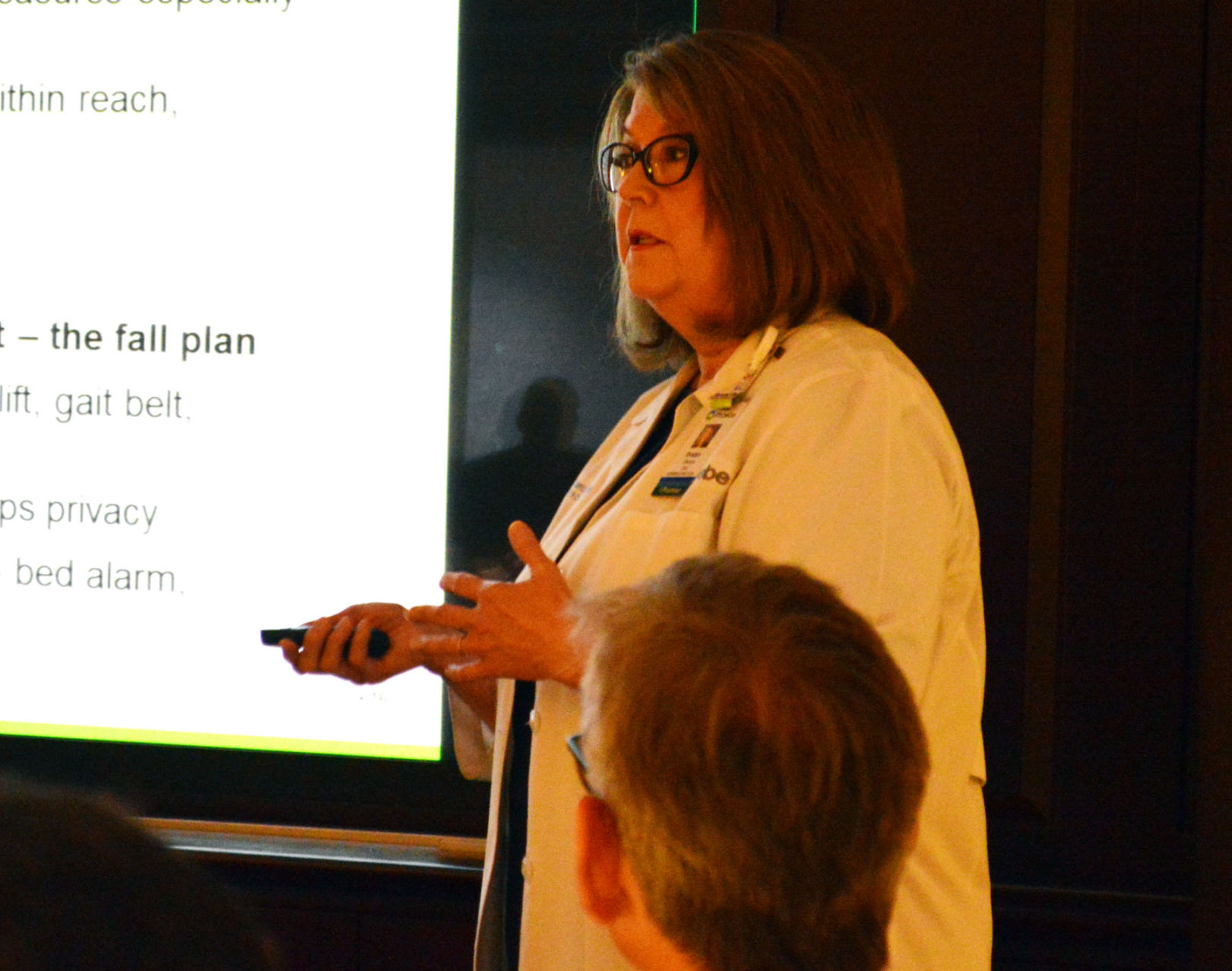
The universal fall protocol for all patients, Phoebe officials said, is to conduct a risk assessment and fall prevention measures with specific populations. Beds are put in a low position with the rails up, the call light is put within reach, families and patients are educated, and there are purposeful rounding and toileting schedules.
Assistance can require one or two people, a lift and gait belt. Safety outranks privacy in toileting, and the Telesitter’s alarm is meant to alert staff when patients overestimate their ability.
When a fall occurs, post-fall huddles and assessments, case reviews in incidents of injury and dissemination of lessons learned are included in post-fall debriefs.
“When a patient falls, we take very direct measures to figure out what happened,” Olenick said.
Officials at Phoebe Putney Memorial Hospital said that in the fiscal year to date the hospital has reduced falls with injury by 28 percent. Last month, there were two fall-related injuries at the main campus, and one such injury at Phoebe North.
The worst month between the two campuses during the fiscal year so far has been January, when there were five such cases at the main campus and one case at the Phoebe North campus. The goal during the year is 4.24 injury falls in a month, down from the Fiscal Year 2017 baseline of 5.3 falls a month.
A financial report from Phoebe Putney Health System Chief Financial Officer Brian Church showed that flu activity has subsided, the behavioral health unit at the main hospital is still in the process of revamping its numbers after its extended closure last year and overall activity at the hospital’s emergency center is down.
“Overall, Mr. Chairman (John Culbreath), we are in line with what we thought we would be at this point,” Church said.
The board also approved the credentials report presented to the hospital’s Professional Affairs Committee on March 26.
Related Articles
Small actions can help save big on utility bills
The high temperatures of July and August can bring scorching utility bills as air conditioners hum to keep houses cool. Albany Utilities Residential Conservation Auditor Willie Jackson offered some tips on making summer cooling bills more manageable.

Bigger budget will mean improvements at Dougherty County’s landfill
“It’s certainly an opportunity where we can grow and make this very beneficial for years to the community. It’s a service that we provide for the community and I want to prolong that resource for the community. It’s not just fill it up and close it.”
Putting on the Ritz: The rise, fall and renewal of Albany’s Harlem District
On July 7, the Albany City Commission unanimously approved final construction drawings for a comprehensive restoration of the Ritz Theatre and Cultural Center, clearing the way for the project to move into competitive bidding after years of planning and preservation efforts. The decision marks the latest chapter in a decades-long effort to preserve one of Southwest Georgia’s most significant African American landmarks.
