
Flint River Fresh mission needs community buy-in
Program was birthed last year from the Flint River Soil and Water Conservation District
By Jennifer Parks
ALBANY — Fredando Jackson recognizes that the Albany area has a need for increased access to fresh fruits and vegetables. Some neighborhoods do not have grocery stores available within a 5-mile radius, resulting in “food deserts” in those areas.
Health problems associated with poor nutrition are also often connected to limited healthy food access. Enter Flint River Fresh.
From its master gardener classes to school gardens to community events, the organization is looking to increase its influence in the community.
“It is for our farmers, for our future and for our community,” Jackson said.
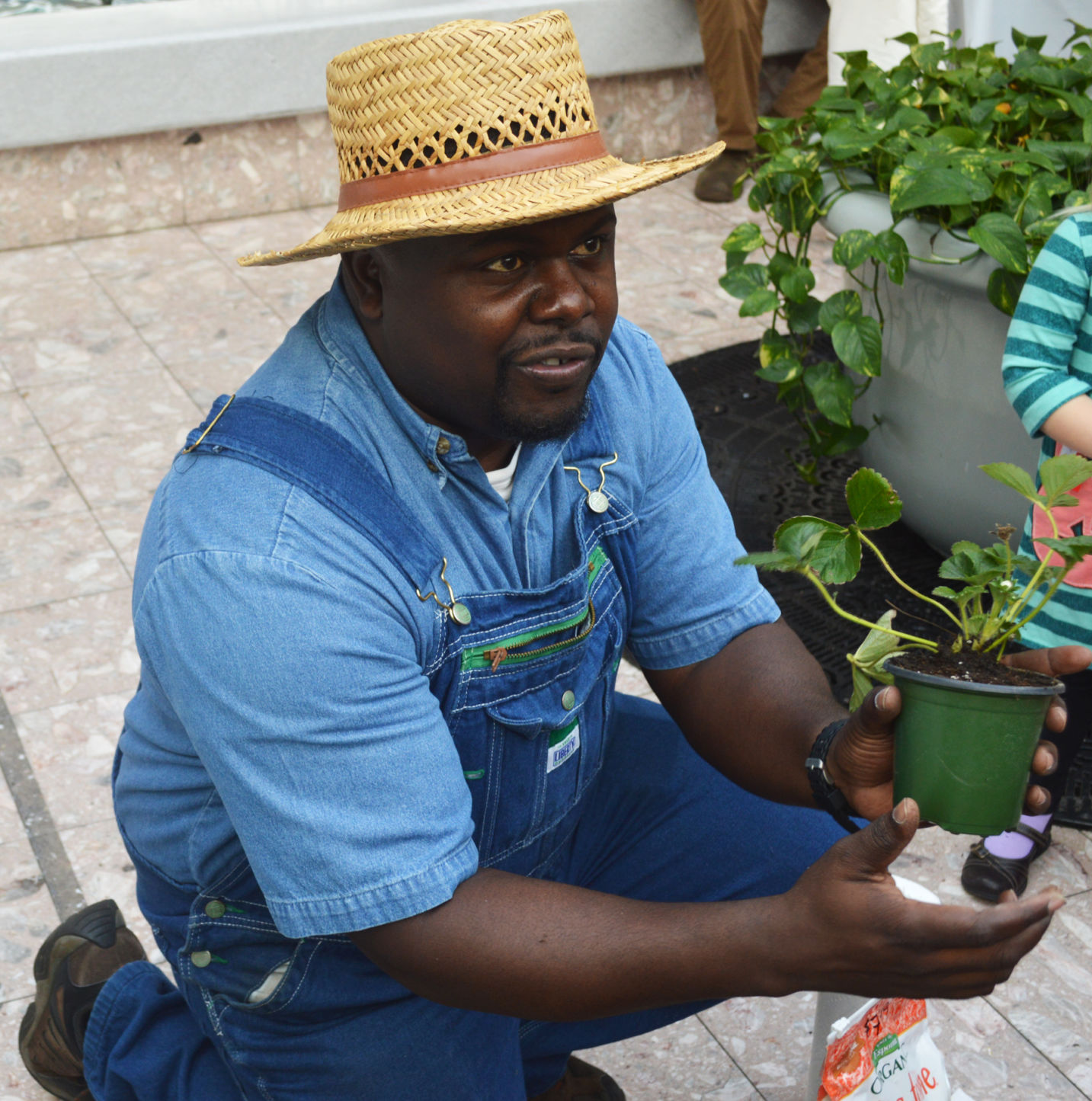
Jackson is more commonly known as “Farmer Fredo.” The organization he is the executive director of was birthed from the Flint River Soil and Water Conservation District and was incorporated as a 501(c)(3) nonprofit in September 2017 as a continuation of the Urban Agriculture Conservation Initiative.
Jackson came on board during July of last year, but the organization’s beginnings were sparked earlier than that.
“In 2015, Dougherty County was selected as a Community of Opportunity by Growing Food Connections — a collaboration between the University of Buffalo, American Farmland Trust, Cultivating Healthy Places and Ohio State University — and participated in a two-year community assessment to ‘improve access to healthy food, support local farms and ranches, and stimulate local economies’ as part of a grant from USDA’s National Institute for Food and Agriculture,” the organization’s website says. “After working with low-income residents, agricultural stakeholders, and local government, Growing Food Connections recommended to the Dougherty County Board of Commissioners ‘to encourage nonprofit efforts to spearhead food systems work.’”
This assessment put into focus what Flint River Fresh’s mission ought to be.
“We felt it was important to focus on access to food,” Jackson said.
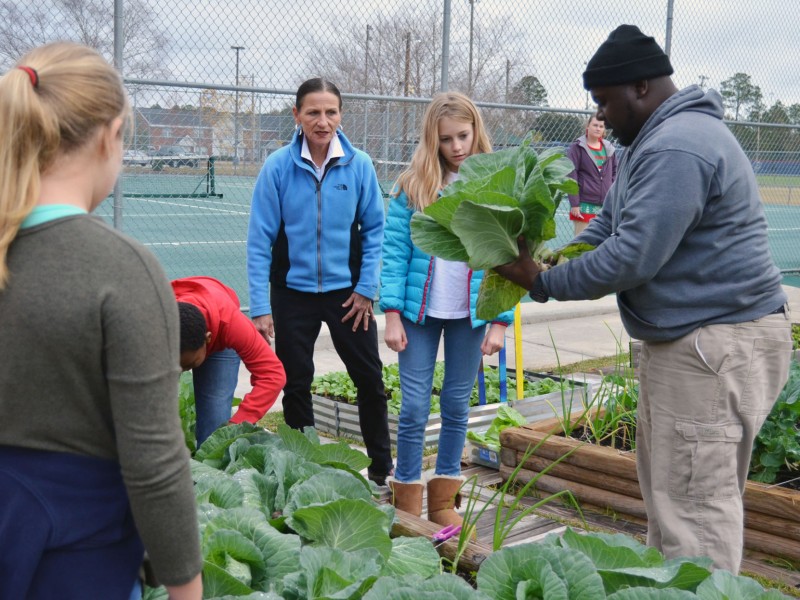
Flint River Fresh has worked toward that goal by helping to establish gardens in Dougherty County’s schools, setting up mobile farmer markets on a monthly basis in Albany Housing Authority neighborhoods, hosting various workshops that educate people on how to grow and harvest their own groceries, and conducting pop-up farmer stands at Pretoria Fields Brewery and Phoebe Putney Memorial Hospital.
Jackson is originally from Plains. His family health history includes type 2 diabetes, heart disease and hypertension. A decade ago, he got involved with agriculture, selling his products to friends of his grandmother’s.
“I felt that, at the end of the day, (we needed to) supply fresh fruits and vegetables,” he said.
In 2016, Jackson began assisting the Dougherty County School System’s Department of Nutrition and its Partners of Excellence in building, planting and harvesting from raised-bed teaching gardens. He also developed a relationship with Glyen Holmes and New North Florida Cooperative/Small Farmer Distribution Network to bring farmers with limited resources together with schools.
“To date, Small Farmers Distribution Network has supplied fresh fruits and vegetables for farm-to-school programs in six Georgia school districts (Dougherty, Sumter, Worth, Mitchell, Thomas and Grady) with 54 schools serving close to 40,000 students in southwest Georgia,” the Flint River Fresh website says. “That means fresh local healthy food in more than 500,000 meals over the course of the school year.”
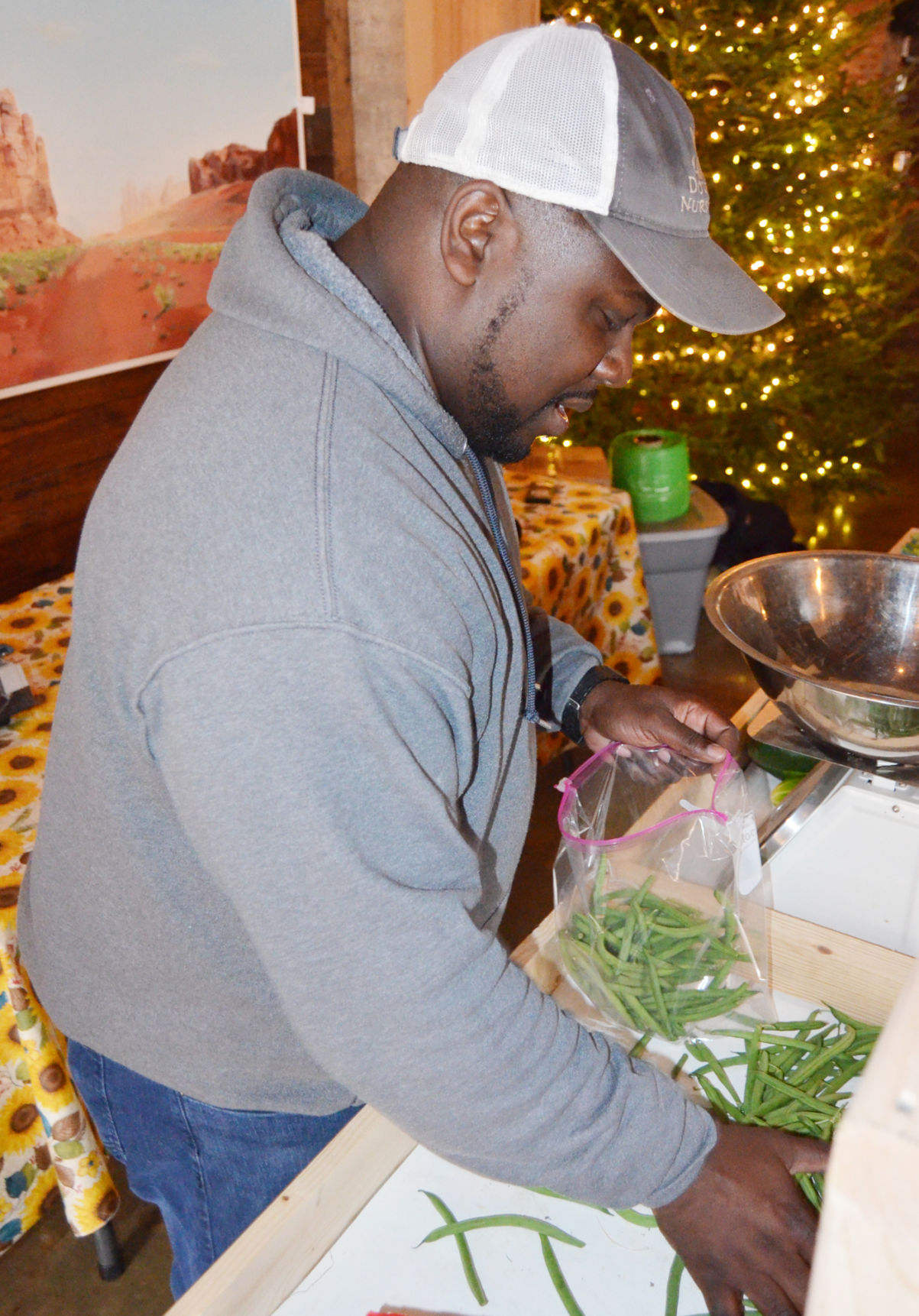
Flint River Fresh also acts as a farmer-to-consumer platform in that farmers can develop a networking and customer base, and in that the customers who have a hard time getting to a grocery store — either due to distance or limited mobility — can get produce at an affordable cost.
“We bring it directly to them,” Jackson said.
Within 75 miles of Albany, Jackson said, there are a number of family farmers with no direct market. As a result, their watermelon, sweet corn, kale and collard greens may have very few places to go if it were not for these types of platforms.
“It builds a relationship with that farmer, but (also) creates talking points with that customer,” Jackson said. “It is a marketing opportunity for new farmers just getting started.”
Food deserts do exist in Albany, particularly in the southern and eastern parts of the city, and most children in a Dougherty County public school get free or reduced-price lunches. The children whose families live in poverty serve as a significant motivator for Flint River Fresh.
“Some leave school in the evening (on Friday) and won’t have another healthy meal until they come back to school on Monday,” Jackson said.
Moving forward, he said the goal of Flint River Fresh is to establish a community food center that would act as a grocery store, including products from southwest Georgia farmers.
“(We want to found) an education center to access fresh produce on site (and offer) workshops on how you grow your own food,” he said.
At the school gardens, most of the products grown there are making their way into the campus’ cafeterias — exposing all of the student body to an education on healthy eating. The youth education piece is something Jackson said he would like to expand through possible entrepreneurship opportunities.
At Deerfield-Windsor School, the middle-schoolers assist in maintaining one such garden. Dee Goss, who teaches the gardening class at the school, said she has seen a difference in her students’ awareness of food and nutrition since the garden was first established three years ago.
They have learned about everything from rootballs to insect control to harvesting.
“A lot of them did not even know about gardening, or where you start,” Goss said.
These are lessons she said she would expect to carry them a long way.
“It is a life lesson, but it is also for their nutrition,” Goss said. “So many of them have been amazed. It lets the children see how they grow their own food (and) they can understand where their food comes from.”
So far, Jackson said he has seen a positive community response — largely from social media. He said he is hopeful that he can gather monetary resources through grants and donations so the work can continue.
The organization’s Soil and Water Conservation District grant is supposed to last two years. With that grant already in its second year, Flint River Fresh needs a community buy-in.
Jackson said Stewbo’s has offered to host a fundraiser to help the organization out.
“We are trying to raise capital and get more community buy-in and support,” he said.
Jackson said Phoebe has been recruited to pull together the data necessary to establish the need for the mission to continue as well as show the impact Flint River Fresh has had so far.
“We know there are benefits to eating healthy, but we want to put numbers behind it,” he said.
Grants tend to be competitive, and the fact that Flint River Fresh is a new organization may put it at a disadvantage. Jackson said the organization has gotten a few small grants so far.
“That is why it is important for the community to support us for the first two or three years, because it helps us build a background story,” he said.
For more information on the organization and how to help, visit www.flintriverfresh.org, call (229) 430-8509, ext. 3, or email [email protected].
Related Articles
Albany considers battery storage system to address electricity surplus
“For me, this is all about ratepayers. Will this keep our rates low? That’s my biggest concern on a project like this.”

48th Sunbelt Farm Expo set to kick off next week in Moultrie
“It’s like down home week, coming to see all the friends, and that’s very reassuring to see. We look forward to welcoming 40,000 or 50,000 of our closest friends to the Sunbelt Expo.”
Lee County residents press school board for alternatives before Thursday’s tax vote
Lee County residents urged school board members Friday to reconsider spending, find other revenue and weigh the strain on household budgets before voting Thursday on a proposed 3-mill property tax increase.
