
Lupus Initiative closing education gap for Southwest Georgia health care providers
Southwest Georgia Area Health Education Center, American College of Rheumatology partners in initiative
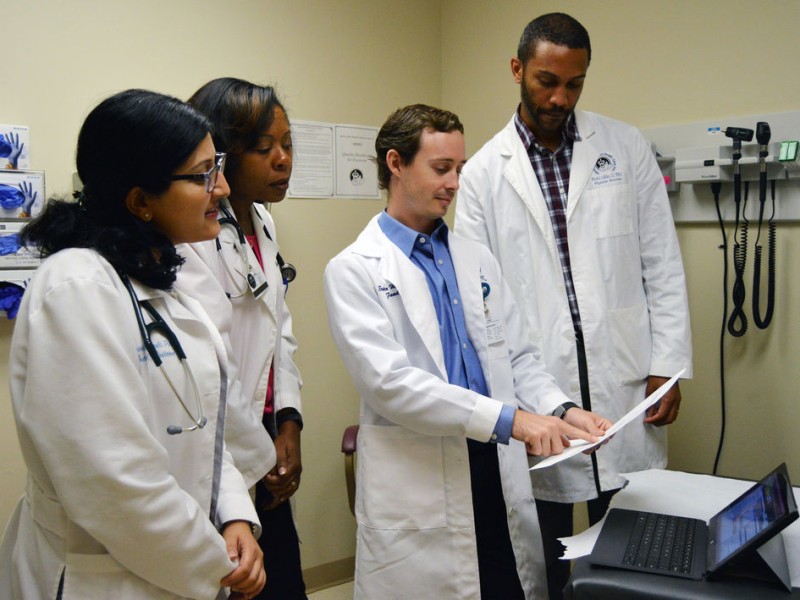
By Jennifer Parks
ALBANY — Lupus is an illness that stumps the public, and even many physicians. Recently, some health care providers in the Albany area began taking part in an effort to understand it better.
The Lupus Initiative is currently ongoing in the region through a partnership between the Southwest Georgia Area Health Education Center and the American College of Rheumatology. Participants are currently working toward the goal of educating Southwest Georgia primary care providers on lupus and ultimately assisting them in making more effective diagnoses.
“It is a program to bring awareness to (lupus) and how we can treat it,” said Daniel Roberson, a physician assistant with East Albany Medical Center and a participant in the initiative. “It can take a long time in Southwest Georgia to see a rheumatologist.
“We may see (participants) while they are waiting to see a rheumatologist, or in between appointments.”
Mayo Clinic describes lupus as an inflammatory disease occurring when the body’s immune system attacks its own tissues and organs. It can affect many different body systems, including the joints, skin, kidneys, blood cells, brain, heart and lungs.
Dr. Karen Law, assistant professor and rheumatologist with Emory Healthcare, has been involved with the initiative since 2011. She describes the program as one that is aimed at education of the public and front line providers, and especially helpful for rural areas where rheumatologists are hard to find.
It can also be helpful for an area with a higher minority population, since that is a demographic more often impacted by lupus.
“Lupus is a disease that is fairly poorly understood and affects multiple organ systems,” Law said. “For the population at most risk, there are bad outcomes if it is not found early.
“(The initiative) looks at creative ways to increase awareness … and creative ways to reach out to those at risk for lupus.”
Those who have lupus are prone to kidney complications. Outcomes are less optimal in rural areas, in part due to delayed diagnoses associated with limited access to specialized care and understanding of the disease. The Southwest Georgia area, for that reason, appeared to be one which would greatly benefit from the initiative.
“Without a significant outlay of funding, it is hard to reach to south Georgia,” Law said.
The curriculum, Law said, is not set up like a typical webinar. A home session, including a narrative Power Point presentation, is conducted, followed by a series during which rheumatologists facilitate discussions based on what providers want more information on, such as the blood testing conducted for lupus.
The providers are almost midway through the series now, which lasts about six months. Nine people participants are currently enrolled.
“Hopefully it will benefit patients who would otherwise have a delayed diagnosis,” Law said.
Equipping providers to better recognize lupus when it is present, and knowing when a case needs referral or can be managed locally, can lead to a reduction of time and money to pursue a diagnosis. The initiative, therefore, gives the resources needed to manage the disease and works to invest in knowledge for patients and providers.
“The earlier we are able to diagnose and get (people into) treatment, the better the outcomes are,” Law said.
Roberson said the series has been very informative and successful in expanding horizons. A lupus patient may see a rheumatologist twice a year, and the symptoms to diagnose the condition in the first place can be vague — so the number of tests before a determination is eventually made typically results in a costly process.
Rashes associated with lupus often present differently in minorities. Symptoms mimic those of other ailments, and the rash does not necessarily occur in all cases. The other common symptoms are, the Mayo Clinic said, fatigue and fever; joint pain, stiffness and swelling; skin lesions that appear or worsen with sun exposure; fingers and toes that turn white or blue when exposed to cold or during stressful periods; shortness of breath; chest pain; dry eyes and headaches, confusion and memory loss.
“It is easily overlooked because the symptoms are vague and all across the board,” Roberson said.
Due to added confidence gained through the initiative, health care providers stand to provide a lasting impact for their patients. Once the right treatment track is found, patients often bounce back fast, Roberson said.
“In the long-term, getting people diagnosed is going to be a huge benefit,” he said. “It helps build trust (in patients) knowing they are in good hands (and that we are) getting it under control.”
The initiative are plans to hold two more sessions and do follow up surveys. Based on the feedback so far, the current series appears to be meeting its goal in raising interest and awareness in a disease that is underdiagnosed and misunderstood.
“(Providers) are asking really wonderful and thoughtful questions,” Law said. “I am really pleased with reception in Southwest Georgia. (The providers there) are committed to lifelong learning. I find that really inspiring.
“I’ve been really thankful to the Southwest Georgia health care population for being engaged with us and engaged with the topic. It shows they have an interest in the community.”
SOWEGA-AHEC officials said the second phase of the initiative is educating the public, which has already begun by the placement of printed material in churches, public health departments, libraries, medical practices and colleges.
For more information, visit thelupusinitiative.org.
Related Articles

Albany teen, 16, makes bodybuilding debut at Atlanta OCB Pro/Am
Crockett, an Albany resident and student at Albany Technical College Academy, placed second in the teen bikini division this weekend at the OCB Immortal Muscle Pro/Am Bodybuilding Competition in Atlanta, becoming the youngest competitor across all categories at the event.
Phoebe opens new urgent care clinic in Camilla
Phoebe Putney Health System has expanded its network of urgent care clinics by opening a new location in Camilla.
Colquitt Regional introduces new heart failure treatment
Colquitt Regional Medical Center recently announced a major advancement in its cardiac care services with the introduction of the biventricular implantable cardiac device (ICD)
