
Rural Georgia on legislators’ minds
Development outside Atlanta expected to take center stage during 2018 session
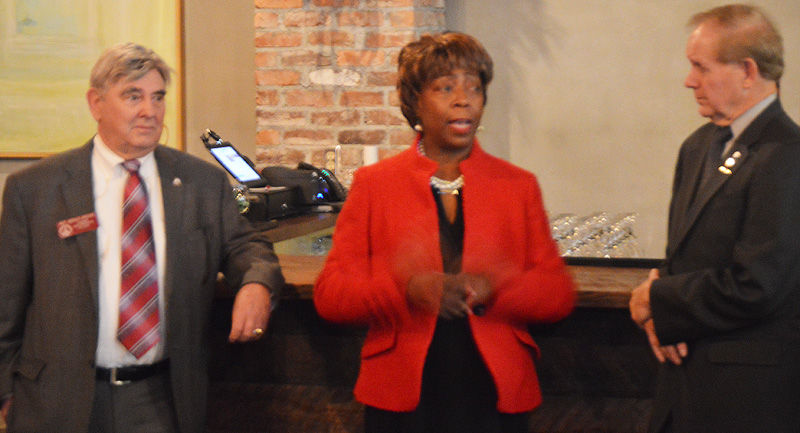
By Terry Lewis and Carlton Fletcher
ATLANTA — The Georgia General Assembly is set to convene Monday morning in Atlanta, and Southwest Georgia legislators say they think much of the session’s focus will be on recently concluded studies on the revitalization of rural Georgia.
Late last month, the 15-member House Rural Development Council released a report focusing on five specific areas of concern: work force development, education, economic development, the expansion of broadband into the region and health care.
The Senate also conducted its own rural development study similar to the one undertaken by the House. Sens. Freddie Powell Sims, D-Dawson, and Greg Kirk, R-Americus, were members of that committee.
“The session before an election year is usually a pretty quiet session,” Sims said Friday. “But I expect the Senate and House rural initiative committees to get a lot of attention. I expect some legislation to come from those studies.
“The rural caucus meets every week, and those of us who represent rural Georgia have sounded the alarm that something needs to happen. Health care will always be a concern until the federal government decides what it’s going to do. On the state level, we’re trying to figure out what we can do, especially for these rural hospitals that are teetering on the brink of closure.”
Rep. Gerald Greene, R-Cuthbert, who has been in the House for 34 years, said he thinks the HDRC report presents a unique opportunity for south Georgia.
“My priority is going to be taking a closer look at the HRDC’s recommendations to see how it can help us or if we need to add other things,” Greene said. “This our chance, and I’m not going to let it go by us. I think the council’s recommendations will take center stage early, and the reason is there has been such a generation of expectations that people are watching very carefully. This a priority of the speaker’s, and I think it is going to be on a fast track.”
Leesburg Republican Rep. Ed Rynders was a member of the House council, which spent the past offsession holding 18 meetings in 11 different communities across the state. The group heard more than 70 hours of testimony from local officials and policy experts on designated topics to gather knowledge of the barriers and potential solutions for bolstering the economies of rural Georgia.
Rynders said he also expects the council’s report to dominate the upcoming session, but he once again cautioned any recommendations must still go through the House and Senate.
“The report is just an outline of our findings,” Rynders said. “The legislative process will determine what the priorities are. The problem is how do we define this and how do we define that? I think during the upcoming session we may see a few big bills and some smaller bills. This can’t be fixed overnight.”
Kirk said he expects both houses of the legislature to discuss similar topics.
“The (Senate) committee addressed a lot of issues that need to be addressed, with rural broadband being right at the top of the list, because it goes hand-in hand with rural economic development,” he said. “As we went through the hearings, we heard the same talking points over and over again. We were hearing the same things the House was hearing.”
Ealum said re-election may be on many lawmakers’ minds as they go about doing the business of the Georgia people.
“This is an election year, so I don’t expect high-profile, controversial legislation to get passed this session,” the Albany Democrat said. “Folks are most likely wanting a short session so they can get back home to their districts to campaign. I am working on a bill that will allow local communities, cities and counties to expeditiously dispose of old abandoned mobile homes and clean up blighted properties. These unlivable, uninhabitable, abandoned eyesores are in every county throughout Southwest Georgia. The present law makes it very difficult for cities and counties to get them off the tax rolls and get the blighted properties cleaned.
“We definitely need to take a look at the HRDC’s recommendations to help address our tremendous shortfall in health care, especially in Southwest Georgia.”
Sims said eliminating the “middle man” in the health care industry would go a long way in improving insurance nightmares that she said the Senate group heard as it traveled across the state.
“Gerald Greene and I spent a week trying to help a woman get permission to have a procedure done that her doctor said she desperately needed,” the 14-year senator said. “Now this was not an indigent patient; this was a woman who had insurance. The surgery her doctor has performed thousands of times was deemed an ‘experimental surgery,’ so Blue Cross Blue Shield denied it as a need. This is what they’re doing to the paying customers.
“We also talked to a dentist who did $900 worth of work on a Medicare patient, and he was paid $15. After a while, those are the providers who quit seeing Medicare patients, and you can’t really blame them. We need to cut out the middle man — these HMOs — that are making decisions based on only one thing: how much money they’re going to be paid for, essentially, doing nothing.”
Greene offered a brief summary of the local delegation’s goals during the session.
“The bottom line is we have a unique opportunity this session to help save south Georgia, and we have to take advantage of it,” he said.
Related Articles
Albany recycling center enacts material separation rule
Mixed items will no longer be accepted at the Albany recycling center at its 2521 Meredyth Drive facility. Individuals will now be required to separate items befor they will be accepted.
Albany City Commission takes action on proposed downtown hotel, two theater renovation projects
“We’re taking the original building back to, hopefully, it’s glory days. One of the cool things about the project is we are going to restore the balcony. It’s going to have a balcony, so it’s going to be super cool.”
Dawson’s $10.2 million sewer project leaves major financial questions unresolved
As Dawson’s finance director resigns and operating pressures mount, records show $10.2 million in sewer funding, frozen loans, missing audits and gaps in the public accounting of project money.
