
Southwest Georgia congressional delegation reacts to federal shutdown deal
Government is up and running through Feb. 8
By Jim Hendricks
ALBANY — Lawmakers who represent Southwest Georgia in Congress expressed relief that the partial federal government shutdown was short-lived while also acknowledging that the way Congress addresses funding is flawed.
When a Senate vote late Friday night failed to reach the 60-member level that would allow the continuing resolution that included federal funding to advance, non-essential personnel were sent home starting at 12:01 a.m. Saturday. The impact was mitigated because two of the three days of the shutdown were on a weekend when many federal employees were off work anyway.
The Senate reached a compromise to fund the federal government through Feb. 8 and on Senate Majority Leader Mitch McConnell’s promise that he would allow debate and a vote on the Deferred Action on Child Arrivals program, also known as DACA or the Dream Act.
That was the sticking point for Democrats who wanted DACA protections voted on before the spending legislation was enacted.
After a weekend of Republicans painting the event as the Schumer Shutdown (for Senate Democratic Leader Chuck Schumer) and Democrats trying to make it the Trump Shutdown, a group of moderates from both sides cobbled together the compromise that allowed the measure to advance and be voted on by both houses, including pay for missed time for affected federal workers.
“Congress has now voted to reopen the government, fund our military, fund the Children’s Health Insurance Program (CHIP), and pay federal employees and our civilian workforce — in spite of the whims of a minority of the Senate that created this senseless government shutdown in the first place,” U.S. Rep. Austin Scott, R-Tifton, said.
Scott said the event was further proof that the congressional budget process has flaws.
“While I am glad to see governmental operations return to normal, the issue remains: Short-term spending measures are a detriment to our government, including our military and national defense,” he said. “I remain committed to fighting for a regular appropriations process that provides for our common defense and responsibly appropriates the taxpayer dollars we are entrusted to allocate.”
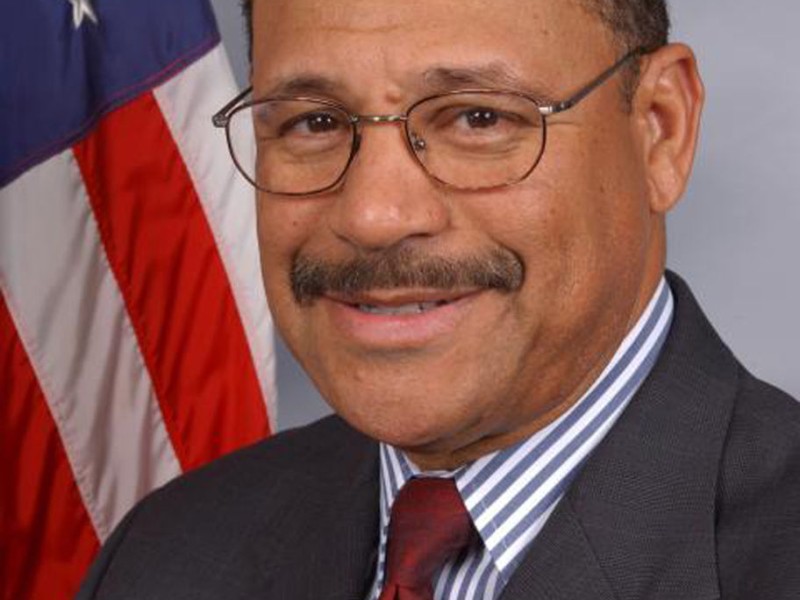
U.S. Rep. Sanford Bishop, D-Albany, said the shutdown “shocked everyone to the reality of our nation’s dire funding situation. I am relieved that both chambers of Congress have come to a bipartisan agreement to reopen the government. The agreed-upon framework provides a plausible pathway for completing a long-term funding bill, which is desperately needed to provide certainty to families, businesses, agencies, communities, and our armed forces.”
Bishop, who was one of the no votes when the House took up and passed the funding issue last week, voted for the compromise solution Monday that reopened the government. He quoted Defense Secretary James Mattis’ statement that the Budget Control Act’s defense spending cuts and operating nine of the last 10 years under continuing resolutions has adversely impacted the U.S. military.
“More military members died in training accidents last year than in combat,” Bishop said. “This underscores the alarming state of training and maintenance caused by years of budgetary neglect. Funding the armed forces through stop-gap measures puts severe pressure on efforts to fix training and maintenance shortfalls and endangers our troops, such as those killed during recent sea and aviation accidents.”
He said the agreement provided Congress with “the opportunity to set aside partisan brinkmanship, and to instead work together on a comprehensive funding measure that modernizes our defense capabilities, adequately resources the VA and its medical programs, fully funds vital health programs including CHIP and Community Health Centers, reforms our immigration system, and invests in our infrastructure, economic development, education, and research.
“Although there remain a number of details to work out, it is better to work through these issues with the government open than with it closed. It is now time to responsibly follow through on this agreement and end our reliance on short-term budgetary fixes.”
U.S. Sen. Johnny Isakson, R-Marietta, said he was “relieved that Senate Democrats have allowed us to reopen the government. Shutting down the government was a terrible idea — it always is — and it is the wrong way to govern. I’m also pleased that we have finally passed a six-year extension of the Children’s Health Insurance Program (CHIP). Thankfully, we can now focus on the work that lies ahead.”
U.S. Sen. David Perdue, R-Sea Island, laid the blame at Schumer’s feet.
“It is ridiculous that we were ever in the Schumer Shutdown in the first place,” Perdue said. “I’m glad to see that Senate Democrats came to their senses and stopped this nonsense. It is frustrating that this is the same proposal that was offered to them days ago before they decided to shut down the government over immigration. Senate Democrats took their political stunt a step too far since a majority of Americans support funding the federal government over continuing the DACA program.
“Clearly, Congress’ budget process is a complete failure. It has only worked four times in the past 43 years, and given the current political dynamics it will never work. Tying important policy decisions to the funding process is the reason we end up in these damaging situations. It’s time Congress gets serious about reworking the way we fund the federal government. That way we can start tackling other big ticket items such as fixing our immigration system and beginning to rebuild our nation’s infrastructure.”



Related Articles

Dawson Council approves $400,000 lifeline in emergency meeting as financial accountability remains elusive
Less than a week after city officials publicly acknowledged the City of Dawson cannot continue operating without additional financing, the Dawson City Council convened a hastily called emergency meeting Tuesday evening and unanimously approved authority to borrow up to $400,000 through a tax anticipation note.

Adult leadership group spreads concept to high school students
“The purpose of Albany Junior Leaders is to pull together leaders from all over the community. We wanted to give these youth the same experience and the same exposure we’re getting in Leadership Albany.”
Albany/Dougherty County among local governments looking at data centers
“Our understanding is that data center developments look like an easy fix for the problems that face rural America, but this is a Faustian deal at best. You can see the effects in communities across the state and country.
