
Prepare to start plants from seeds in the new year
Special Photo: Megan McCoy
By Alicia Holloway
CAES News
ATHENS — It’s almost that time of year again: January is the month for seed catalogs galore.
Seed catalogs are the embodiment of possibility, a chance for gardeners to envision the ever-elusive perfect garden. It is one of gardeners’ favorite times of the year.
This year, most of us could use something sunshiny to ponder. Outside is gray. The news seems unceasingly dire, and even for the most optimistic, envisioning something as hopeful as a spring garden seems to take more energy than it should. That is even more reason to start plants from seeds this growing season. Starting seeds takes attention, care and time, and a bit of faith that something good will come from that diligence.
In addition to perusing vegetables and annual flower catalogs, the last couple of years many home gardeners have perused native seeds and dabbled in seeding native perennials.
Native plants are good for wildlife, including native pollinators. They are good nectar sources for bees and hummingbirds. Some top selections this year are hosts for butterflies, meaning they are one of maybe only a handful of plant species on which a particular type of butterfly will lay its eggs.
Children are often fascinated by the caterpillars on various host plants in the summer. They watch the “very hungry caterpillars” munch the host plants, draw sidewalk chalk caterpillars and played with caterpillars that turned into cocoons repeatedly while we had caterpillar guests.
Doing kind things for the environment is always heartening, but it is even better when you get flowers and entertainment in the process.
Native plants also are adapted to the area. Siting still matters; plants that are from wet environments will still do better in a soggy area, but when matched with the correct site, natives are just better adapted to survive Georgia weather and climate.
Starting seeds also can save money. At minimum effort and cost, natives can be direct-seeded in the garden. For a little more investment, buy a germination mat, build a grow-light stand, sanitize and reuse old trays, and purchase potting soil to start indoors for a jump-start on the season and more consistent results. Either way, buying seeds is much cheaper, plant for plant.
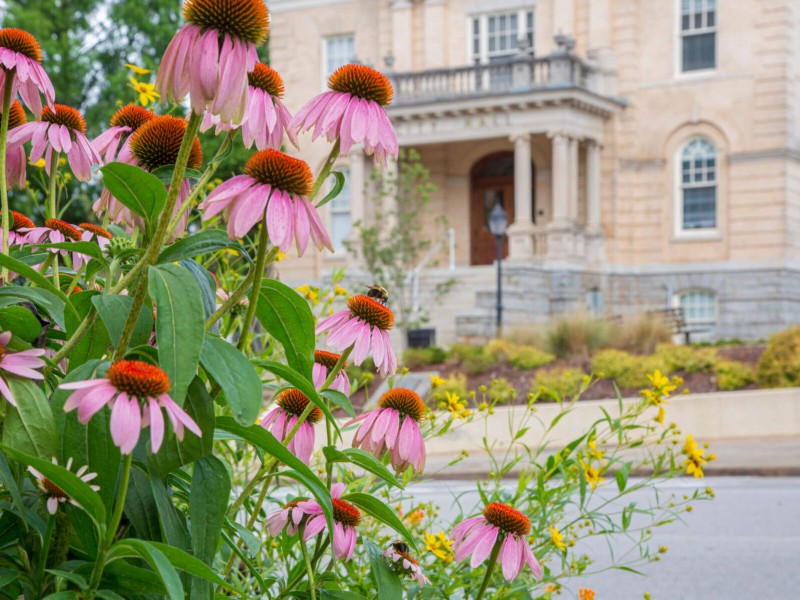
Natives also can offer a wider selection than shoppers find in most stores. Familiar plants, such as coneflower and black-eyed Susan, turn up when looking at native seeds, but also fantastic plants such as eastern bluestar, spotted beebalm, or rattlesnake master, which are much less frequent in garden centers and landscapes, are available.
This is an ideal time to start native perennials from seed, because the process takes months. With the right planning, an avid gardener can make the seed-starting season last from now until May.
The reason starting perennials takes longer than most annual seeds is because of the need for stratification and sometimes scarification.
Perennial seeds have mechanisms that prevent them from germinating too early in the season, and home gardeners must mimic these conditions before successfully starting seed. It is more complicated than vegetables or flowers but still easy.
A cold period, or stratification, is one of those mechanisms. You can stratify seeds in your home by mixing seeds with slightly damp sand, popping them in a plastic bag, and leaving them in the fridge for a month or so, depending on what the particular plant requires.
Likewise, some seeds need to be scarified. They need their seed coat to be broken down a bit before they will germinate. For homeowners, the best way to do this is by using sandpaper to gently scratch the surface.
Reputable seed dealers will provide information on germination requirements. Most perennial seeds need to be stratified; only some need to be scarified, and some have different considerations altogether. Make sure to read directions thoroughly.
As with any plant, pay attention to the amount of sun and soil moisture it needs and its size at maturity. Native perennials are wildflowers, and often they are taller than their tame cultivar varieties, which have been bred to be smaller with a more uniform growth habit. Also keep in mind, some may not bloom in their first season, but that is no reason to worry.
Adding natives to a home garden is an extra challenge, but starting the garden season early this year seems like a similar logic to folks that put up their Christmas tree before Thanksgiving. Let’s put a real urgency into this year’s seed catalog musings and plan — with a little hope and faith t — hat a good spring is just around the corner.
Author

Related Articles

Federal agency to investigate Monday paragliding fatality
The death of a 63-year-old man who was killed in a paragliding accident on Monday is under investigation by the National Transportation Board, according to Dougherty County Coroner Michael Fowler.

Audit of police surveillance cameras results in arrests of five former APD officers
“The bottom line is when we find people who have misused resources that they have, we’re going to hold them accountable. These resources help fight crime, but we will not tolerate when they are misused.”

Albany Herald – July 7, 2026
Lee County stands alones without… DOT say delay in Oglethorpe Bridge… ASU’s Leah Cowen Selected for…
