
Progress made in Skywater flow restoration project at Radium Springs
It’s still a work in progress, but strides have been made in Skywater, a project plan to restore the water flow through Radium Springs, one of Georgia’s Seven Natural Wonders. The Skywater Group includes hydrologists, farmers and conservationists. This spot, which was the former site of Radium Springs Casino that was lost to fire and floods, has long been talked about as one of the main tourist draws for the Albany area.
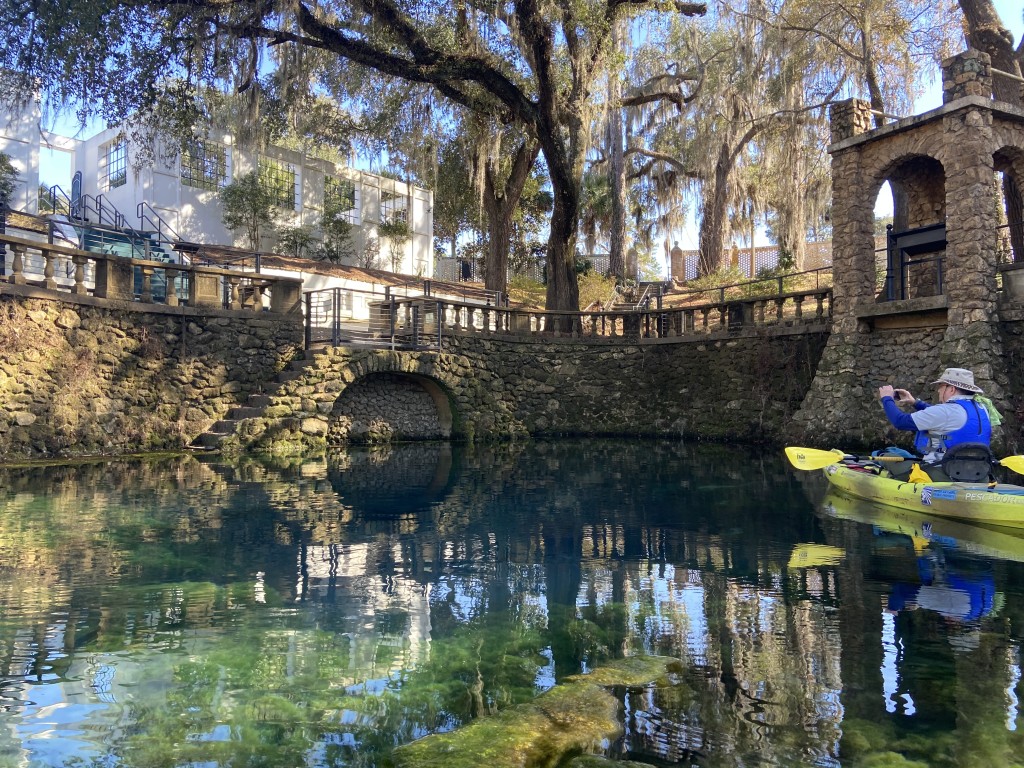
ALBANY – On a warm Sunday, just days after snow blanketed much of the state, Radium Springs in Albany flowed clear and bright blue at a constant 68 degrees.
Striped bass and gar swim beneath clumps of hydrilla, an invasive aquatic plant. About halfway along Skywater Creek, which flows from the Radium Springs springhead, a thick carpet of algae coats the surface from one bank to the other.
It’s still a work in progress, but strides have been made at Skywater, a project plan to restore the water flow through Radium Springs, one of Georgia’s Seven Natural Wonders. The Skywater Group includes hydrologists, farmers and conservationists. This spot, which was the former site of the Radium Springs Casino that was lost to fire and floods, has long been talked about as one of the main tourist draws to the Albany area.
Because of this, private and public funding, including a $1.5 million state grant to repair the historic carriage bridge, has been allocated toward water monitoring technology, renovations and smart irrigation technologies for farmers in the Radium Springs springshed. Former Flint Riverkeeper Board President David Dixon, a volunteer with Georgia’s Adopt a Stream program, said the project’s whole purpose is to keep water in the springshed, especially in times of drought.
Water is pumped into Radium Springs at 70 million gallons per day from the Floridan Aquifer, which is the largest aquifer in the southeastern U.S. In the early 1980s, a drought caused water to stop flowing from the aquifer into Radium Springs. The spring dried up into a muddy pit.
This happened again in 2011. Hundreds of dead fish – largemouth bass, bluegill and gar – appeared in the springs because the low water levels meant not enough dissolved oxygen.
“You can’t stop mother nature from having droughts, but you can plan a bit better,” Dixon said
One of the newest parts of the Skywater Project plan includes a gate system that was installed mid-2024 at the newly renovated carriage bridge. The gate controls the water level at adjusting heights to let water out into the Flint River. When the spring levels rise enough, water pours out the spillway next to the gate, into the river.
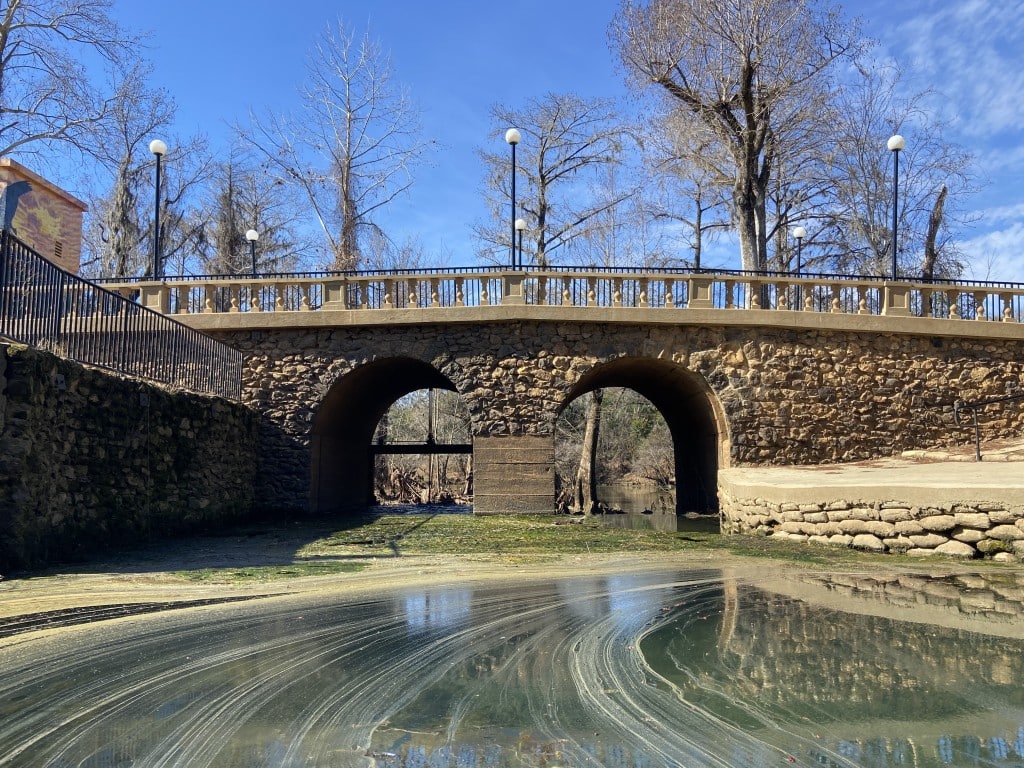
Dixon said this overflow of spring water into the Flint is important, especially during the winter months when the Flint’s water temperatures drop.
“Certain fish, like striped bass, like warm water, so wherever there’s springs flowing into and out of the Flint River, that’s where those fish will stay during the winter month,” Dixon said.
The pool level of Skywater Creek sits about 3 feet higher than the Flint River at normal river levels to keep water in the spring from becoming stagnant. Sometimes the river floods and pushes water back into the spring.
Skywater Creek had gone without flow control for several years. The gate has been operating now for about six months. Dixon said in those six months, he’s seen a difference in pool height even without heavy rain.
There is also less algae, which has increasingly been a problem at Radium Springs.
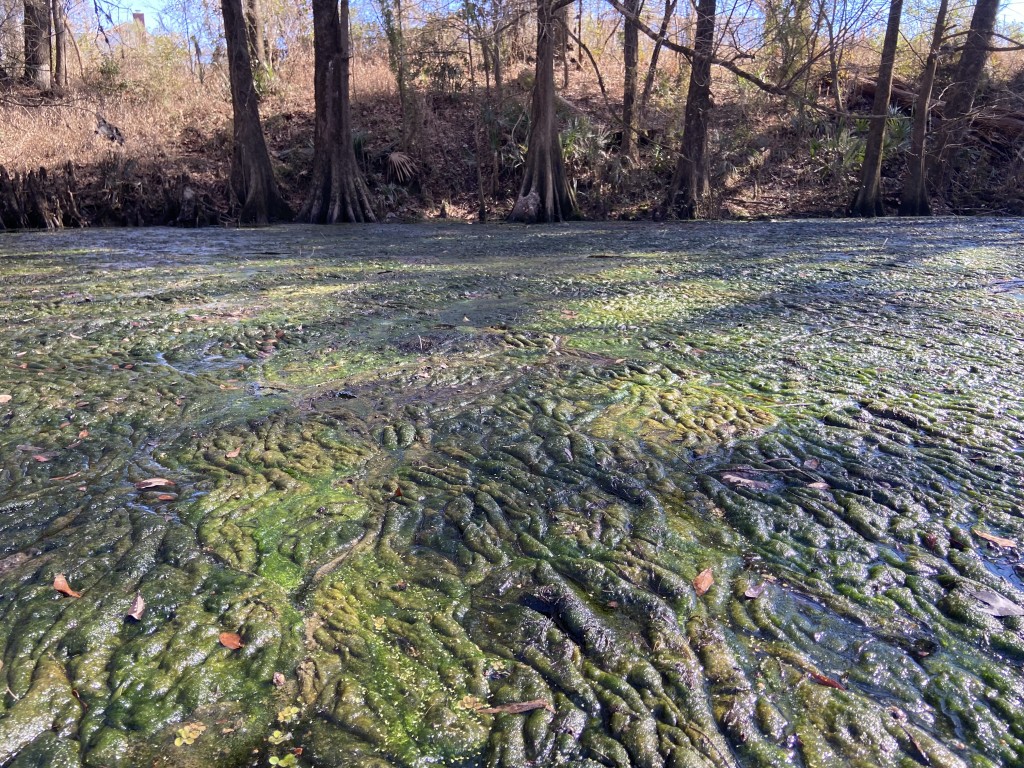
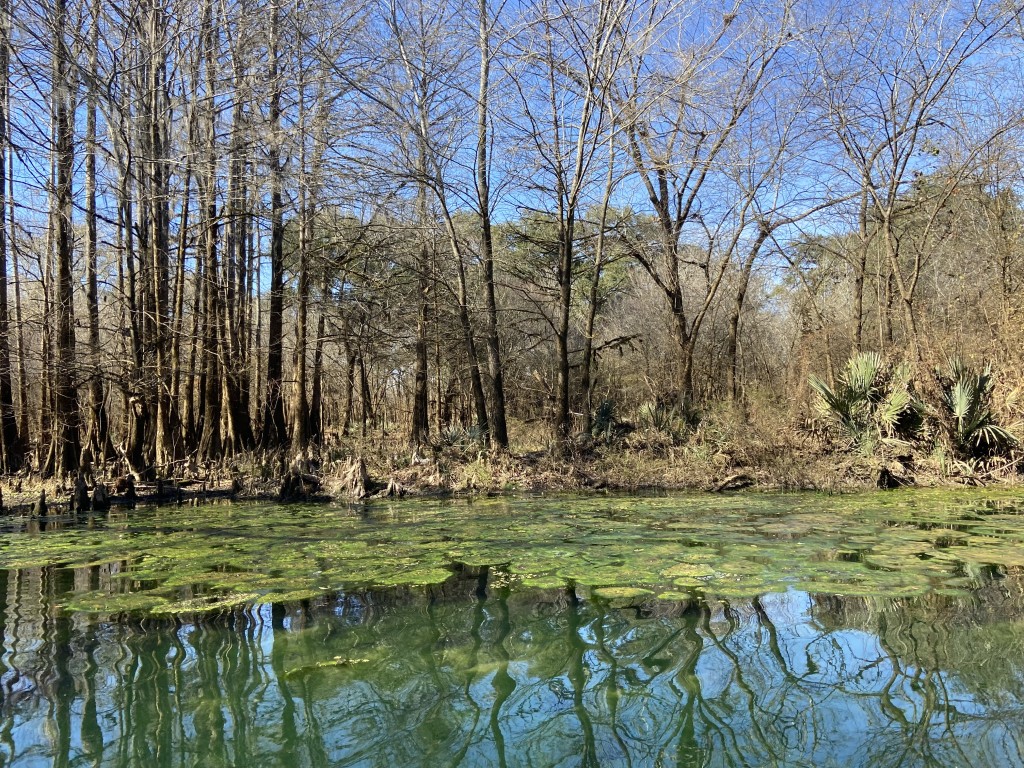
“Algae gets worse the slower the flow, the lower the water, the hotter the days,” Dixon said.
While the green, goopy stuff benefits some organisms, like egrets and herons who can walk on it to get fish, it stops sunlight from getting to organisms at the bottom of the creek and springhead.
“It’s a benefit to some and an eyesore for others,” Dixon said.
He said Dougherty County provides herbicides to try to keep the algae down. It becomes a problem for tourism when people travel to see one of Georgia’s natural wonders, and instead of seeing a crystal clear spring, they’re met with smelly, rotting algae.
Another part of the Skywater Project, is a concept Flint Riverkeeper Gordon Rogers referred to as “drought swap.”
The portion of the Floridan that feeds Radium Springs is over-exploited. It’s used by farmers in the springshed for irrigation, and Dixon said the largest contributor to aquifer drawdown in the spring shed is Procter & Gamble, which pumps water each day.
Rogers said when conversations first arose about restoring the springshed’s flow, the idea of switching to deeper water sources was bounced around.
He said Radium Springs goes dry or quits flowing during every drought year and even in the dry portions of wet years.
“A lot of people don’t realize that,” Rogers said.
So when the Skywater Team was formed about five years ago, Rogers said the central tenet became looking at the feasibility of source switching and beginning to try to identify funding sources for it.
The team worked with U.S. Rep. Sanford Bishop’s office to get funding written in for a Natural Resource and Conservation Service Project. The plan for this was submitted to the U.S. Deptartment of Agriculture, and Rogers said it’s awaiting approval.
“With any luck, we’ll be able to start the work,” Rogers said.
The work will be offering drought swap wells to agricultural producers in the springshed. Underneath the Floridan are two deeper aquifers, the Claiborne and Clayton. These wells would allow farmers to take from deeper aquifers during drought times so as not to harm the flow at Radium Springs.
Rogers said the Skywater team received communication from the federal government that Procter & Gamble would even be eligible for financing.
“That’s important because they have the closest wells to the springhead itself,” he said.
Along with the Skywater Project, the Georgia Flow Incentive Trust, which works with farmers in the Flint River Basin to build capacity to respond to drought, is making headway on the other side of the Flint River.
Rogers said state funding was secured for a drought swap project that would benefit the nearby Muckalee, Kinchafoonee, Ichawaynochaway and Spring creeks.
“The drilling of those wells and the granting of those permits is already underway,” he said. “We’ve got really exciting things going on on both sides of the river. It’s going to benefit the flow in Radium Springs and those four creeks.”
Author

Related Articles

Albany Herald – July 4, 2026
MCLB-Albany welcomes new commander as… Colonial Dames: 100 years of… Albany State graduate Justin Clements earns…

HAPPY 250TH ANNIVERSARY AMERICA
America Celebrates 250 Years???

Classifieds – July 4, 2026
Albany Classifieds: Real Estate for Sale: 1835 Arlington Park Circle… Jobs: Irrigation Tech needed…
