
Southwest Georgia farmers struggling with dry weather, poor crop prices
Staff Photo: Alan Mauldin
Staff Photo: Alan Mauldin
By Alan Mauldin
[email protected]
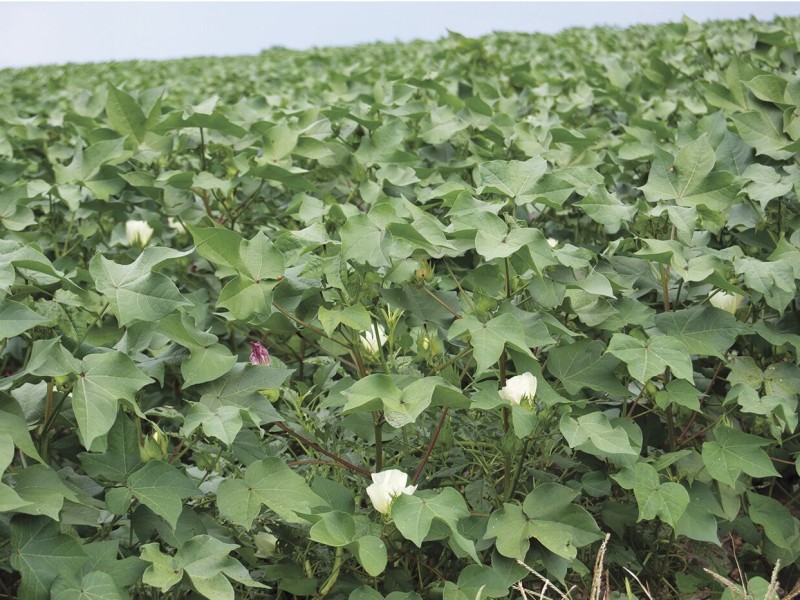
CAMILLA – A drive through parts of Mitchell County reveals lush, green stands of blooming cotton in a number of fields. But a short distance down the road there are other fields where the plants are obviously struggling.
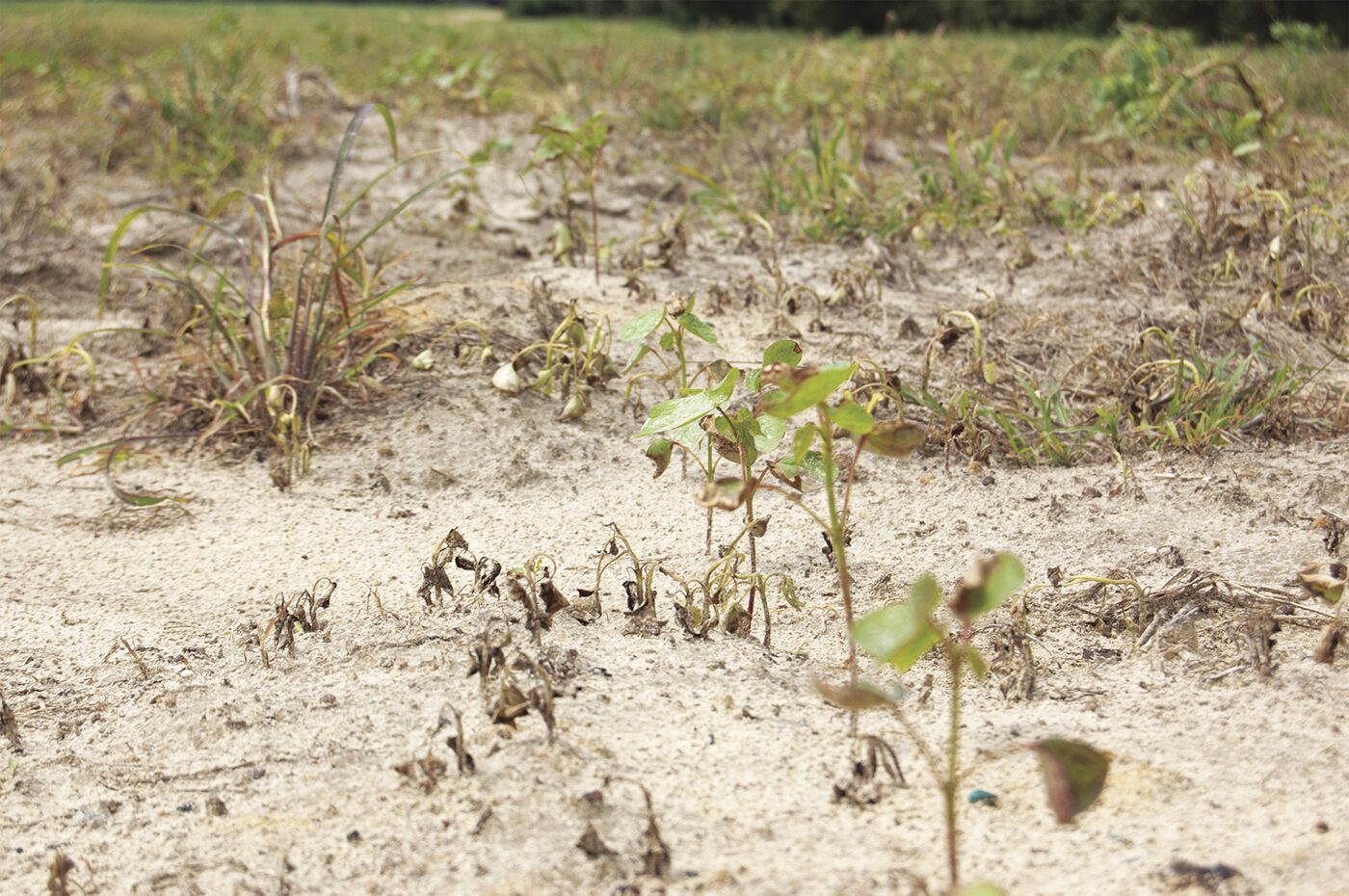
Among the worst is one where the plants are stunted, and large portions of the field have no visible stand of plants. Few of the wilting plants are displaying blooms and flowers were dropping from the spindly plants that stood only a few inches high.
A wet spring was followed by weeks of little or no rainfall, which delayed planting the crop for many farmers in the area.
While southwest Georgia is not under drought conditions currently, with the exception of a small pocket in extreme northwest Early County experiencing moderate drought as of Wednesday, the entire region is dry. According to the U.S. Drought Monitor, the entire region is abnormally dry, as is 50% of the state as a whole, with pockets of severe drought in the Macon area, west Atlanta and a small portion of north Georgia near the Tennessee border.
Scattered rains over the past few weeks have helped, but dryland corn pretty much burned up through an extended period when there was little or no rain and high temperatures. Likewise, unirrigated cotton faces a tough fight, with some fields abandoned.
“We didn’t get any rain for five weeks,” Calhoun County Cooperative Extension Agent Luke Crosson said. “We had some dryland cotton people planted the first (part) of May. We didn’t get started until later in May, and then it turned out so dry. It was probably some of the earliest severe dry weather I’ve seen.”
That dry streak ended a few weeks ago, but showers have been hit-or-miss, with some parts of the region getting some decent rainfall and others not so much.
The University of Georgia Weather Network station located at Marine Corps Logistics Base-Albany, for example, measured a total of 0.05 inches of rainfall from June 1 through June 26, with a shower bringing 0.78 inches on June 27 and 1.11 inches two days later.
At the Arlington site, a total of 2.84 inches of rain was measured May 17 and 18, but after that things got dry, with rainfall over the next seven weeks totaling only 1.86 inches before 1.21 inches arrived on June 29, followed by 1.36 inches on June 30.
“The good thing is we did catch some good rains lately,” Crosson said. “We’re seeing what it’s going to do.”
While there is not much hope for the dryland corn and cotton, there is a chance that cotton and peanut plants can bounce back and produce a decent crop, he said.
“We have research that says we can get that yield potential back,” Crosson said. “We just need some regular rains. As far as peanuts and cotton, we’re at peak water use. It’s the most crucial time for the crop.
“We’re encouraging growers to stay as timely as they can with everything hoping to boost our yield potential as much as they can and keep praying for rain, hoping we’ll get some. We’ve still got some time left. We’re still optimistic.”
While irrigation helps keep plants from wilting in the heat, it does come at a cost to farmers’ bottom line. Growers are already struggling from poor prices for cotton, at about $0.69 per pound. Local growers say they need about $1 per pound just to break even.
“It’s going to be pretty rough,” Doerun farmer Bart Davis said. “The situation ain’t getting any better. It’s getting worse.”
For every inch of water pumped on an acre of crops, it costs about $7 or $8, Mitchell County cooperative extension agent Brian Hayes said.
“It costs money to pump water,” he said. “All the inputs are sky-high, and all the commodity prices are rock-bottom right now. Irrigation has been going. We got a little relief (from rain).”
For some who planted on unirrigated acreage, the prognosis is grim in those places that haven’t been in the path of showers.
“The dryland corn is going to be minimal yield,” Hayes said. “It got hurt real bad.”
The same holds true for cotton and peanuts.
“There are some that couldn’t get a stand because it’s so dry now, cotton and a few peanuts,” Hayes said. “This year we didn’t get a stand everywhere. They’ll turn it over to crop insurance.”
Author

Related Articles

Albany/Dougherty County among local governments looking at data centers
“Our understanding is that data center developments look like an easy fix for the problems that face rural America, but this is a Faustian deal at best. You can see the effects in communities across the state and country.

Albany Herald – July 14, 2026
In Lee County, they saw it… Bigger budget will mean improvements at… Small actions can help save…

Classifieds – July 14, 2026
Albany Classifieds and Legals…
